18 Japandi Bedroom Design Ideas for Calm, Minimal, and Natural Interiors
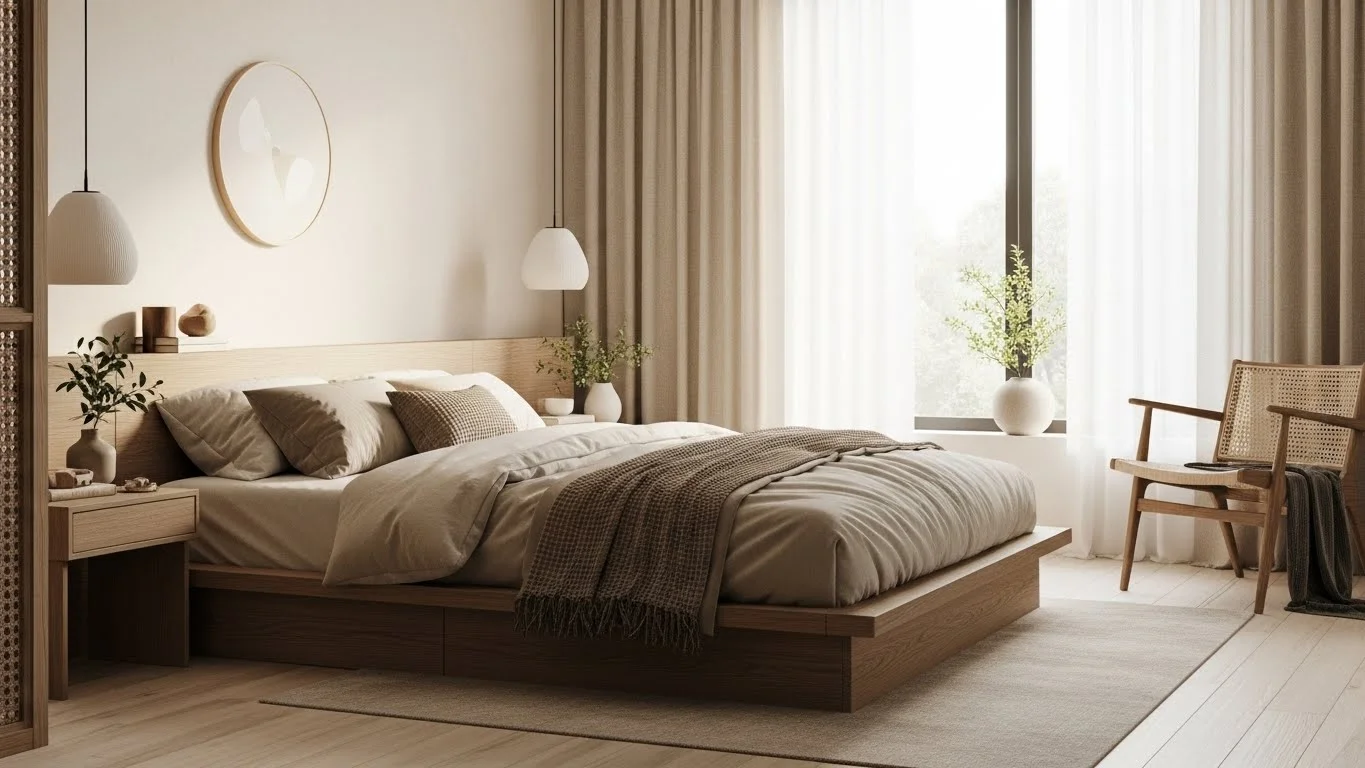
The Japandi aesthetic is where serenity meets functionality — a perfect harmony between Japanese elegance and Scandinavian simplicity. It celebrates clean lines, natural textures, and the quiet beauty of imperfection. These Japandi bedroom design ideas offer a balance between minimalism and warmth, creating spaces that feel calm, grounded, and deeply intentional.
At the heart of Japandi design is the philosophy of “less, but better.” Every detail serves a purpose — from the shape of a ceramic bowl to the curve of a wooden handle. This approach doesn’t sacrifice comfort for aesthetics; instead, it embraces simplicity as a form of luxury. It’s ideal for modern homes seeking tranquility amid life’s busyness.
In this guide, we’ll explore 18 Japandi bedroom design ideas that blend mindfulness with modernity. Each idea captures the essence of Scandinavian Japanese style, helping you create a restful environment that nurtures both body and mind.
1. Embrace Natural Wood Tones
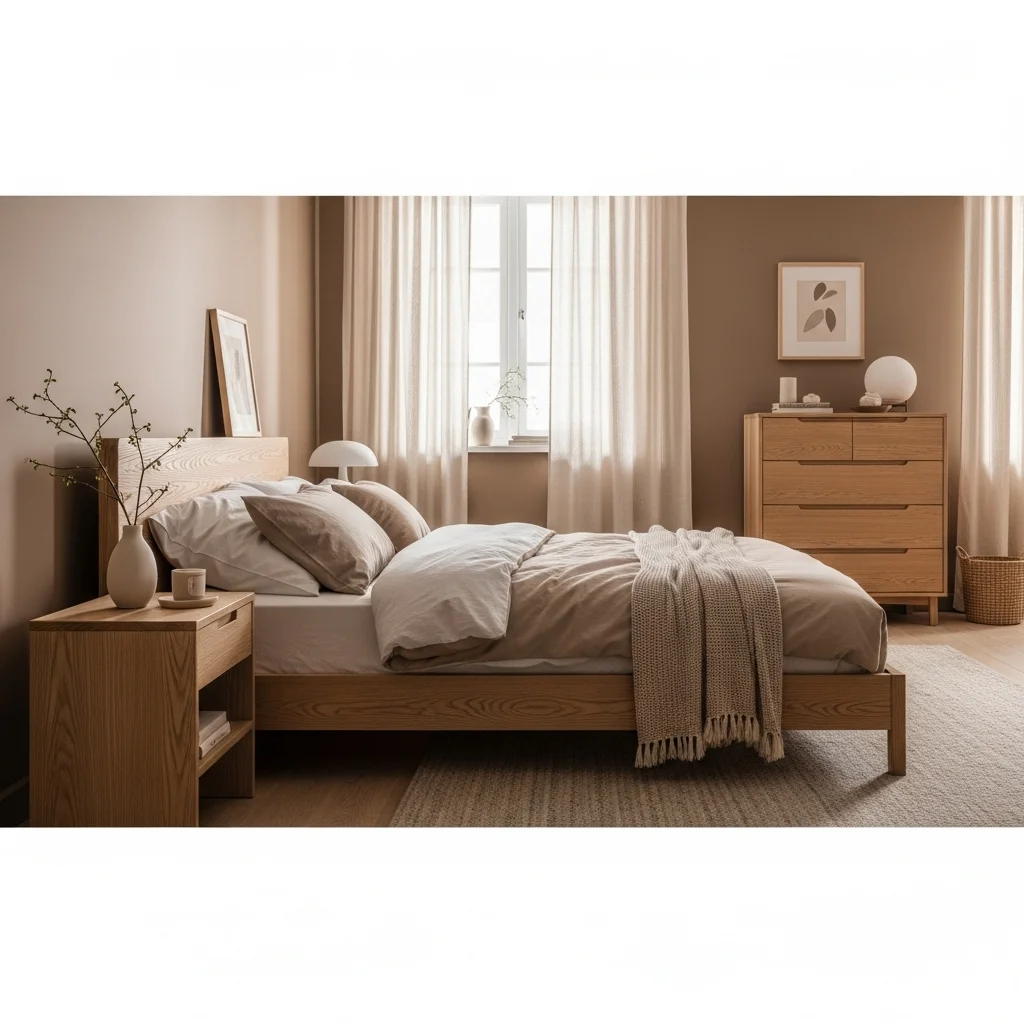
Wood is the soul of Japandi interiors. Choose light oak, ash, or bamboo finishes to create warmth and authenticity. Let the grain and texture remain visible — imperfections add character and honesty.
This concept ties directly to natural wood furniture, bringing organic beauty and grounding energy to your bedroom. The combination of simplicity and nature transforms the space into a haven of quiet strength.
2. Keep the Palette Neutral

A soft color palette sets the foundation for calmness. Think beige, taupe, ivory, gray, and muted earthy tones. Avoid harsh contrasts — aim for a soothing gradient that encourages restfulness.
This muted harmony reflects neutral color palettes and calming interior design principles. The result is a tranquil environment where every shade contributes to serenity and spatial balance.
3. Choose Low Furniture Profiles
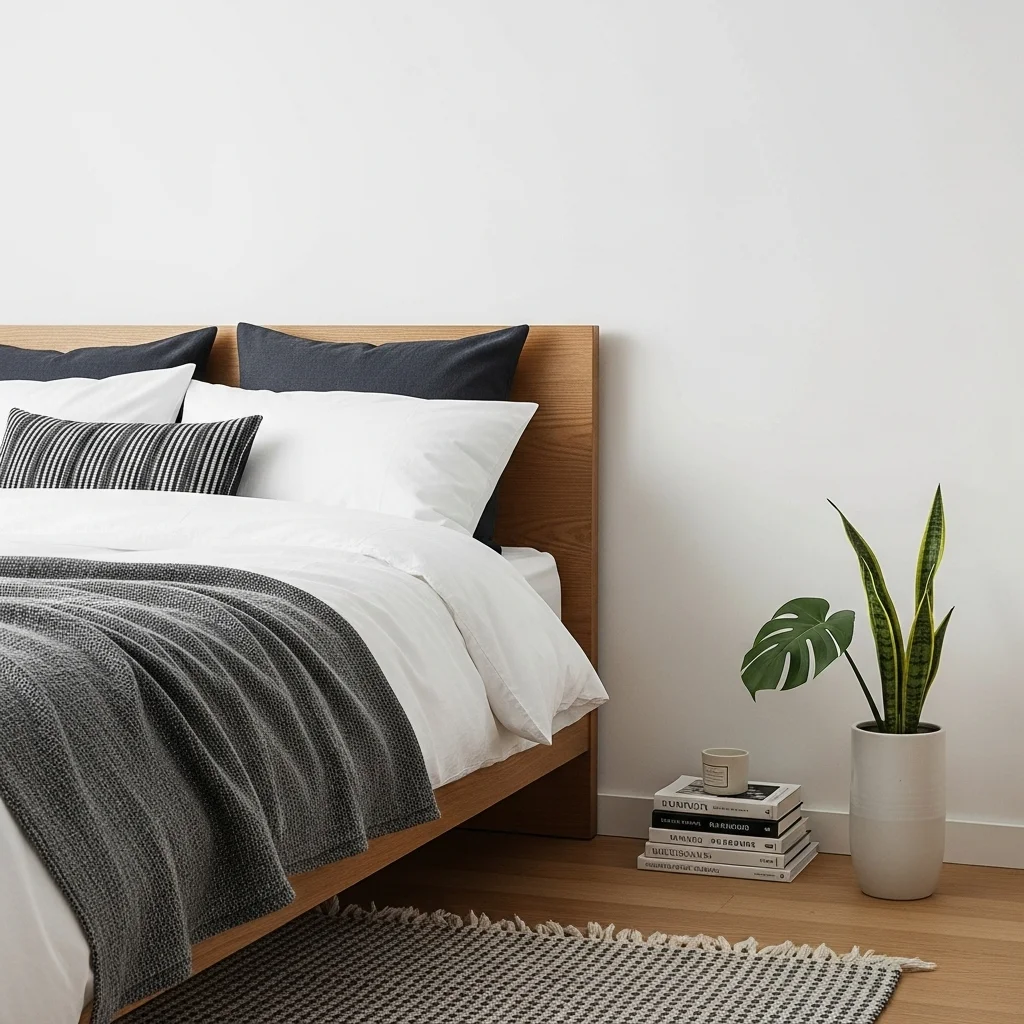
Low furniture grounds the room and creates visual openness. A platform bed, low nightstands, and floor-level seating invite relaxation while embodying Japanese restraint.
This detail highlights minimalist bedroom ideas, where simplicity creates flow. The horizontal lines emphasize space and stillness, allowing the design to breathe effortlessly.
4. Use Soft Textures for Comfort

Add texture through organic fabrics — linen bedding, wool throws, and cotton curtains. These materials soften the clean lines of the room without cluttering it.
This sensory layering blends Scandinavian Japanese style with warmth. Textures introduce quiet contrast, making the room feel tactile, intimate, and human — calm yet cozy.
5. Add a Touch of Wabi-Sabi Imperfection
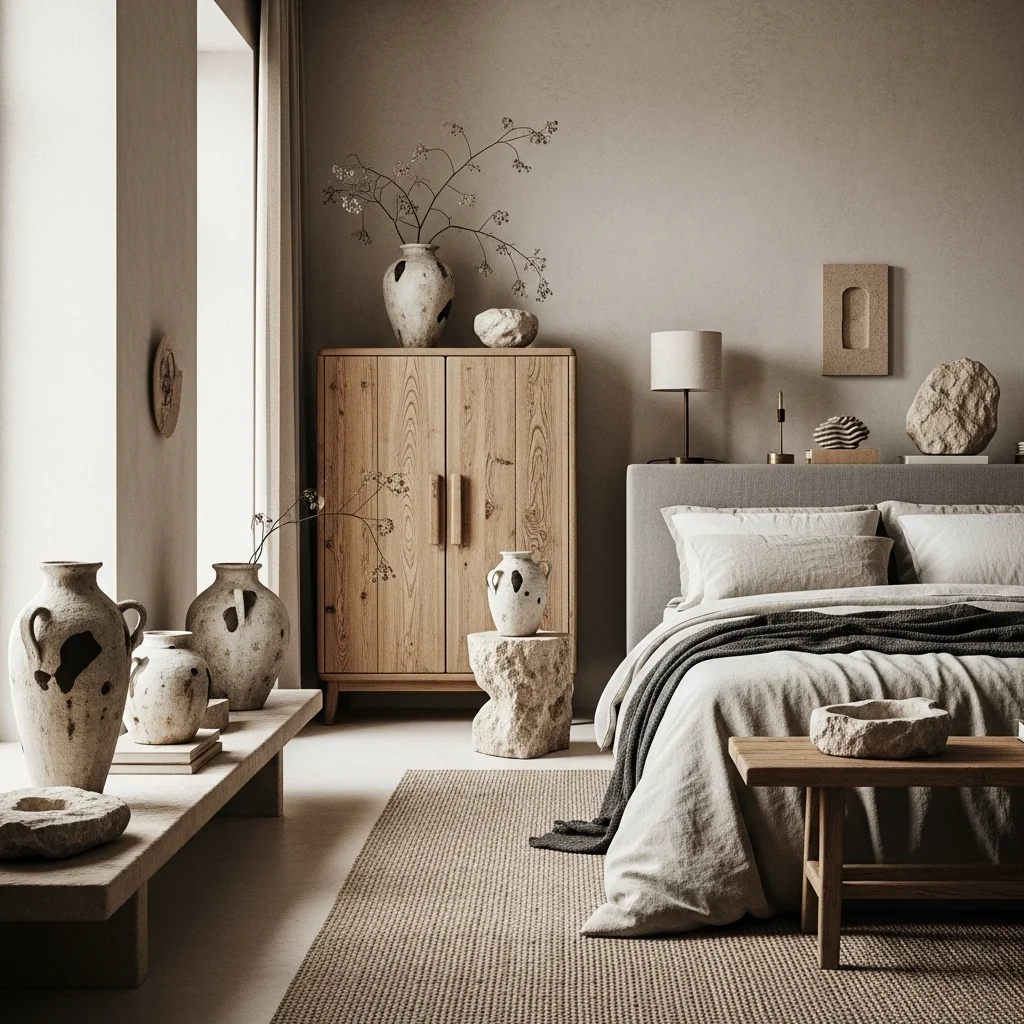
Embrace imperfections — a handcrafted vase, uneven ceramic, or slightly weathered wood. Wabi-sabi celebrates authenticity and the passage of time.
This idea defines calming interior design rooted in mindfulness. Each imperfect detail tells a story, transforming the bedroom into a deeply personal and peaceful retreat.
6. Integrate Hidden Storage Solutions

Concealed storage maintains simplicity and order. Built-in drawers or under-bed compartments help preserve a clutter-free look while keeping essentials within reach.
This practice follows minimalist bedroom ideas perfectly — practical, elegant, and serene. The absence of visible clutter strengthens mental clarity and enhances the room’s overall balance.
7. Incorporate Plants and Greenery
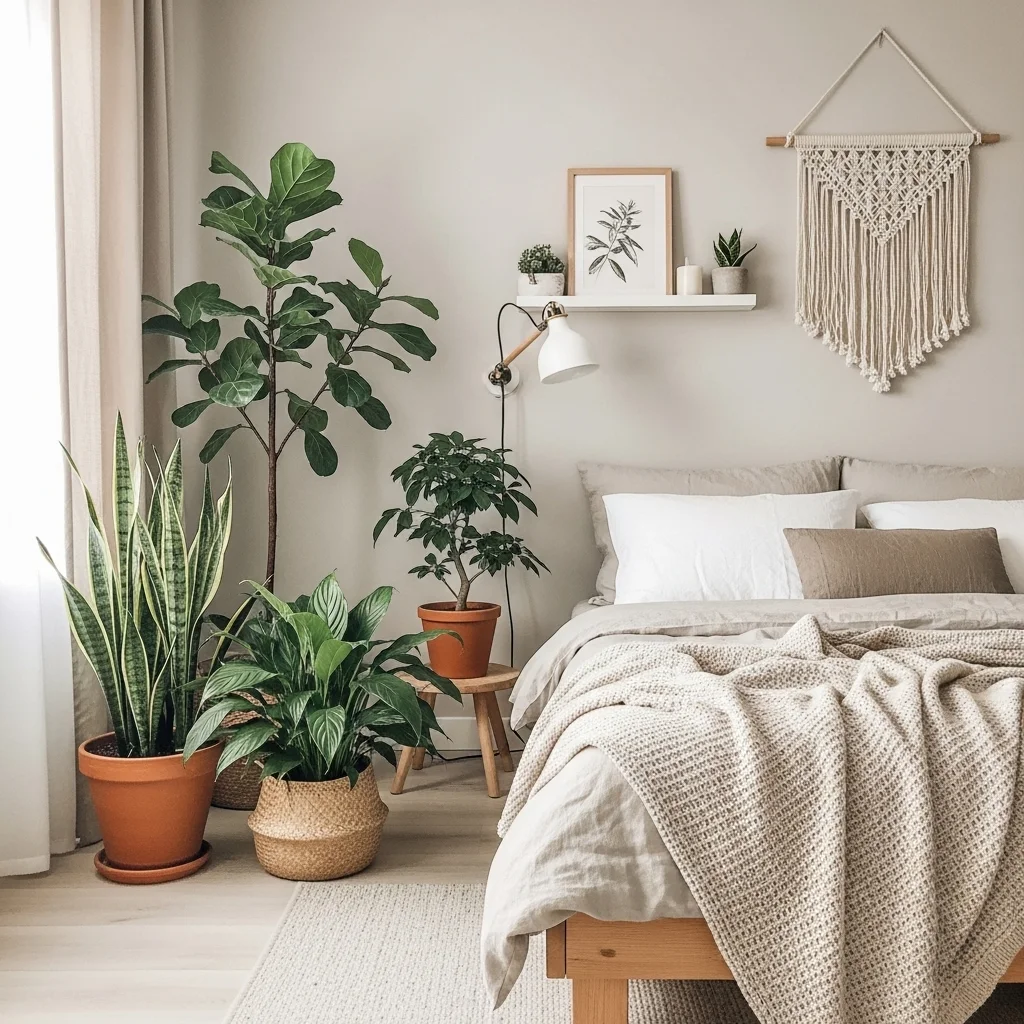
Greenery symbolizes renewal and harmony with nature. Choose simple, low-maintenance plants like bonsai, snake plants, or pampas grass to add organic movement and freshness.
Plants breathe life into Scandinavian Japanese style spaces. Their subtle presence brings rhythm and balance, connecting your bedroom with nature’s calm vitality.
8. Highlight Natural Light
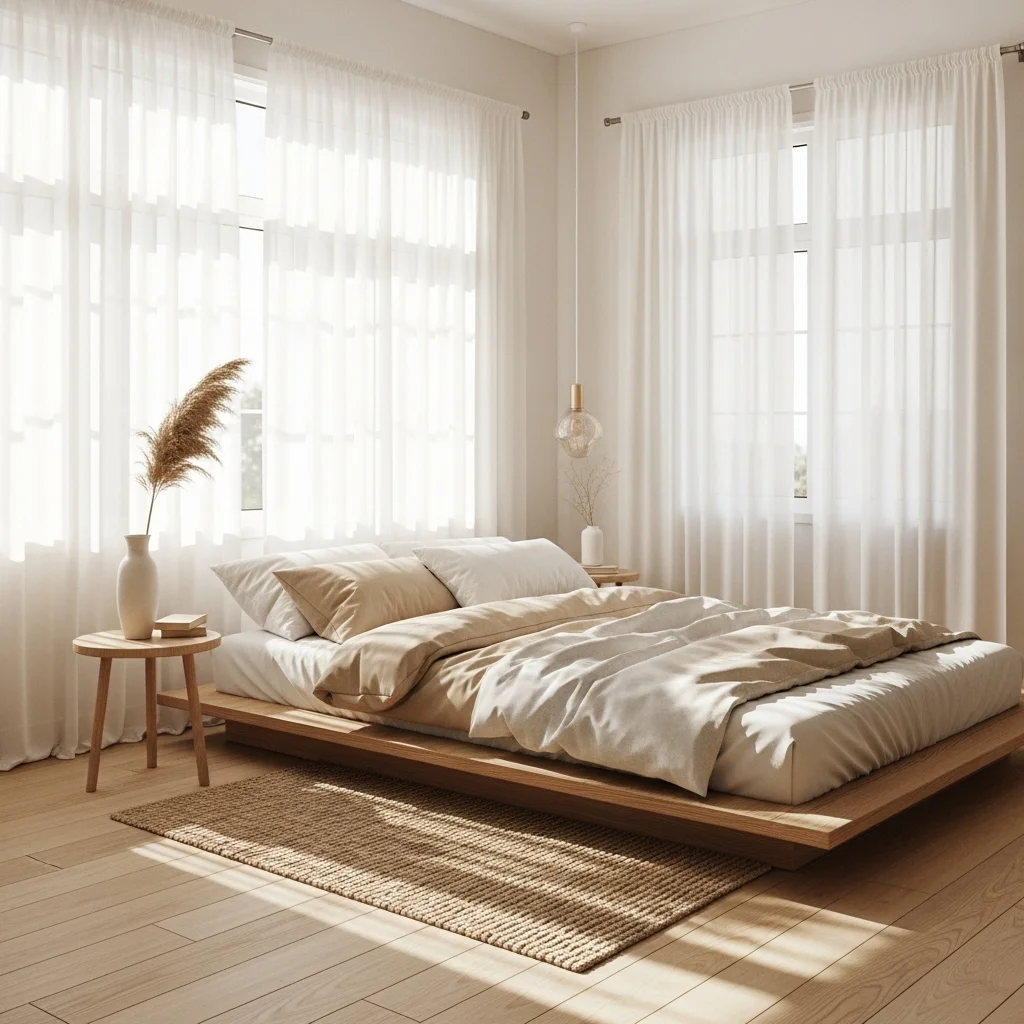
Natural light is essential in Japandi spaces. Use sheer curtains or light-filtering shades to let sunlight in gently, illuminating wood textures and muted hues.
This concept supports calming interior design, where illumination feels soft, warm, and fluid. The interplay of shadow and light enhances stillness, shaping a meditative ambiance throughout the room.
9. Add Artisan Decor Pieces

Opt for handmade pottery, woven baskets, or textured artwork. Artisan pieces express authenticity while avoiding mass-produced uniformity.
This thoughtful curation echoes natural wood furniture traditions and neutral color palettes. Artisan touches give your bedroom soul — a quiet reflection of craftsmanship and individuality.
Read also. 20 Twin Size Bedroom Ideas
10. Layer Soft Lighting
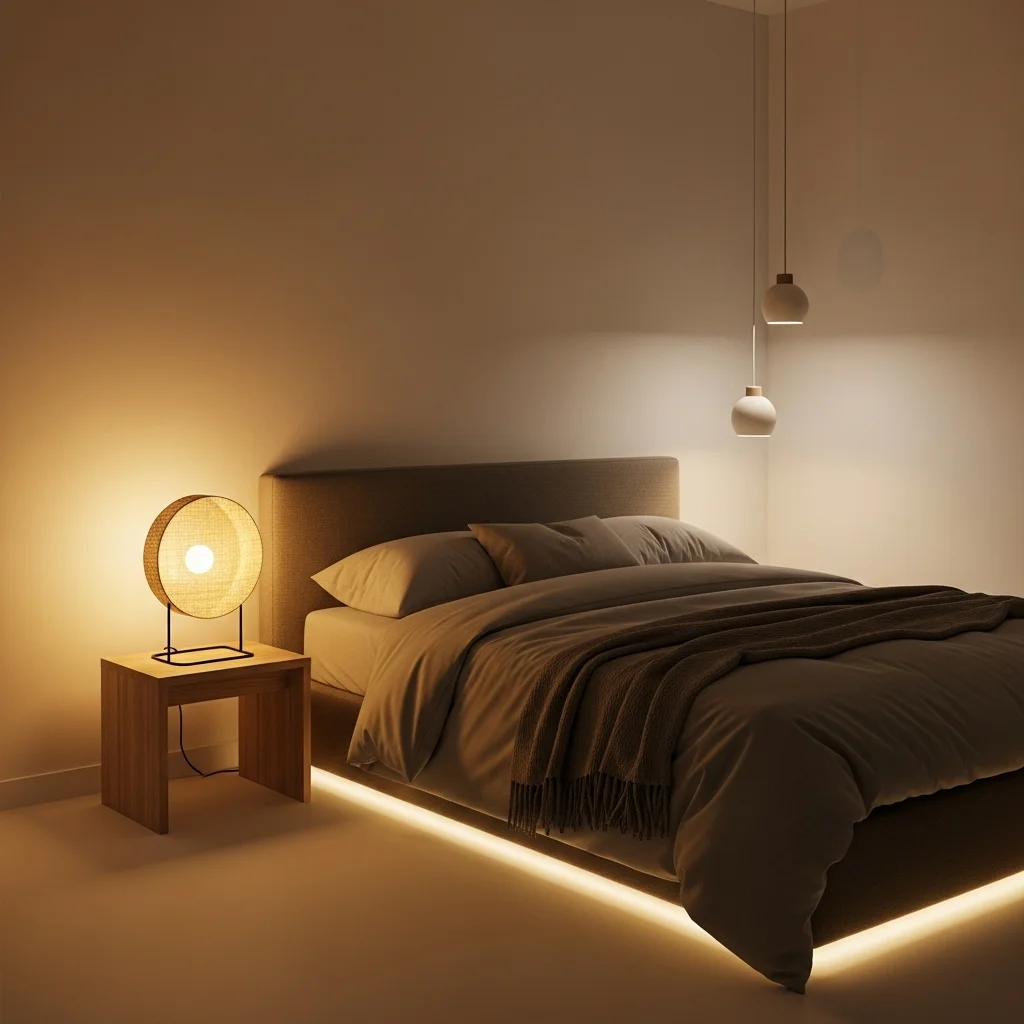
Lighting in a Japandi bedroom should feel natural and unobtrusive. Use diffused light sources like paper lanterns, fabric shades, or wall sconces to create a soft glow. Avoid harsh overhead lighting — instead, layer ambient and task lighting for depth.
This gentle illumination reflects calming interior design and enhances the space’s meditative mood. Warm, low light invites relaxation, transforming your bedroom into a cocoon of peace that supports slow living and mindfulness.
11. Add a Statement Accent in Stone or Clay
Introduce stone or clay décor pieces to bring texture and weight to your room. A small stone side table, clay vase, or minimalist sculpture adds tactile depth and an earthy essence.
This design approach echoes Scandinavian Japanese style, grounding the serenity of soft fabrics with the timeless solidity of nature. Stone and clay connect the aesthetic to Earth’s stillness, creating a harmonious balance between fragility and strength.
12. Keep Walls Minimal

Walls in a Japandi bedroom act as calm backdrops rather than decorative focal points. Stick to matte finishes and avoid heavy patterns. If you add art, choose a single large piece or a trio of understated prints in neutral tones.
This minimalism complements minimalist bedroom ideas, emphasizing space and silence. The simplicity of the walls allows textures, light, and natural materials to become the true language of the room.
13. Add a Tatami-Inspired Area Rug
Tatami-inspired rugs add warmth, texture, and a subtle nod to Japanese tradition. Choose natural fibers like jute, sisal, or wool for an organic feel underfoot.
This grounding detail enhances natural wood furniture and balances cool, clean surfaces. The tactile quality of the rug creates comfort and visual unity, tying the entire space together in harmony.
14. Use Subtle Black Accents
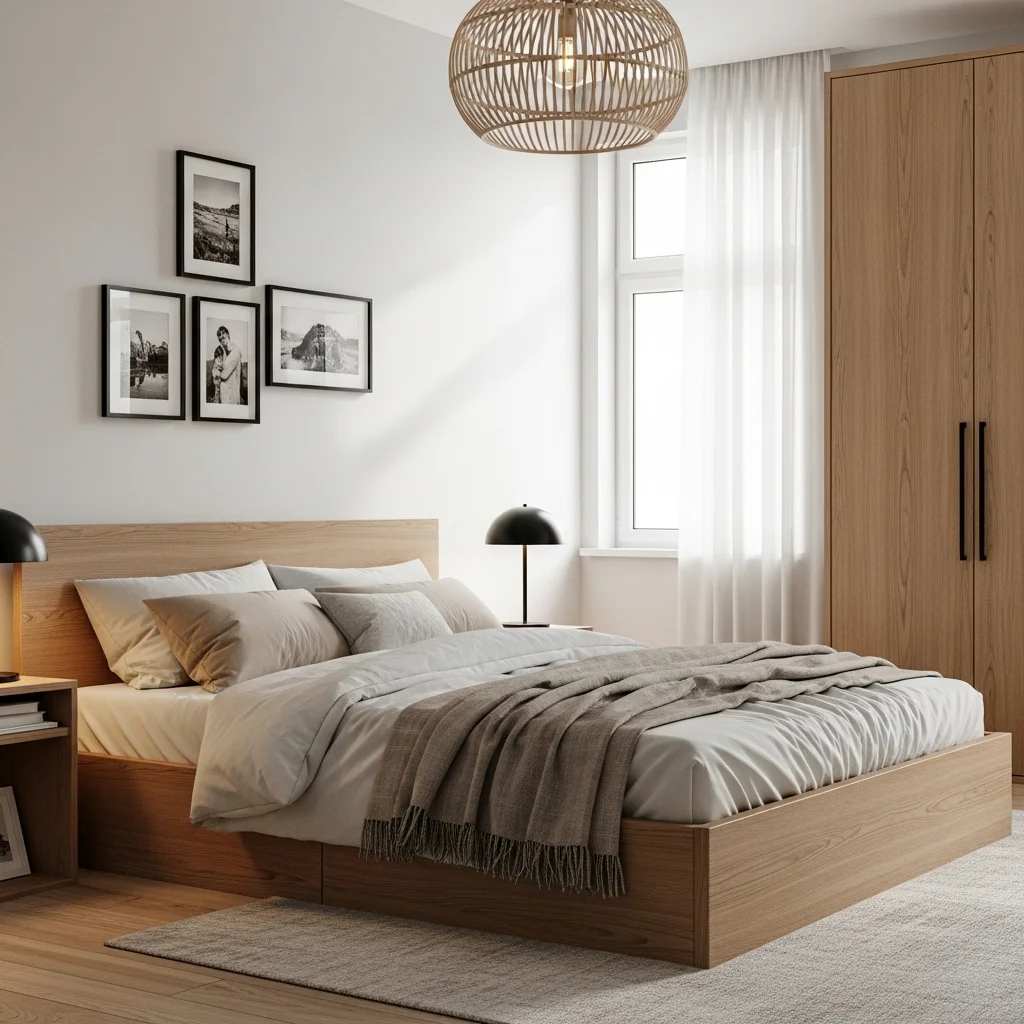
A touch of black provides contrast and modern edge without overpowering the softness of Japandi tones. Black light fixtures, frames, or chair legs offer visual structure and sophistication.
This contrast embodies Scandinavian Japanese style at its finest — minimalist yet expressive. The interplay between black and neutral hues keeps the space grounded and visually compelling.
15. Include Textural Wall Art
Opt for woven panels, wood reliefs, or handmade fabric hangings. Textural art adds quiet interest without breaking the calm flow of the space.
This concept celebrates neutral color palettes and artisan craftsmanship. The textures catch light softly, adding dimension and depth while maintaining the tranquil rhythm that defines Japandi bedroom design.
16. Choose a Futon or Low Platform Bed
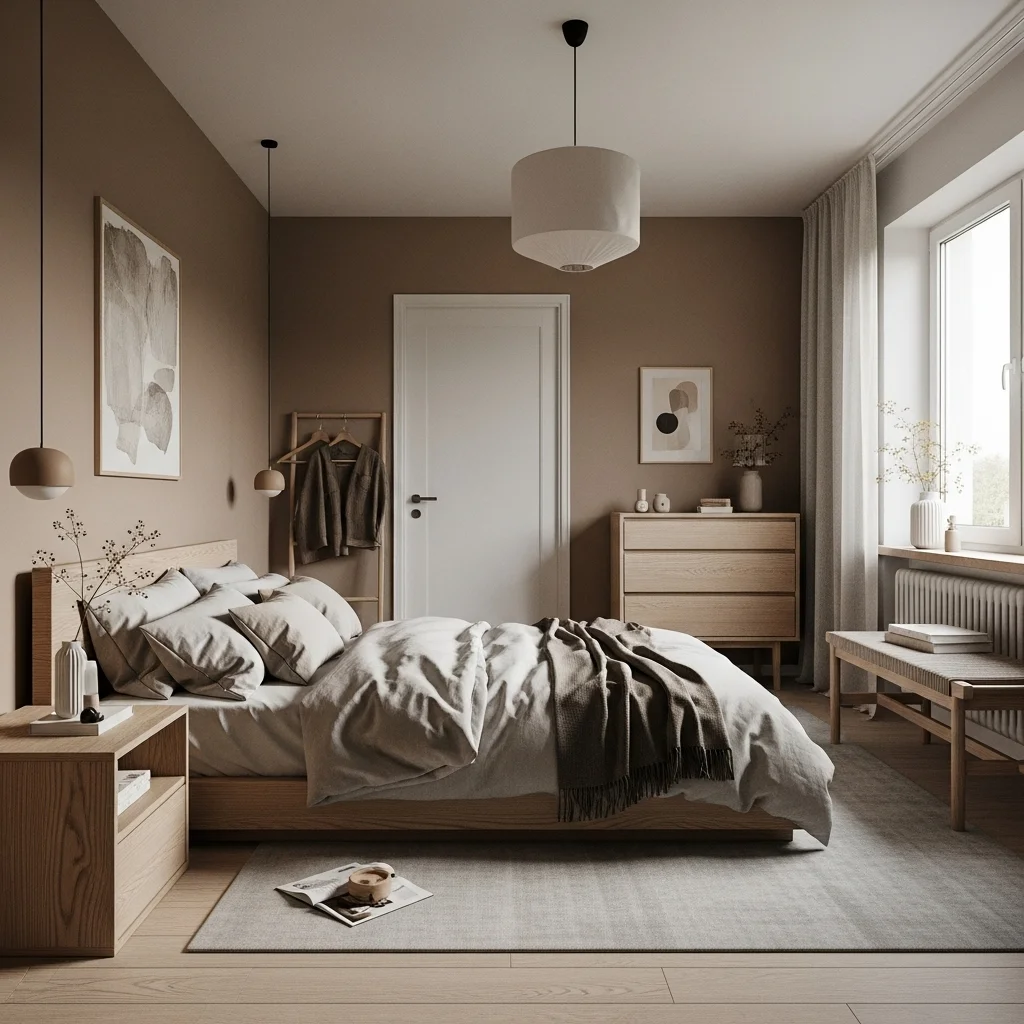
Inspired by Japanese tradition, low or futon-style beds keep your sightlines open and create an airy, grounded energy. Pair them with linen bedding and a neutral throw blanket for warmth.
This design detail connects deeply with minimalist bedroom ideas, where space and simplicity create beauty. A low bed adds balance and humility — a nod to the philosophy of living close to the Earth.
17. Add Sliding Doors or Screens
Shoji-inspired sliding doors or partitions are both practical and poetic. They separate spaces gracefully while maintaining the natural flow of light. Use paper or translucent materials to evoke softness.
This feature embodies Scandinavian Japanese style, blending Japanese structure with Scandinavian openness. Sliding elements create quiet movement and adaptability — traits that define the Japandi lifestyle.
18. Introduce a Scent Element
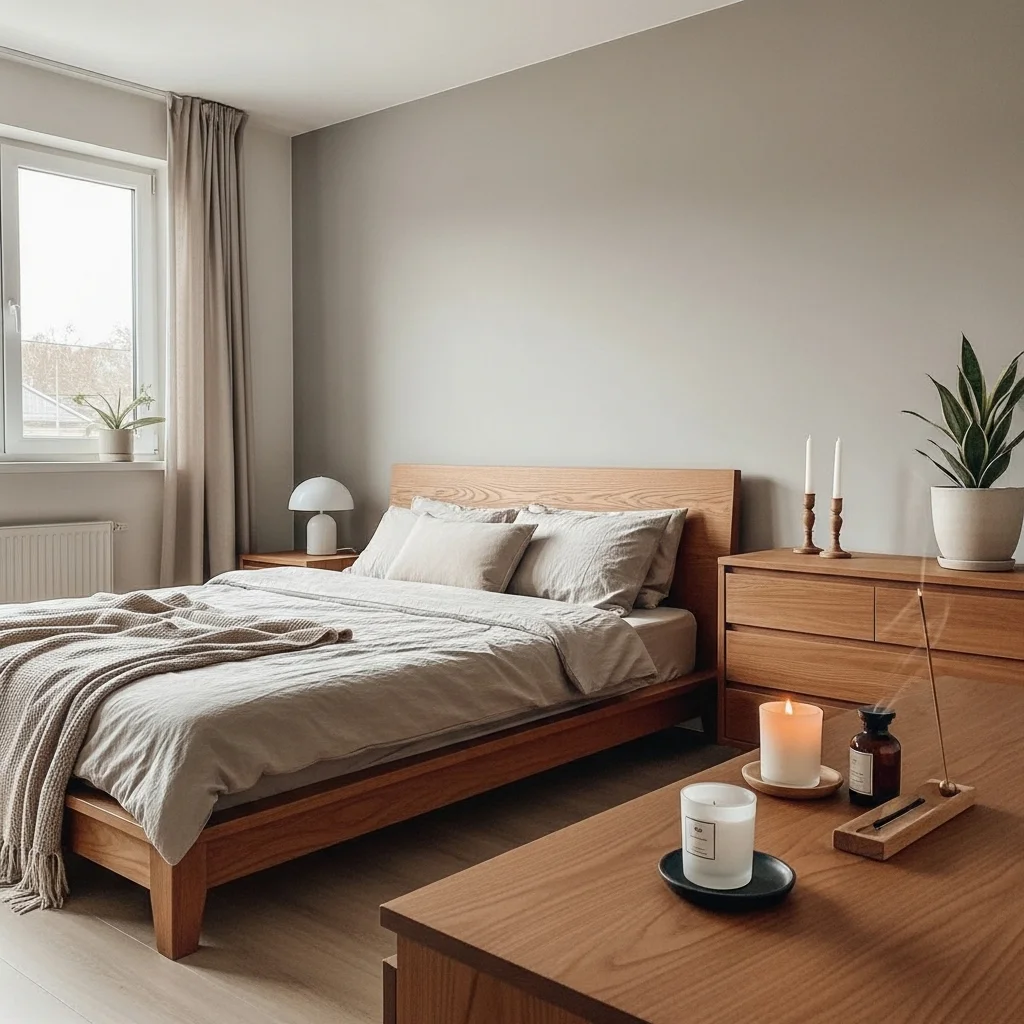
Scent is the invisible layer of Japandi tranquility. Diffuse essential oils like cedarwood, sandalwood, or lavender to complement the natural aesthetic. Fragrance completes the sensory balance of your space.
This mindful detail enhances calming interior design, transforming your bedroom into a sanctuary of rest. The scent connects emotion with environment, deepening your sense of peace and daily mindfulness.
Final Thoughts
A Japandi bedroom design is more than a visual trend — it’s a lifestyle philosophy rooted in intention, balance, and authenticity. By merging the Japanese love for simplicity with the Scandinavian embrace of comfort, you create a sanctuary that nurtures body and mind.
These ideas remind us that less truly can be more. The right textures, materials, and light don’t just decorate — they breathe life into the room. A Scandinavian Japanese style bedroom is an act of mindfulness — quiet, beautiful, and grounded in purpose.
FAQs About Japandi Bedroom Design
Q1: What colors work best for Japandi bedrooms?
Soft neutrals, warm beiges, and natural wood tones create calming interior design harmony and timeless appeal.
Q2: Can Japandi style work in small bedrooms?
Yes! Its minimalist approach and natural wood furniture make even small spaces feel open and airy.
Q3: How do I make my bedroom feel more Japandi?
Focus on quality over quantity, neutral colors, and handmade pieces — key principles of Scandinavian Japanese style.
Q4: What materials define Japandi interiors?
Wood, linen, stone, and clay are core materials in Japandi bedroom design, reflecting nature’s simplicity and calm.
Q5: Is Japandi the same as minimalist design?
Not exactly. While similar, Japandi adds warmth, texture, and human touch to the stricter minimalist bedroom ideas aesthetic.