24 Wabi Sabi Living Room Ideas for Calm, Minimal, Natural, and Imperfectly Beautiful Spaces
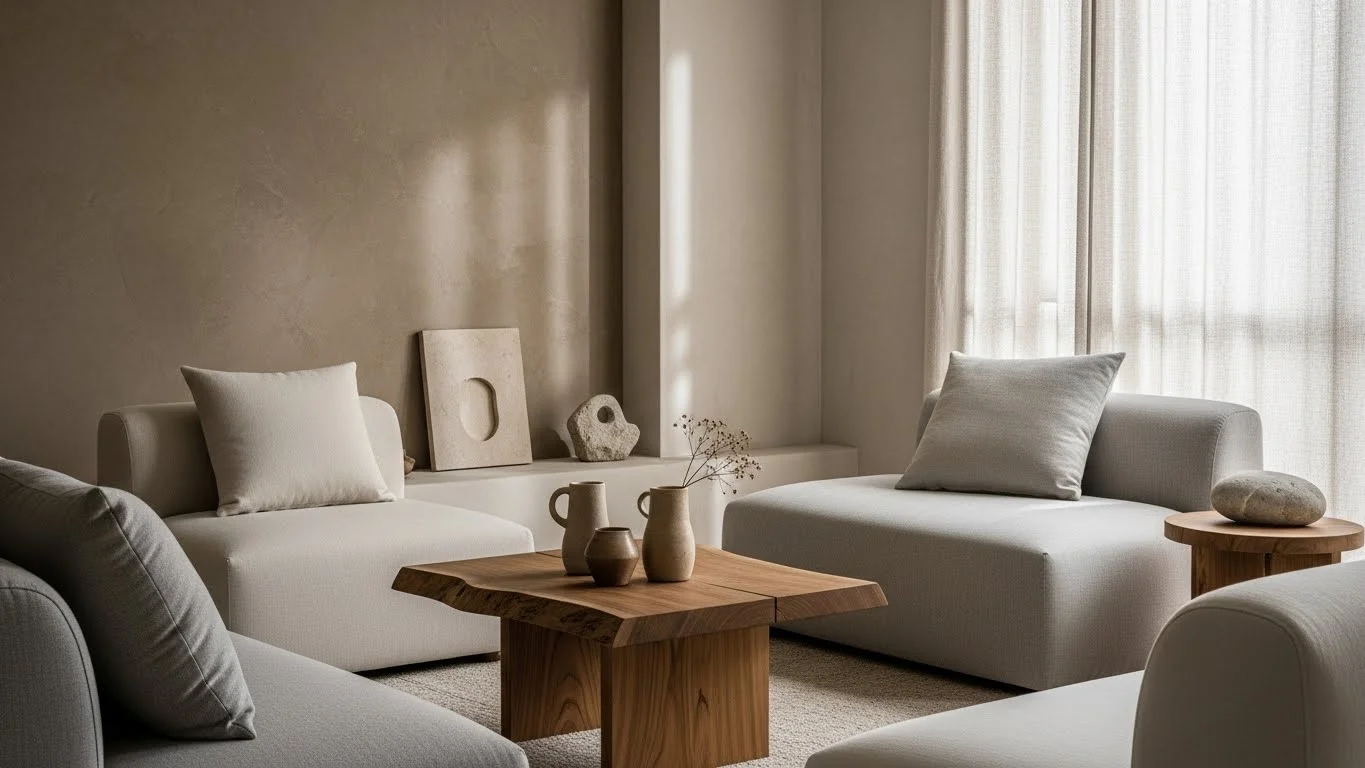
Wabi Sabi is more than a design style — it is a gentle philosophy rooted in the Japanese appreciation of simplicity, imperfection, and the quiet passage of time. These Wabi Sabi living room ideas help you create a space that feels grounded, intimate, and emotionally spacious. It is a style that encourages slowing down, reconnecting with nature, and embracing the beauty of things that are worn, handmade, or naturally evolving. Instead of striving for perfection, the Wabi Sabi home celebrates authenticity — the soft patina of wood, the uneven glaze of ceramic, the calmness of natural light.
In a world filled with noise and clutter, Wabi Sabi invites us to return to stillness. The living room becomes a sanctuary where form follows feeling, where natural materials take the lead, and where space breathes through negative space and gentle textures. It is a deeply personal style, allowing you to curate a home that holds emotional resonance rather than complexity. With earthy tones, organic forms, and imperfect surfaces, a Wabi Sabi living room feels like an exhale — a place where the mind rests and the heart softens.
In these 24 Wabi Sabi living room ideas, you’ll discover ways to bring warmth, meaning, and quiet beauty into your home. Each idea channels calmness through texture, nature, craftsmanship, and mindful simplicity — transforming your living room into a place where imperfection becomes art and everyday life feels beautifully grounded.
1. Embrace Natural, Earthy Color Palettes
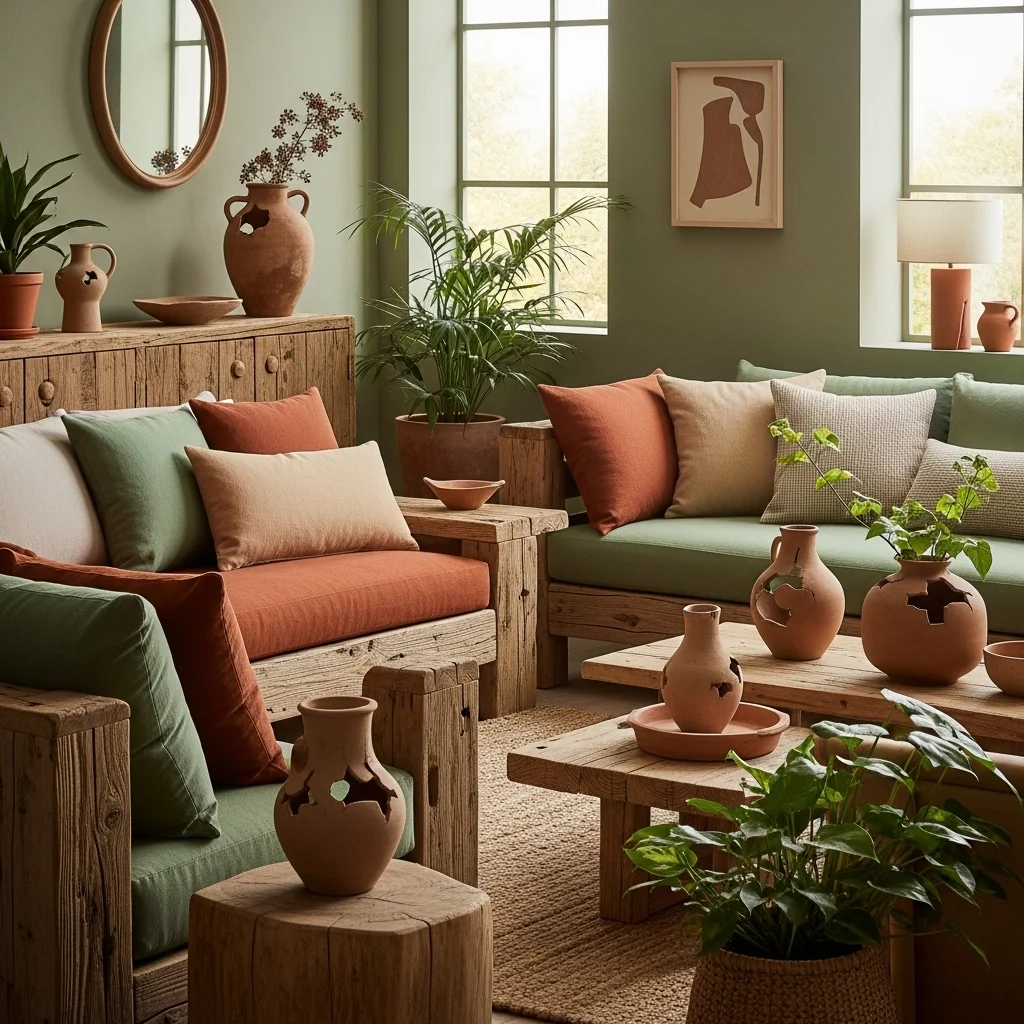
A Wabi Sabi living room begins with earthy tones that mimic the natural world — muted browns, sand, soft charcoal, clay, and warm beige. These colors create a gentle flow that soothes the senses and brings a grounding, organic presence to the room. When sunlight touches these shades, they feel soft, aged, and deeply comforting, offering a serene backdrop for furniture and meaningful accents.
This idea captures the heart of Wabi Sabi living room ideas, using color to evoke simplicity and emotional calm. Earthy neutrals form a quiet foundation that allows textures, natural materials, and organic shapes to shine. The palette becomes a meditation on warmth and balance, filling the room with understated beauty and deep tranquility.
2. Add Low, Minimalist Seating
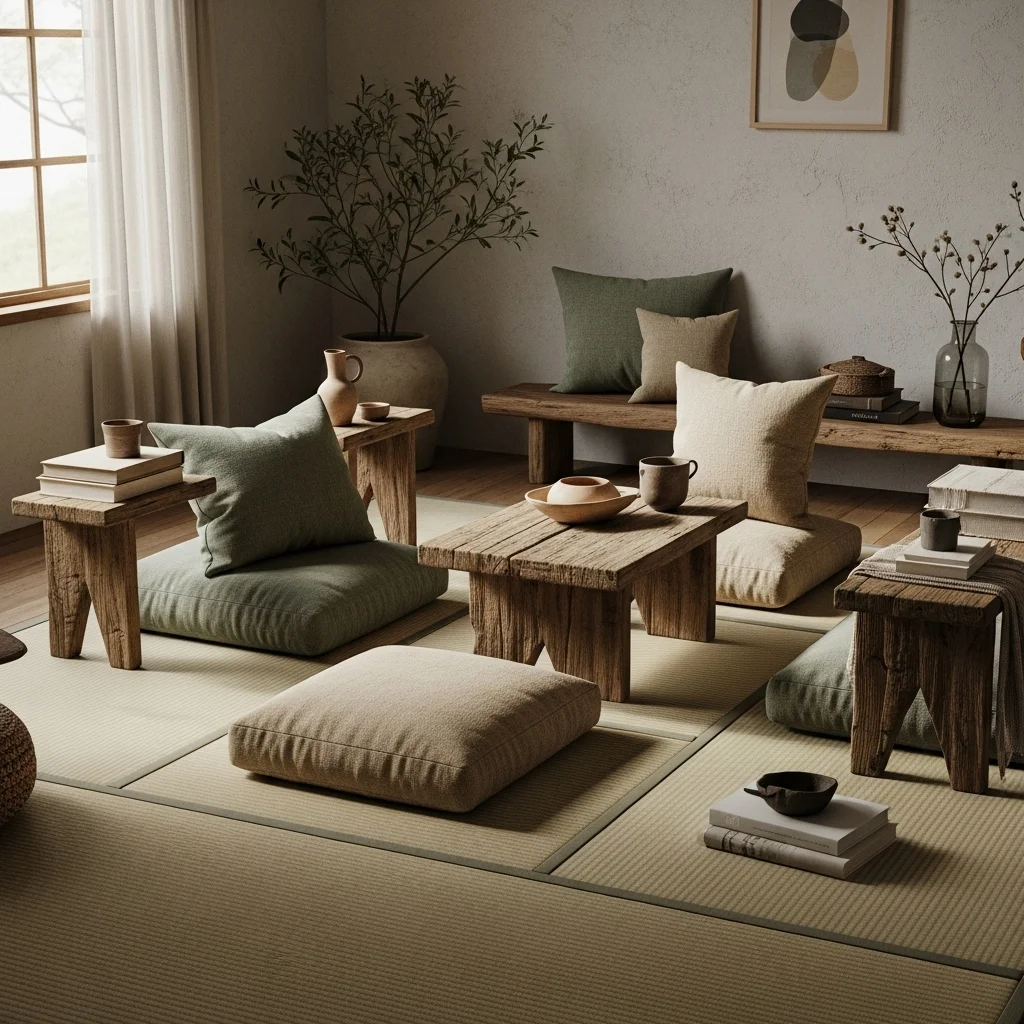
Low-profile sofas, floor cushions, or simple wooden benches create a relaxed and humble atmosphere. These pieces encourage a grounded way of living, connecting you physically and emotionally to the space. Their low height also enhances a sense of spaciousness, allowing the room to feel uncluttered and harmoniously minimal.
This approach reflects the essence of wabi sabi interior design, where comfort meets modesty and simplicity. Low seating brings intimacy to conversation, encourages mindful presence, and softens the room’s energy. It turns the living room into a quiet retreat that supports reflection, connection, and ease.
3. Showcase Natural Imperfections in Wood
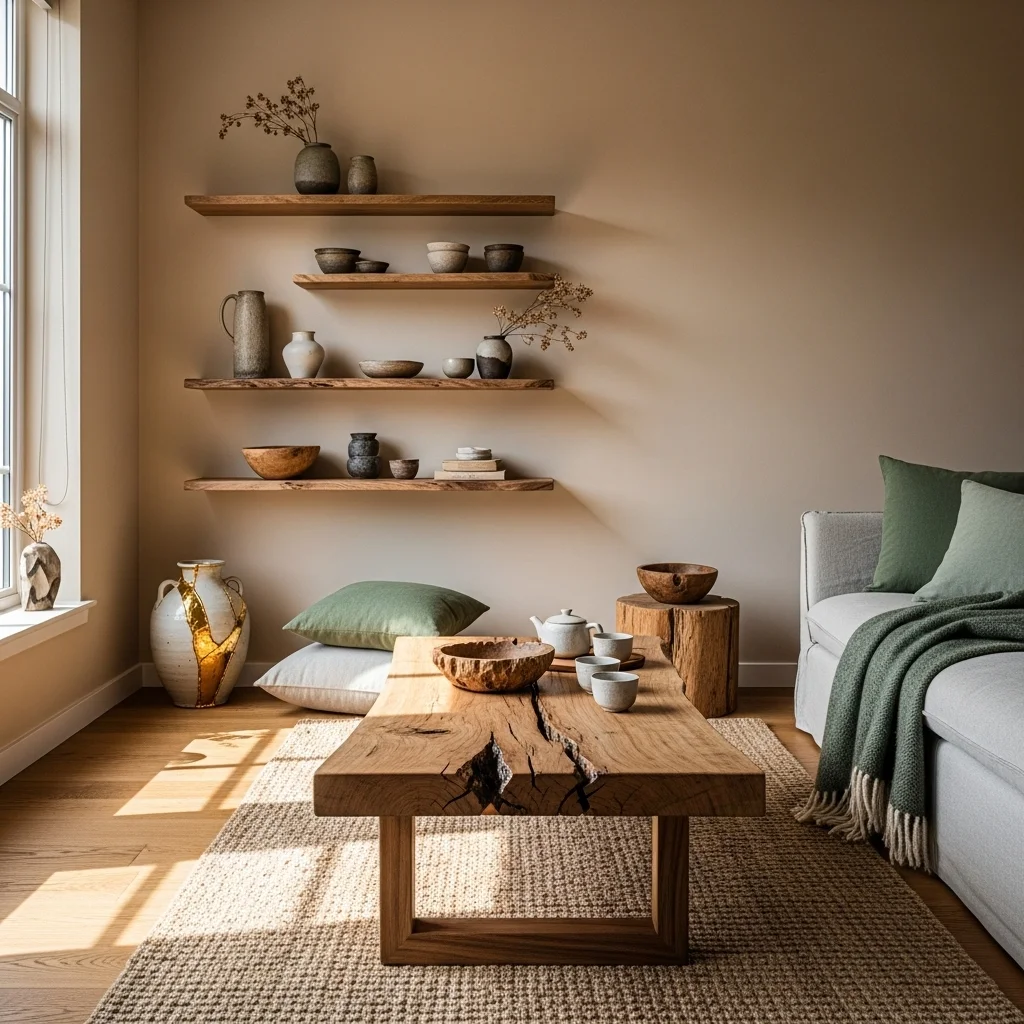
Choose furniture or accent pieces with visible knots, organic edges, and textured grain. These raw details tell the story of the tree, revealing its lifetime of growth, weathering, and quiet evolution. Whether it’s a coffee table, a wooden stool, or a shelving unit, natural wood adds warmth, soul, and a sense of heritage to the space.
This idea embraces the emotional honesty behind natural minimalist decor, celebrating imperfections as marks of beauty. The organic textures deepen the living room’s character, making the space feel grounded and connected to the natural world. It’s a reminder that beauty often lies in the unpolished and untouched.
4. Layer Soft, Organic Textiles
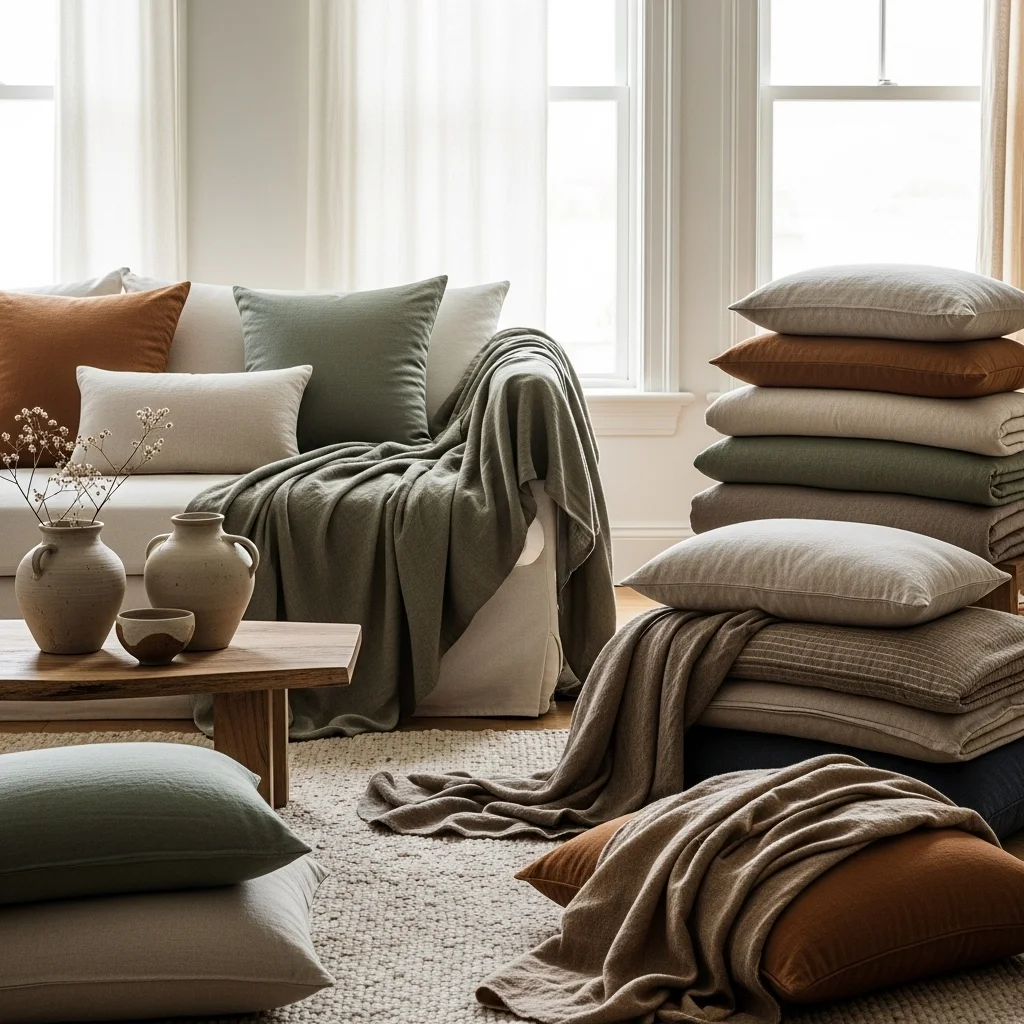
Linen throws, cotton blankets, wool rugs, and handmade cushions bring tactile richness into the room. Their soft wrinkles, loose weaves, and natural fibers enhance the lived-in feeling Wabi Sabi is known for. These textiles soften furniture edges and create gentle movement throughout the space.
This idea supports the sensory comfort behind Wabi Sabi living room ideas, turning your space into a sanctuary of touch and warmth. The organic textures bring emotional softness — a quiet invitation to relax, sit slowly, and enjoy the simple pleasure of authentic materials.
5. Display Handmade and Artisan Ceramics
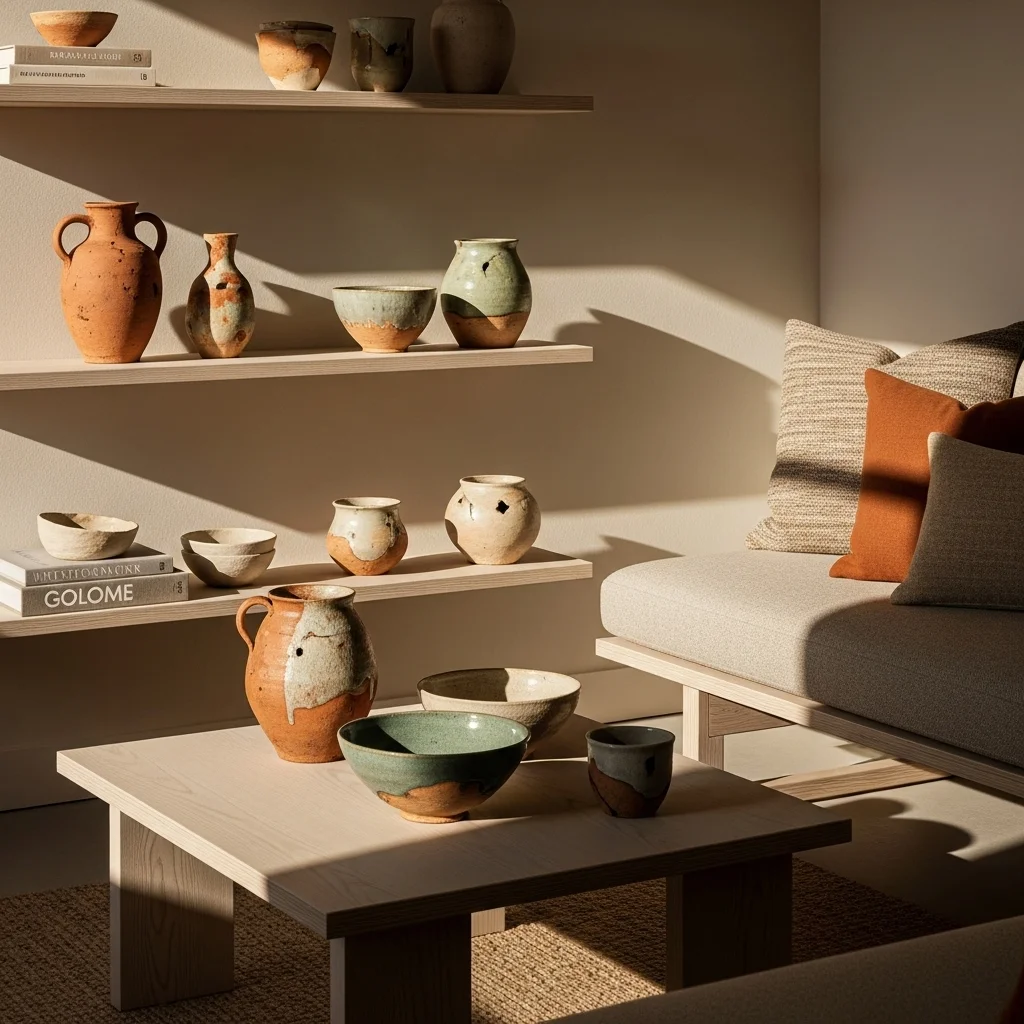
Hand-thrown ceramics with uneven shapes, rough edges, or imperfect glazes celebrate craftsmanship and individuality. A simple clay vase, a worn bowl, or a handcrafted cup can bring profound meaning to the room. Each piece holds character, warmth, and the subtle beauty of human touch.
This idea reflects the quiet artistry within wabi sabi interior design, where handmade pieces become emotional anchors. They remind us of slowness, creativity, and the beauty found in irregularity. These details elevate the living room with authenticity and soul.
6. Add Greenery With Natural, Organic Shapes
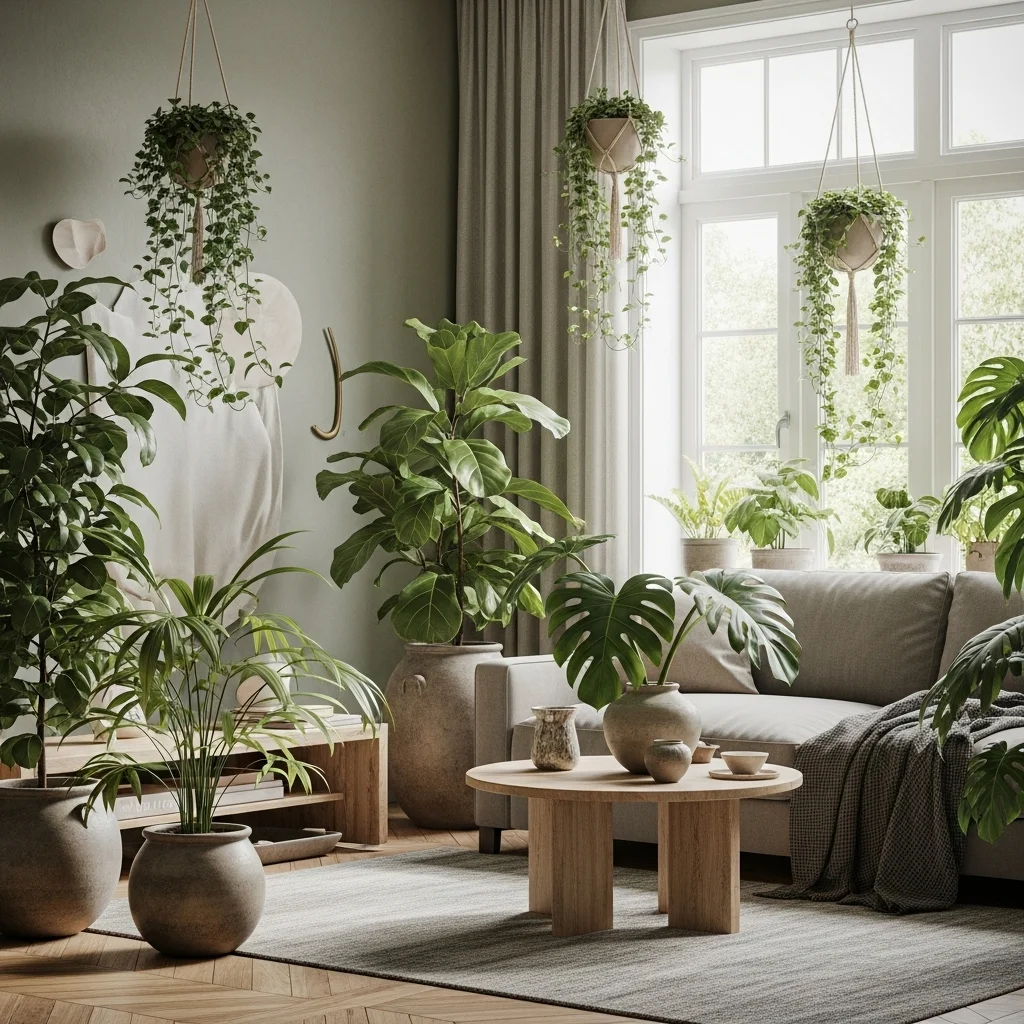
Choose plants with soft curves, asymmetrical growth, or gentle draping. Ferns, bonsai, olive branches, or dried botanicals bring life without overwhelming the space. Their natural imperfections become part of the room’s calm, inviting atmosphere.
This idea enhances the biophilic heart of Wabi Sabi living room ideas, grounding your space with living elements that evolve slowly over time. Plants nurture stillness and organic flow, bringing gentle movement and natural presence to the room.
7. Incorporate Worn, Weathered Furniture
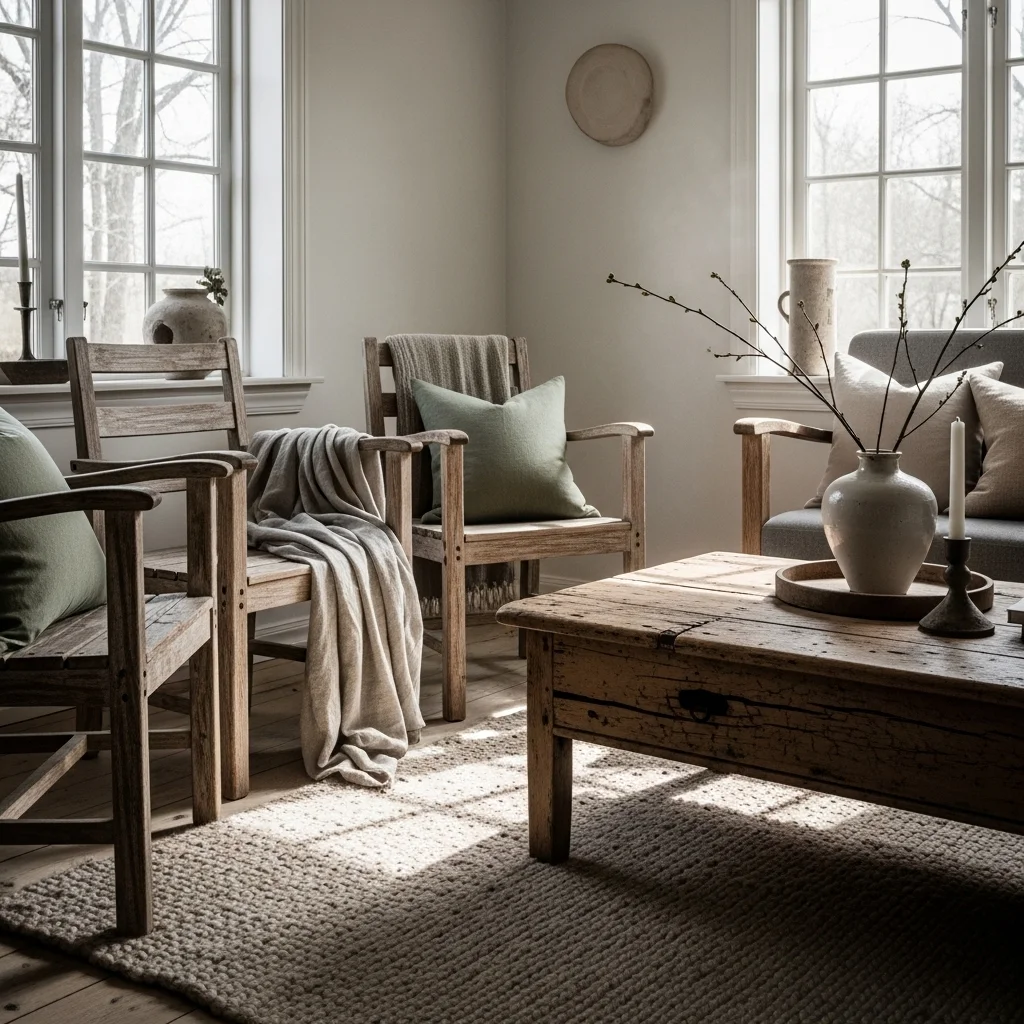
Vintage or weathered pieces — such as distressed wooden cabinets, aged metal stools, or antique trunks — add history and quiet nostalgia. Their imperfections tell stories through patina, scratches, and faded tones, making the room feel authentic and emotionally layered.
This idea embraces the soulful imperfection behind imperfect beauty design details, reminding you that age enriches character. Worn furniture offers comfort through familiarity, grounding the living room in warmth, memory, and organic charm.
8. Use Natural Stone Accents
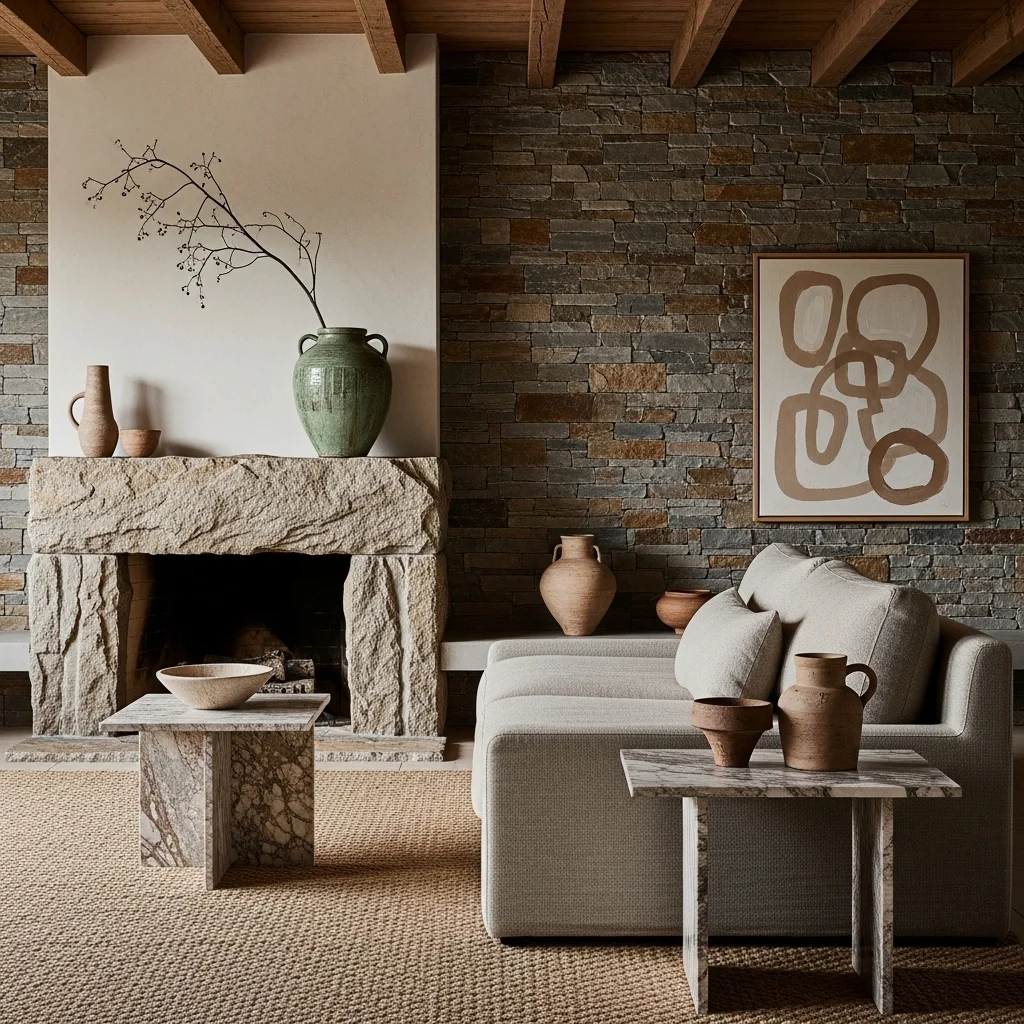
Stone trays, rough-edged coasters, or a natural stone side table bring solidity and grounding energy to the space. Their organic shapes and cool textures contrast beautifully with soft textiles and warm wood, creating balance and harmony.
This idea supports the elemental nature of Wabi Sabi living room ideas, adding weight and timelessness. Stone brings a sense of permanence and natural authenticity, grounding the space in simplicity and earth-born beauty.
9. Keep Décor Minimal and Meaningful
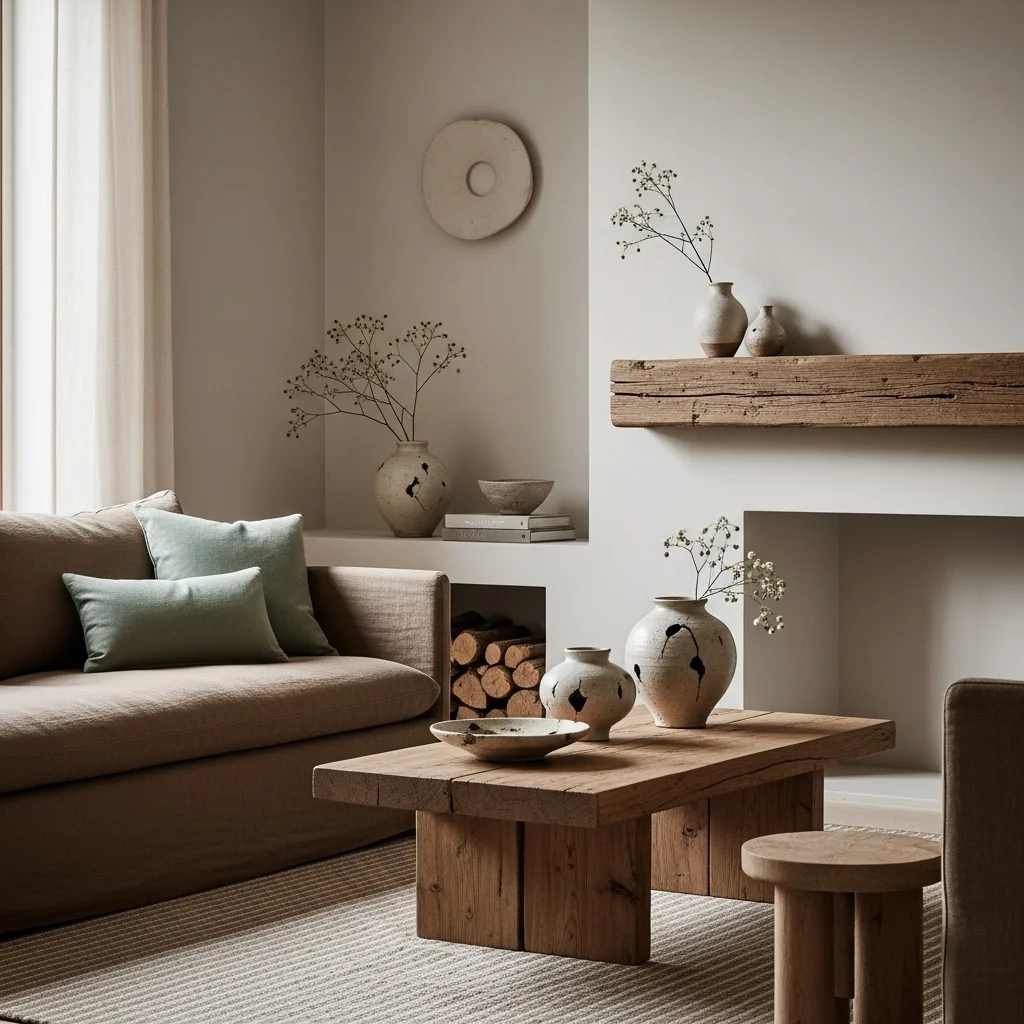
Instead of filling the room with many objects, choose only a few items that carry emotional significance. A single branch in a vase, a favorite ceramic piece, or a handmade bowl can speak more than an overcrowded shelf. Negative space becomes a powerful design element.
This idea reflects the intentionality behind natural minimalist decor, where each object has purpose and meaning. The living room feels uncluttered and calming, offering visual breathing room that enhances relaxation and emotional presence.
10. Add Soft, Diffused Lighting
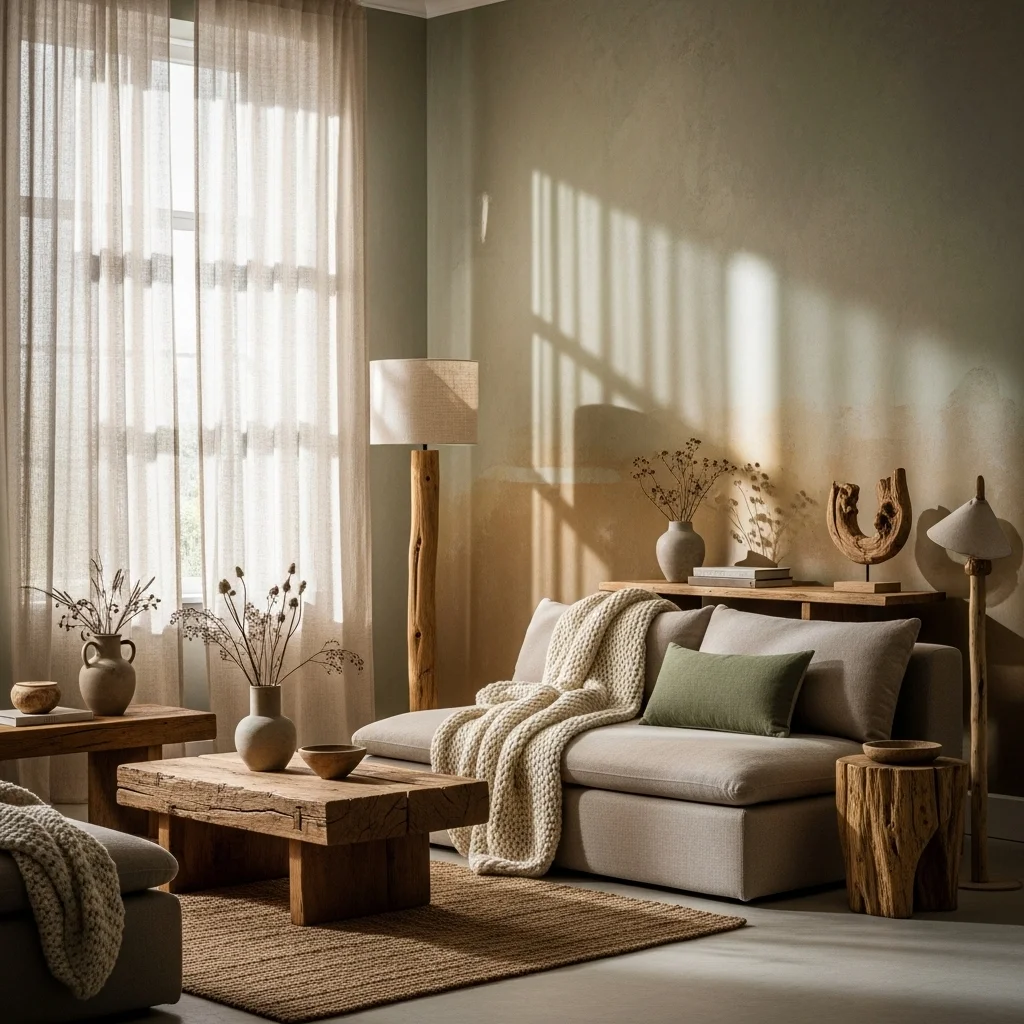
Use paper lanterns, linen lampshades, candles, or frosted bulbs to create gentle, ambient lighting. Harsh illumination disrupts Wabi Sabi’s serenity, so soft, layered light is key to creating warmth and emotional quietness in the room.
This idea supports the atmospheric calm behind Wabi Sabi living room ideas, turning light into a soft companion rather than a spotlight. Diffused lighting nurtures peaceful evenings and invites slow, mindful living.
11. Use Low, Simple Coffee Tables
A low wooden or stone coffee table enhances minimalism and encourages grounded living. Its simple structure becomes a quiet focal point that complements the earthy color palette and natural textures around it. Choose tables with visible grain, uneven edges, or a rustic finish for authenticity.
This idea highlights the simplicity central to wabi sabi interior design, where furniture feels honest and unpretentious. The coffee table becomes a symbol of calm gathering — a place for tea, books, and moments of quiet reflection.
12. Add Textured Wall Finishes

Clay walls, limewash paint, or gently textured plaster bring depth and organic softness to the room. Their subtle variations catch light beautifully, making the walls feel alive with gentle, understated movement. No two surfaces look the same — and that is exactly the charm.
This idea enhances the organic richness of Wabi Sabi living room ideas, embracing walls as living elements rather than blank backgrounds. The textures bring emotional warmth and a handcrafted feeling, turning your living room into a serene, intimate sanctuary.
13. Highlight Open Space and Negative Space
Wabi Sabi design thrives on open areas where the eye can rest. Leaving intentional empty space between furniture pieces, on shelves, or around décor creates a calming rhythm. This openness prevents the room from feeling crowded and brings a soothing sense of breathing room. It’s a reminder that beauty exists not only in objects but also in the quiet spaces between them.
This concept strengthens the minimalist heart of Wabi Sabi living room ideas, where spaciousness feels emotionally grounding. Negative space becomes a design tool, adding clarity, calm, and gentle flow. It allows every object to hold deeper meaning, helping the room feel lighter, more intentional, and profoundly peaceful.
14. Choose Timeworn Rugs and Textiles
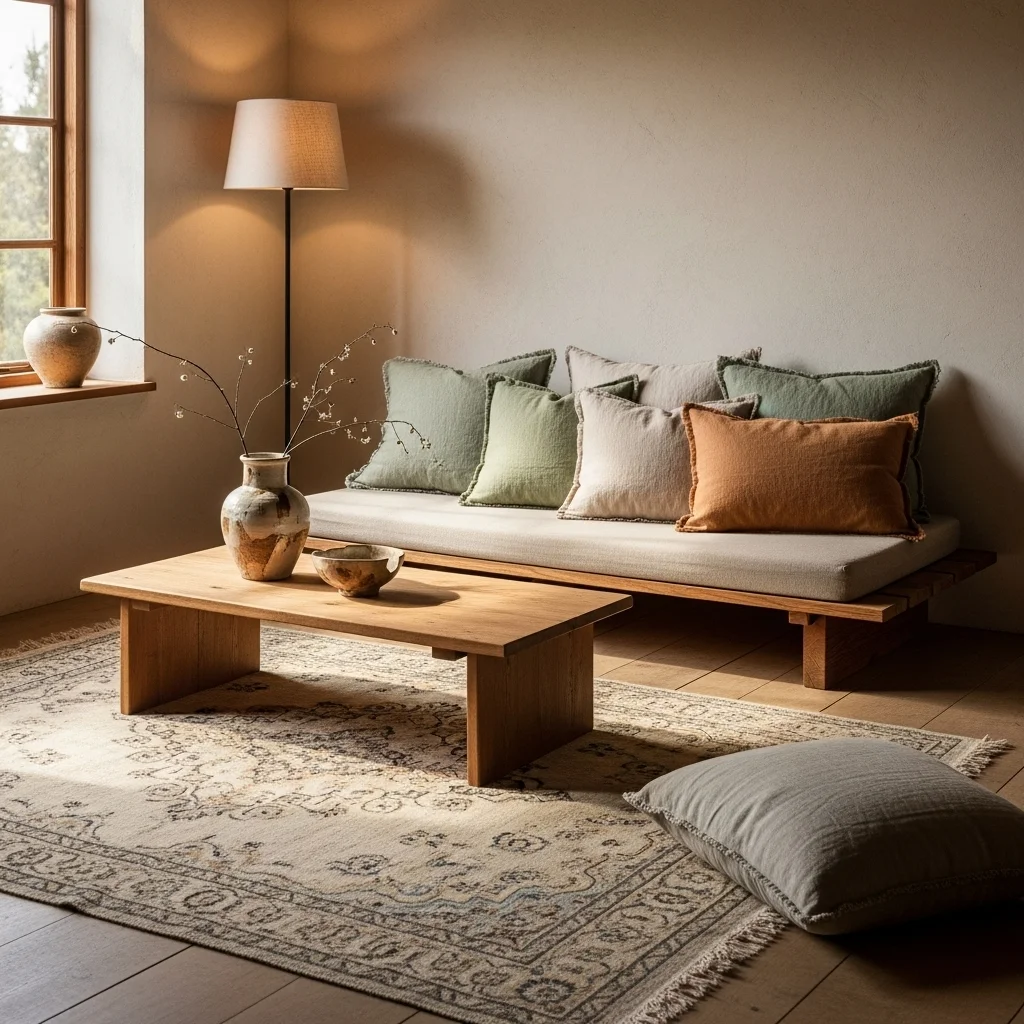
Vintage rugs with faded colors, softened edges, or simple handwoven patterns add character and warmth. Their worn appearance reflects the passage of time, giving the living room a sense of lived-in comfort. Neutral tones, earthy stripes, or minimal geometric patterns enhance the natural aesthetic without overpowering the space.
This idea expresses the soulful wear of imperfect beauty design details, adding emotional softness to the room. A timeworn rug anchors the seating area and brings warmth underfoot. The gentle aging tells a story, enriching your living room with memory, history, and quiet familiarity.
15. Incorporate Organic, Asymmetrical Shapes
Use furniture and décor with soft, curved, or irregular shapes — round tables, uneven ceramic bowls, or organically carved benches. These imperfect lines mimic nature’s gentle forms, adding emotional fluidity to the room. The subtle asymmetry makes the space feel warm, dynamic, and deeply human.
This idea enhances the natural flow behind wabi sabi interior design, inviting movement and softness. Asymmetrical forms break the monotony of straight lines, giving your living room a sense of gentle evolution. The shapes feel honest and comforting, grounding the room in authenticity.
16. Add Wabi Sabi Artwork or Calligraphy

Choose simple artwork inspired by nature, Japanese calligraphy, ink illustrations, or minimal abstract pieces. These artworks often feature soft strokes, earth-inspired colors, or intentional emptiness, creating a sense of peace. A single piece of art can become a quiet focal point that speaks volumes through simplicity.
This idea deepens the poetic presence of Wabi Sabi living room ideas, letting artwork embody serenity. The organic brushstrokes and open backgrounds echo the design philosophy, helping the space feel meditative, intimate, and emotionally expressive.
17. Use Soft Linen or Cotton Curtains
Lightweight, natural-fiber curtains add gentle movement and soft diffused light. Their wrinkled texture and unstructured drape enhance the lived-in charm of Wabi Sabi style. When the breeze moves the curtains, it brings subtle motion and a sense of calm energy into the living room.
This idea enriches natural minimalist decor, adding softness without excess. The curtains create a quiet boundary between indoors and outdoors, filtering sunlight into a warm, serene glow. They give the room a comforting, breathable feel that aligns beautifully with mindful living.
18. Add a Minimal, Low-Maintenance Plant Corner
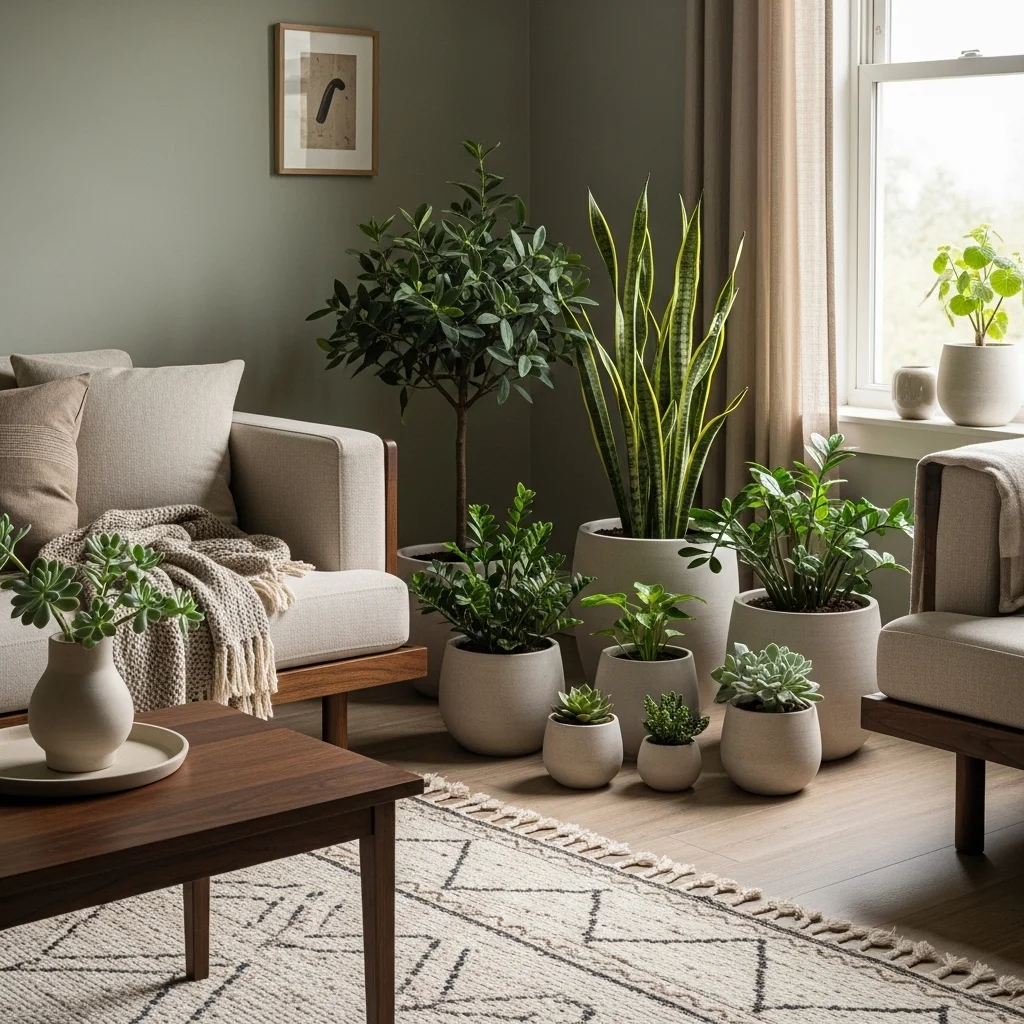
Create a small plant corner using hardy, slow-growing plants like snake plants, pothos, or bonsai. Choose pots with natural textures like clay, stone, or handmade ceramic. Keep the arrangement uncluttered and organic, allowing space for each plant to shine without becoming a busy display.
This idea celebrates the organic calm behind Wabi Sabi living room ideas, bringing life into the room in a grounded, peaceful way. Plants become symbols of slow, steady growth — reflecting the deeper philosophy of appreciating what evolves in its own time.
19. Keep Furniture Arrangements Open and Flowing
Arrange seating and tables in a way that encourages movement and openness. Avoid rigid symmetry and prioritize gentle flow. Leave walkways uncluttered, allowing the living room to feel expansive and quiet. This layout fosters a sense of ease and balance.
This idea reinforces the spatial harmony of wabi sabi interior design, helping the room feel intuitive and calming. An open arrangement creates emotional spaciousness, allowing your living room to become a place where energy circulates softly and naturally.
20. Add Stone or Clay Candle Holders
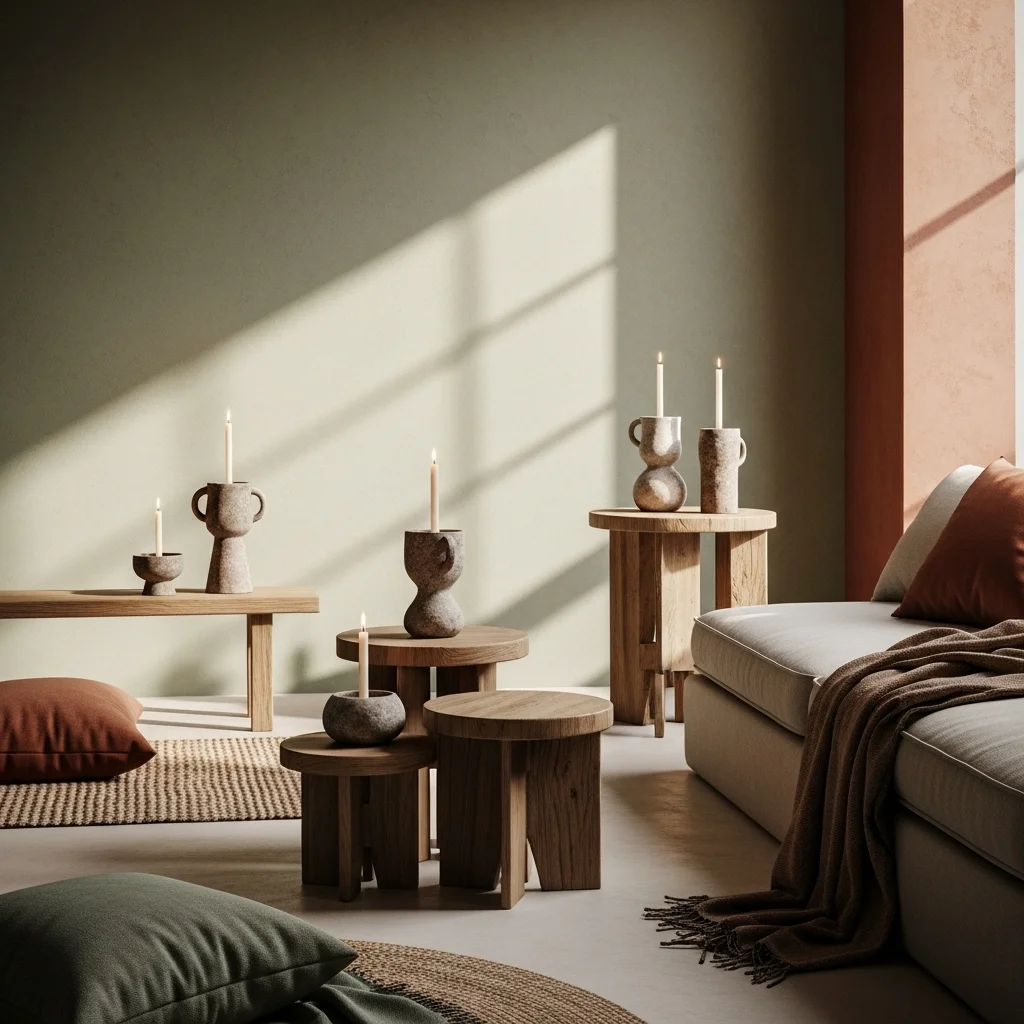
Handmade candle holders made from stone, clay, or rough ceramic add warmth and natural charm. When lit, the soft glow of candlelight enhances the room’s serenity, illuminating textured surfaces gently. The imperfect shapes and raw materials deepen the emotional atmosphere.
This idea enhances the sanctuary-like feel of imperfect beauty design details, bringing quiet ritual into daily life. Candlelight softens the room’s energy, inviting peaceful evenings filled with stillness, reflection, and grounding warmth.
21. Choose Simple Wooden Shelving
Minimal wooden shelves with visible grain or handcrafted details create beautiful displays for ceramics, plants, or books. Keep the shelves lightly styled to avoid clutter — a few meaningful items are enough. The simplicity supports the living room’s natural, intentional atmosphere.
This idea represents the mindful essence behind Wabi Sabi living room ideas, merging function with authenticity. Wooden shelves become calm visual anchors, adding warmth while preserving openness and emotional balance.
22. Add Grounding Stone or Clay Sculptures

Organic sculptures made from natural materials add artful presence to your living room. Their grounded weight and imperfect shapes create a sense of stability and depth. These pieces don’t need to be elaborate — even a simple hand-shaped clay form can add quiet poetry.
This idea deepens the artistic soul of wabi sabi interior design, connecting your space to earth and craft. The sculptures celebrate human touch and natural formation, enriching the room with texture, meditation, and emotional grounding.
23. Let Natural Light Shape the Mood
Allow sunlight to become part of the design. Keep windows simple and unblocked so light can shift gently through the day. The changing glow creates natural shadow play across textured surfaces, bringing the room to life without forcing decoration.
This idea enhances the ephemeral nature of Wabi Sabi living room ideas, reminding you that beauty changes moment to moment. Light becomes a living design element — soft, fleeting, and deeply evocative.
24. Keep the Room Quiet and Uncluttered
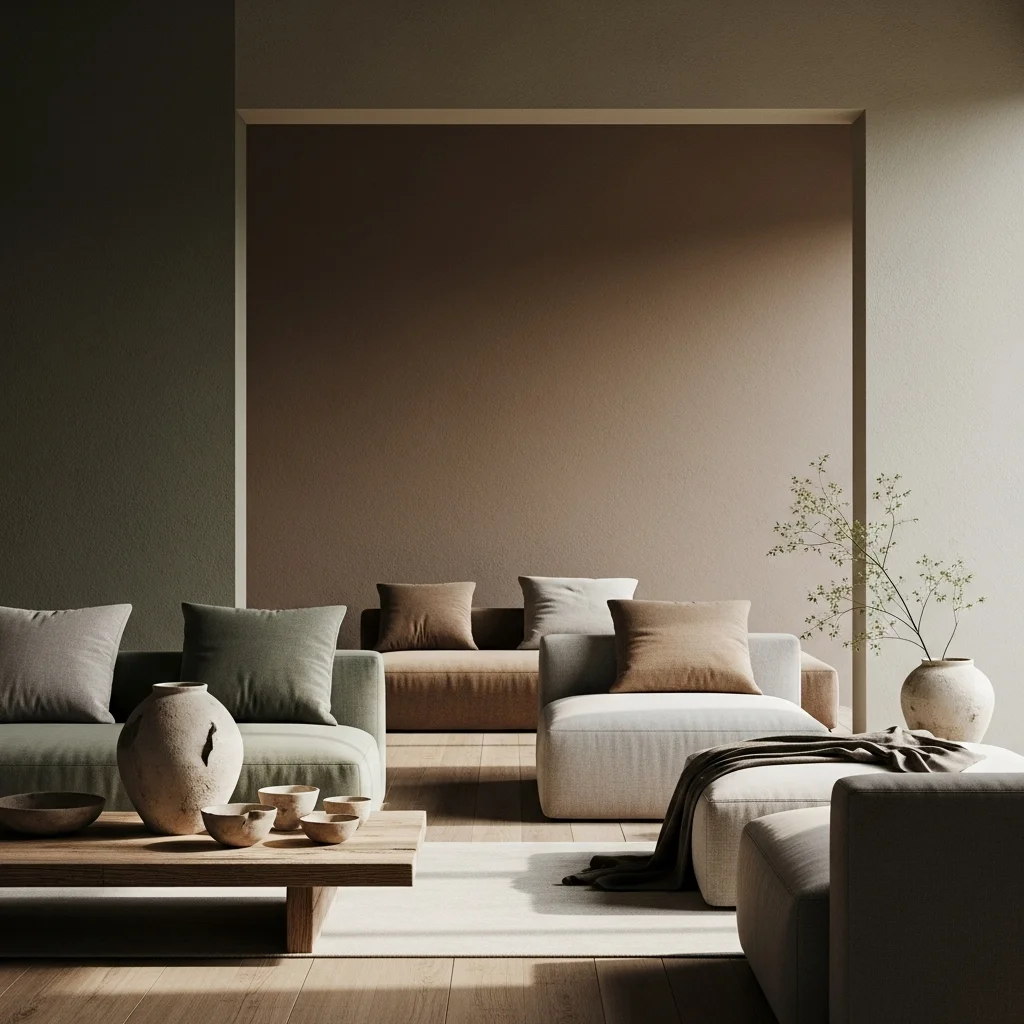
Above all, Wabi Sabi thrives on calm simplicity. Keep surfaces clean, décor intentional, and furniture minimal. Create a room where the mind can rest and the senses can breathe. Instead of pursuing perfection, allow the room to evolve naturally with you.
This idea embodies the deepest truth of natural minimalist decor, shaping a living room that feels peaceful, real, and emotionally nourishing. When the space remains uncluttered, you invite clarity, grounding, and gratitude into everyday life.
Final Thoughts
Wabi Sabi living rooms aren’t just designed — they’re felt. These Wabi Sabi living room ideas encourage you to create a space that honors natural beauty, embraces imperfection, and offers emotional peace. With earthy tones, organic textures, and quiet openness, your living room becomes a gentle sanctuary where life slows down and simplicity becomes a source of comfort.
What makes Wabi Sabi so moving is its honesty. It highlights what is real: wood that ages softly, ceramics shaped by hand, fabrics that wrinkle naturally, and light that changes throughout the day. These qualities invite you to connect with the room on a deeper level, appreciating each moment and surface as part of a greater story.
When you embrace Wabi Sabi, you create a home that supports mindful living. It becomes a place where imperfection is welcome, where silence feels warm, and where the natural world flows gently into everyday space. This philosophy turns your living room into a timeless refuge for rest, reflection, and authenticity.
FAQs About Wabi Sabi Living Rooms
Q1: What is the main color palette for Wabi Sabi design?
Earthy tones like sand, taupe, charcoal, clay, beige, and soft green dominate the palette.
Q2: Can I mix Wabi Sabi with modern décor?
Yes — Wabi Sabi blends beautifully with modern minimalism, Scandinavian style, and Japandi aesthetics.
Q3: Does Wabi Sabi require expensive décor?
Not at all. Handmade, thrifted, and natural materials are central to the style — imperfections add value.
Q4: What materials work best?
Wood, stone, clay, linen, cotton, wool, bamboo, and raw ceramics are essential for organic authenticity.
Q5: How do I keep the living room from feeling empty?
Use meaningful items, layered textures, warm lighting, and organic shapes — simplicity, not emptiness, is the goal.