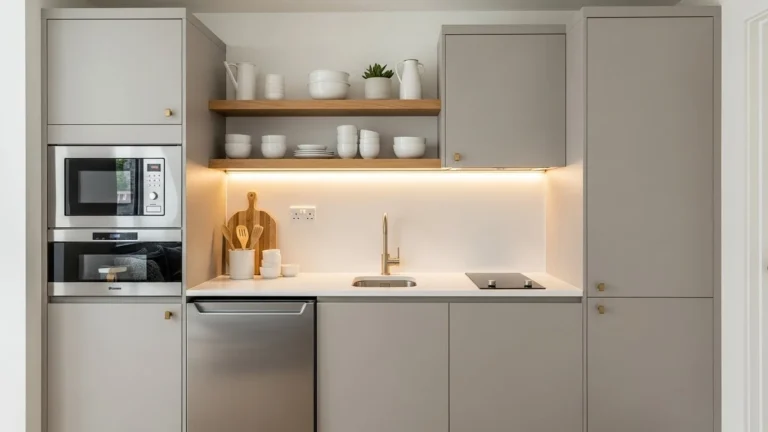
22 Kitchen Island Trim Ideas for Modern, Stylish, and Detailed Kitchens
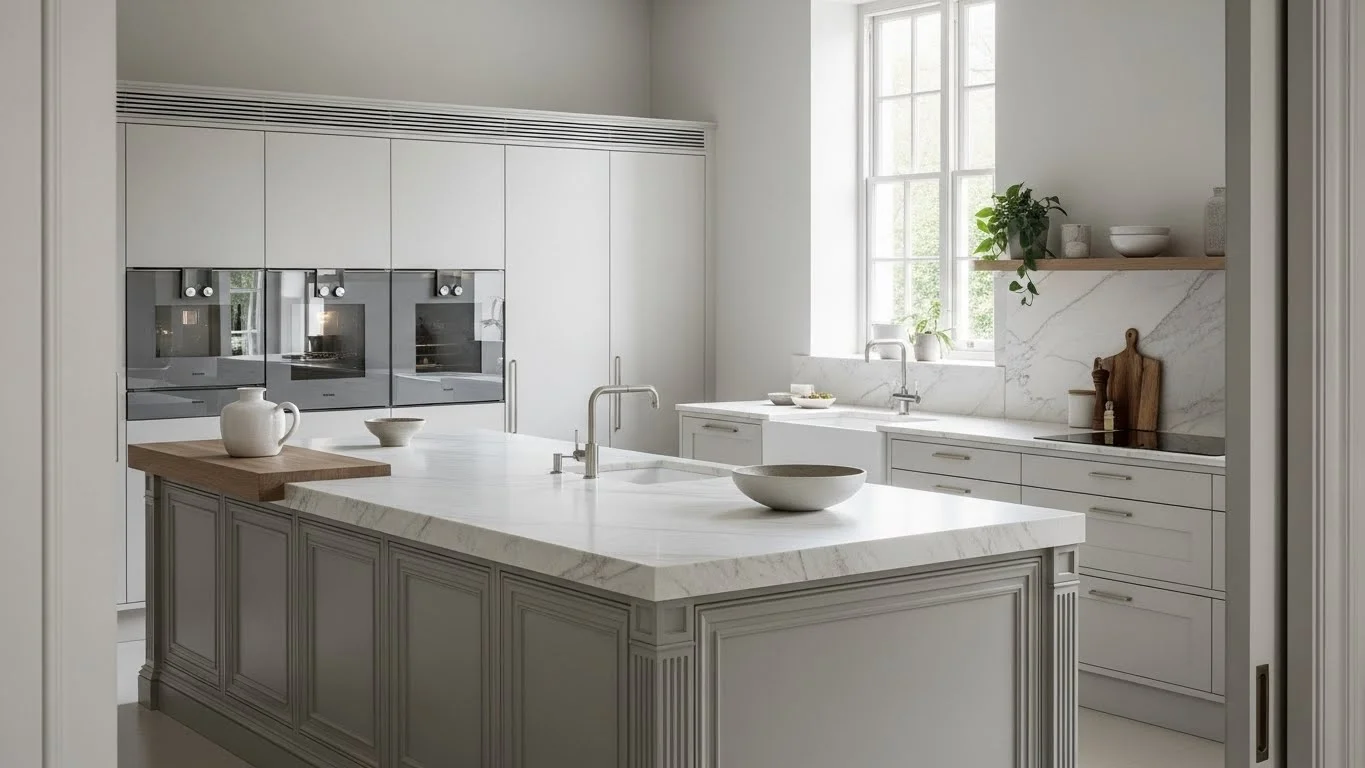
The kitchen island isn’t just a workspace — it’s the visual and functional centerpiece of the modern home. Trims and moldings can elevate this central feature from simple to stunning, adding depth, dimension, and personality. These kitchen island trim ideas show how thoughtful detailing turns your kitchen into a masterpiece of craftsmanship and style.
From sleek contemporary edges to classic paneled finishes, the right trim brings balance to form and function. Whether your kitchen leans minimalist, farmhouse, or transitional, well-designed trims enhance structure and proportion while highlighting material beauty.
This guide explores 22 kitchen island trim ideas to inspire your next remodel or DIY project. Each design blends art and practicality, showing how subtle architectural choices can redefine your kitchen’s personality — making it refined, grounded, and unforgettable.
1. Add Decorative Base Molding
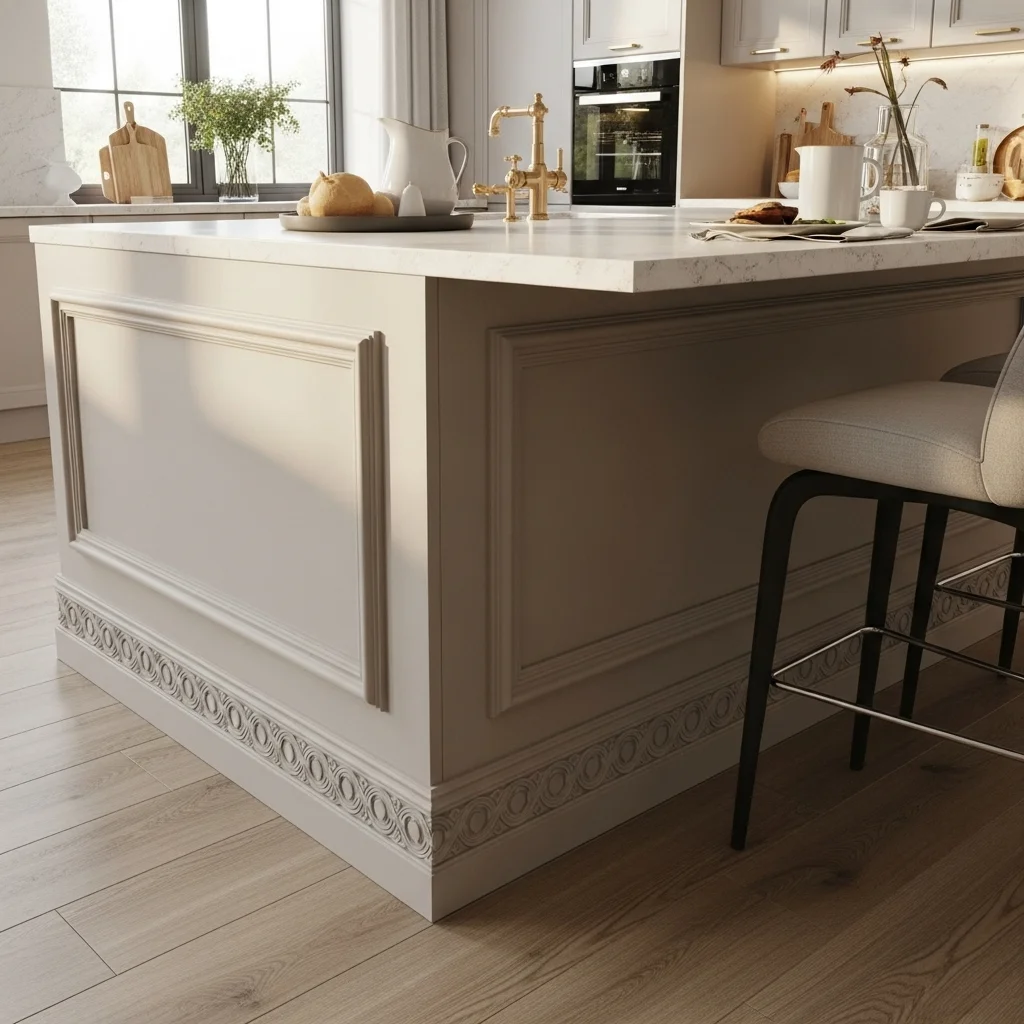
Base molding brings a finished, grounded look to your kitchen island. It conceals seams and adds subtle dimension while giving the island a furniture-like appearance. Choose a profile that complements your cabinet style — simple for modern kitchens or ornate for traditional designs.
These trims belong to stylish kitchen detailing that ties your cabinetry and flooring together seamlessly. Base moldings also help protect the lower edges from wear, making them both beautiful and functional additions to your space.
2. Use Shiplap or V-Groove Panels
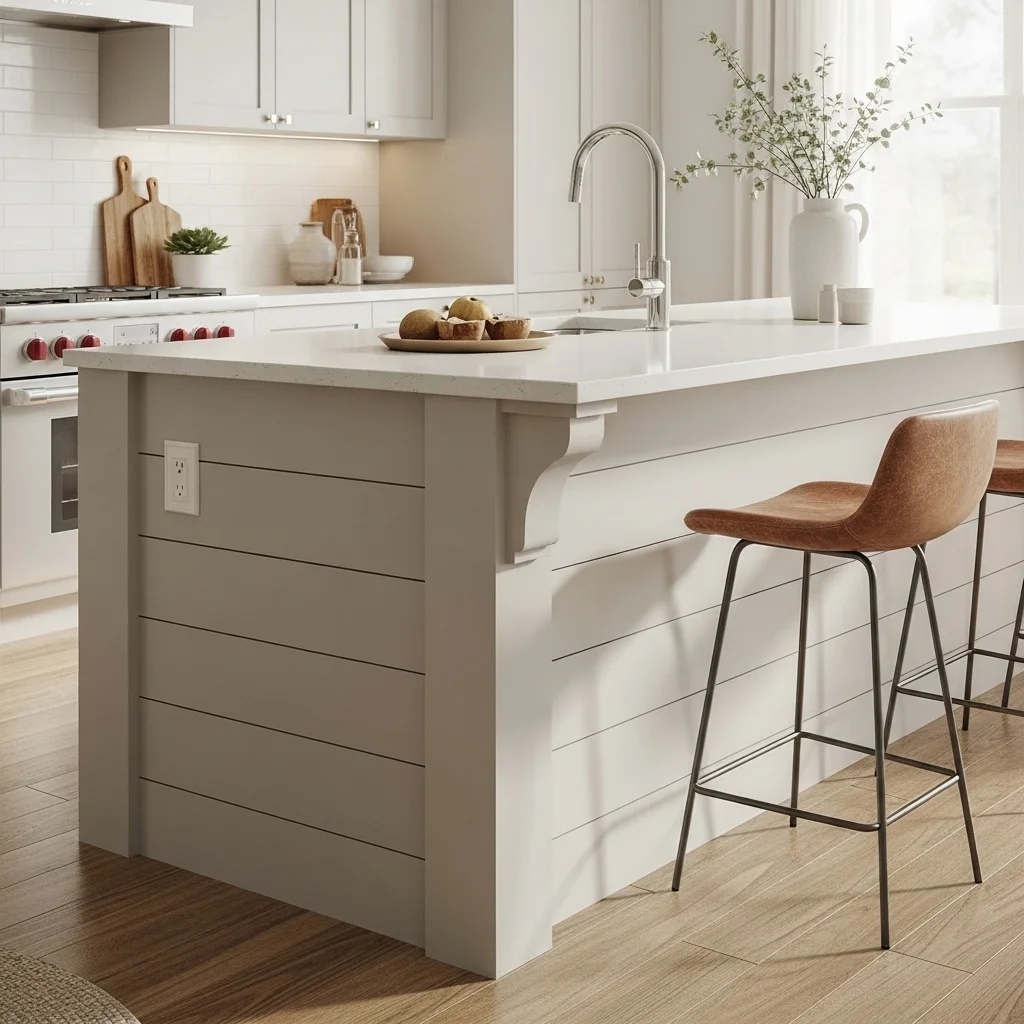
Shiplap adds cozy character and texture to your island’s base. The linear pattern draws the eye horizontally, making your kitchen appear wider and more inviting.
Whether painted white for coastal charm or stained wood for warmth, shiplap defines modern kitchen design that values clean lines with personality. It’s a simple upgrade that feels intentional and timeless, blending rustic warmth with contemporary finesse.
3. Incorporate Beadboard for Cottage Charm

Beadboard paneling instantly infuses charm and texture into your island. The vertical grooves add rhythm, making the island stand out without overwhelming the space.
Paint it soft cream, sage, or muted gray for a serene touch. Beadboard celebrates woodwork and molding styles that bring a handcrafted, heritage feel into even the most modern kitchens.
4. Add Contrasting Trim Colors

For bold contrast, paint the island trim in a shade different from the cabinetry — black on white, or navy against natural oak. This visual break adds sophistication and dimension.
Contrasting trims are key decorative island accents that highlight craftsmanship while giving your space a tailored, design-forward appearance. They turn even simple cabinetry into a statement piece.
5. Install Corner Molding for Definition

Corner moldings create smooth transitions where panels meet, protecting edges while emphasizing structure. They can be subtle or pronounced, depending on your aesthetic goals.
In kitchen island trim ideas, corner moldings are the unsung heroes of refinement. They define edges beautifully, adding polish and geometry to your island’s overall form.
6. Add Fluted or Reeded Details
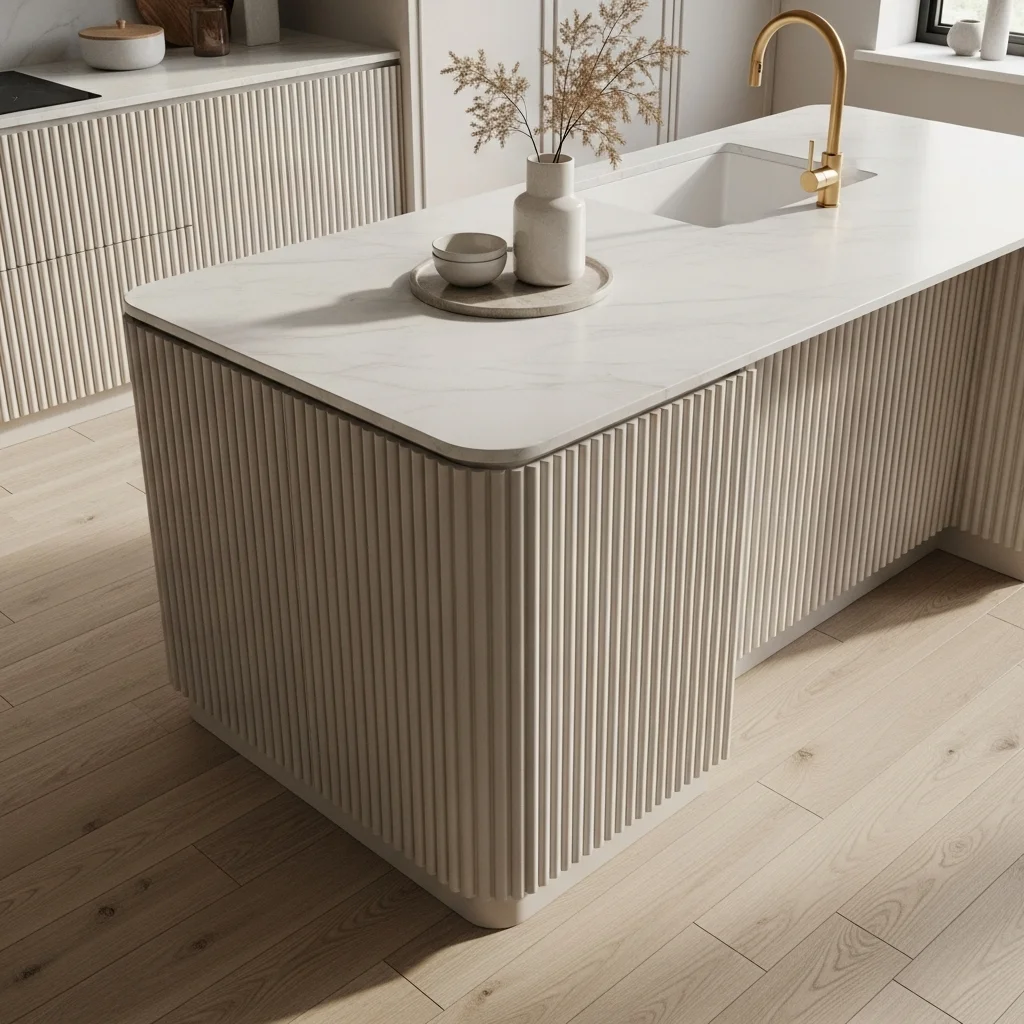
Fluting brings texture and luxury to your island’s sides. These vertical grooves add depth and play with light, giving a sculptural quality to flat surfaces.
Fluted designs are trending in modern kitchen design, offering both tactile interest and architectural rhythm. Whether in wood or stone, they turn your island into a centerpiece of artistry and sophistication.
7. Try X-Brace or Crossbuck Accents
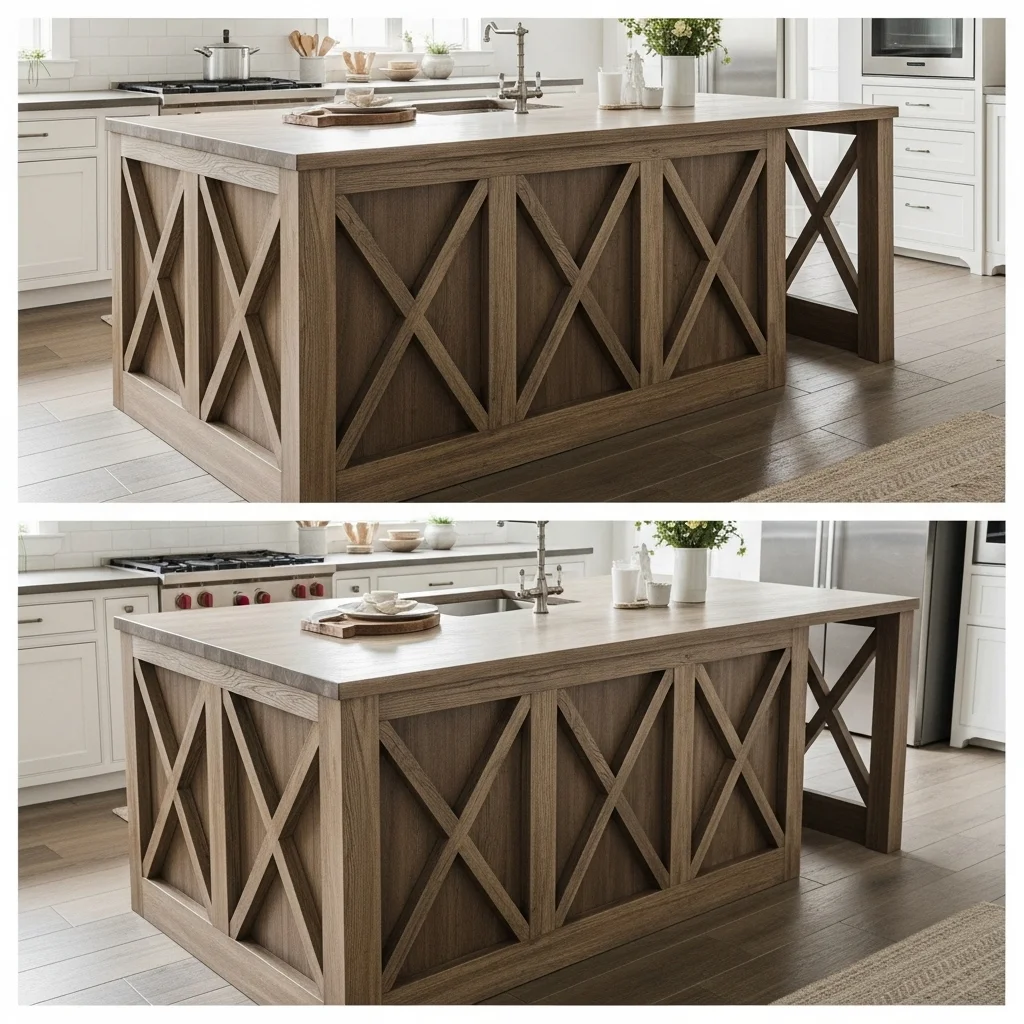
X-brace details give your kitchen island a rustic farmhouse or industrial flair. Typically made from wood or metal, they add structure and personality without feeling heavy.
These braces represent custom kitchen craftsmanship, celebrating both design and function. They’re ideal for large open kitchens that crave character and subtle visual contrast.
8. Include Crown Molding for Elegance
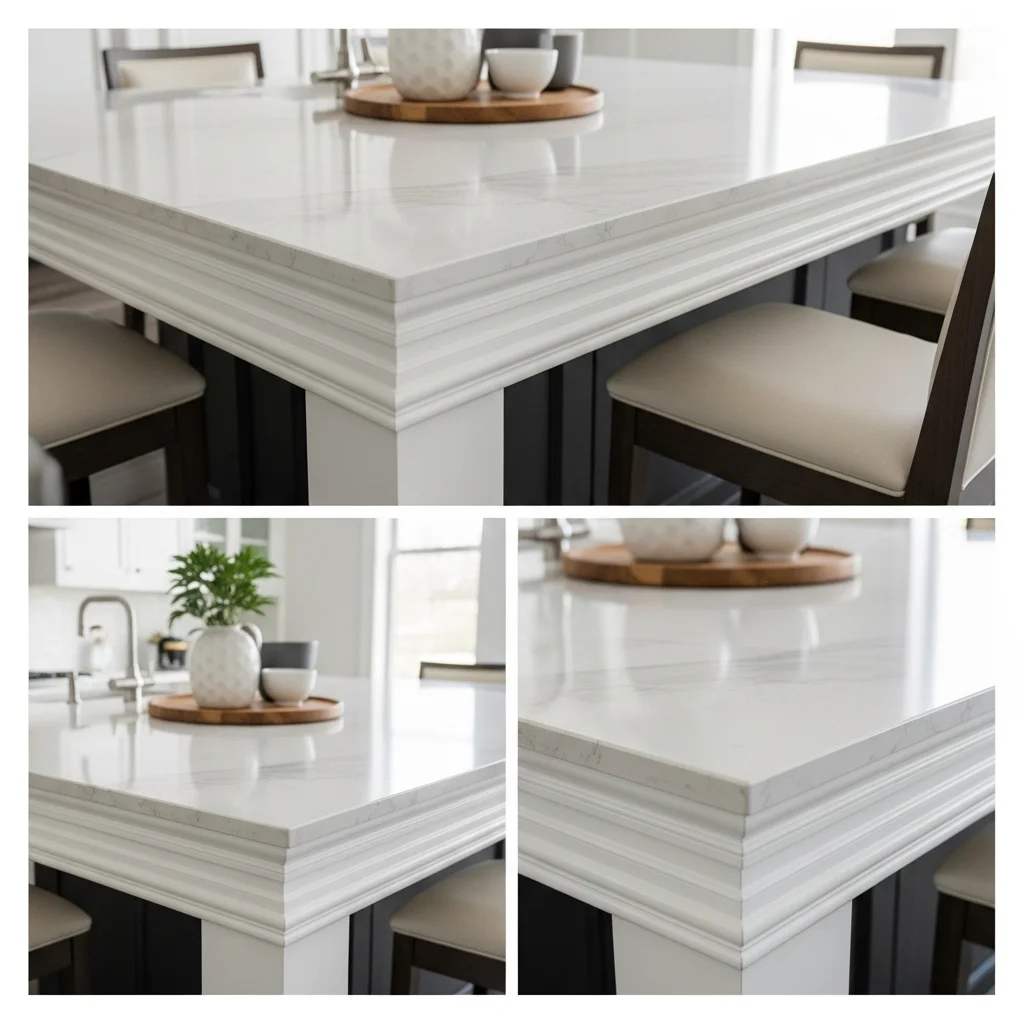
Though typically seen on upper cabinets, crown molding can also grace the top or base of an island. It adds a touch of formality and grandeur, especially in traditional or transitional kitchens.
This trim style enhances woodwork and molding styles that emphasize symmetry and polish. It turns an ordinary island into an architectural focal point of timeless elegance.
9. Use Metal Edge Trim for a Modern Edge
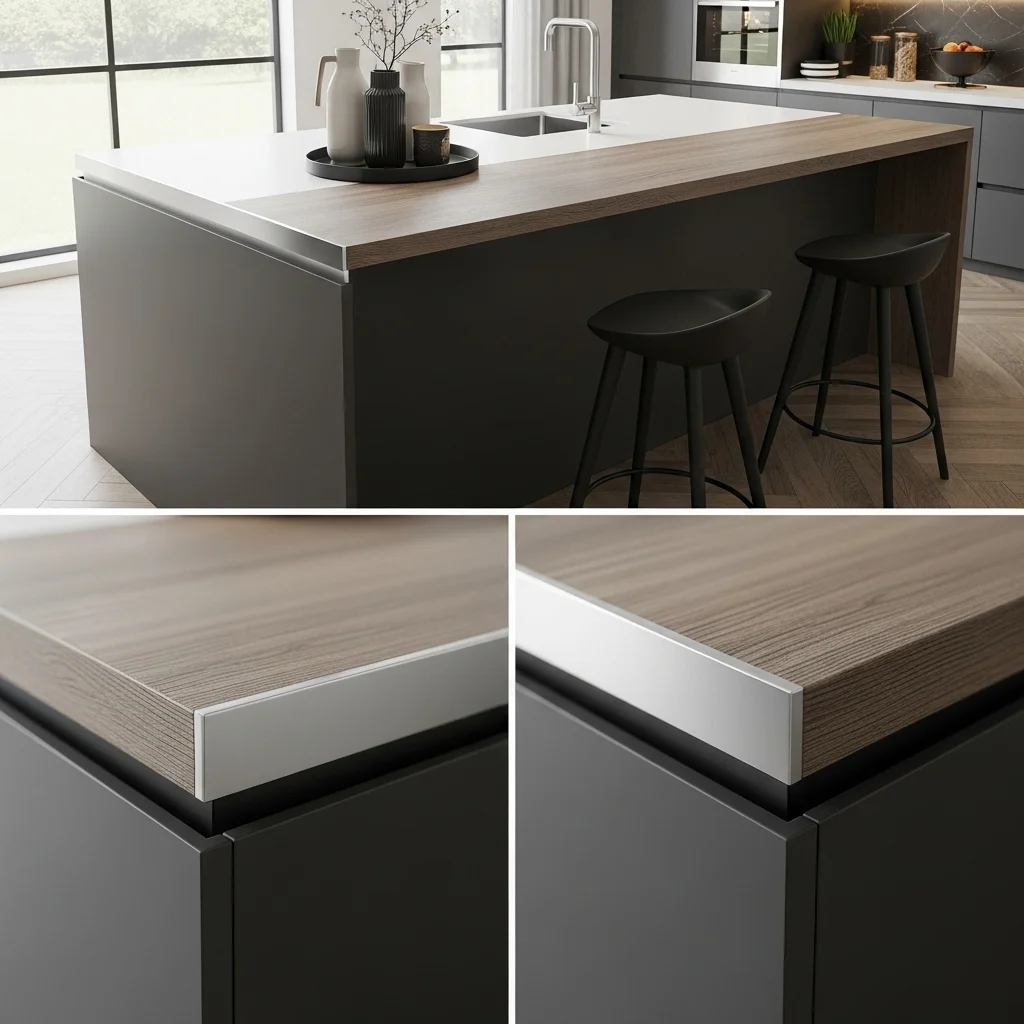
For a sleek, industrial touch, add metal trims around the countertop or base. Brushed brass, matte black, or stainless steel edges bring sophistication and modernity.
These metallic details elevate decorative island accents, providing clean definition and durability. They perfectly complement modern aesthetics where simplicity meets precision.
10. Add Wainscoting Panels

Wainscoting trims create a luxurious, custom-built appearance. Use rectangular or square moldings to add symmetry and depth to flat surfaces.
Wainscoting embodies stylish kitchen detailing by transforming plain panels into elegant compositions. It’s especially striking in two-tone kitchens, where trims subtly define contrast and craftsmanship.
11. Create a Waterfall Countertop Effect
Extend your countertop material down the sides of the island for a seamless, sculptural look. The “waterfall” design highlights natural stone veining or bold quartz patterns.
This is a hallmark of modern kitchen design, blending precision and organic beauty. Waterfall edges create visual flow and durability, offering a perfect mix of artistry and practicality.
12. Add Framed Panel Trim for Classic Structure
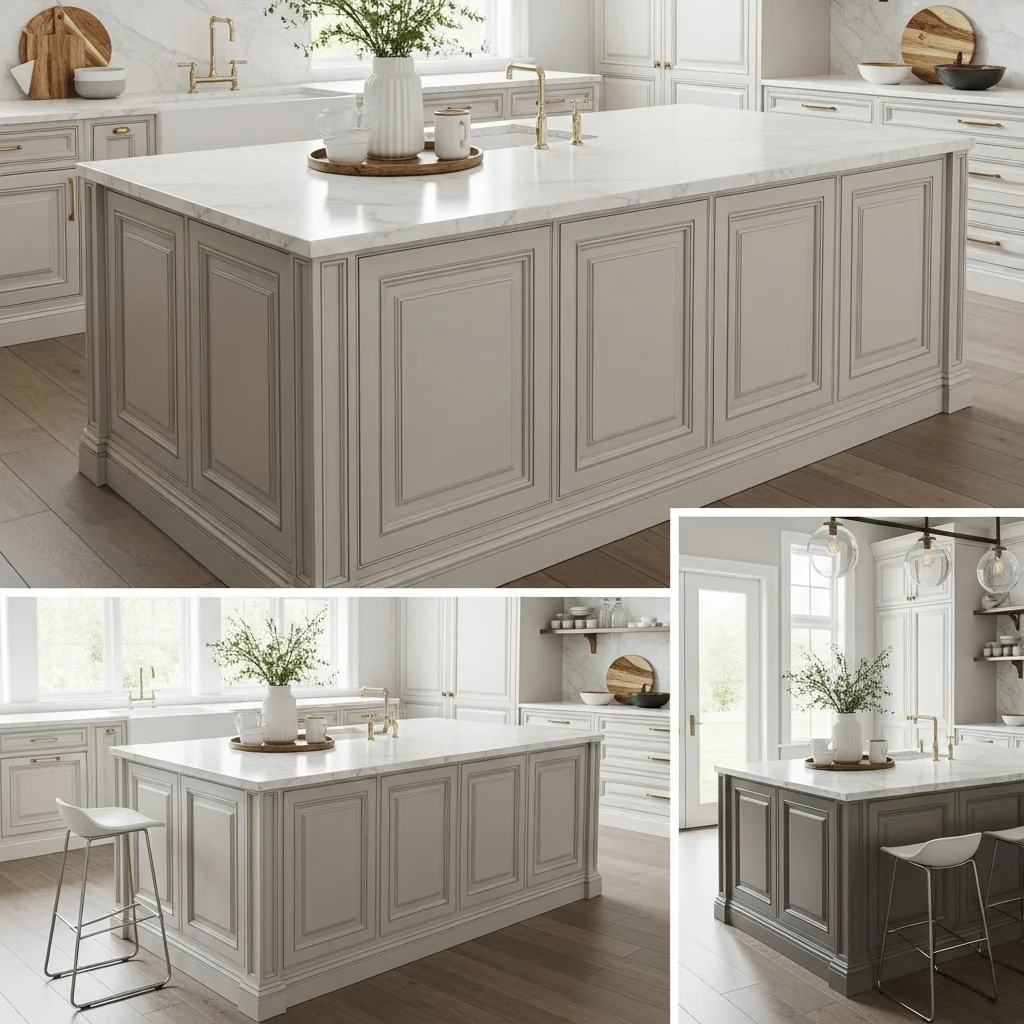
Framed paneling brings a sense of tradition and order to your kitchen island. By outlining rectangular sections with molding, you create a balanced, architectural look that instantly elevates your cabinetry. The structure also helps the island blend seamlessly with your overall kitchen millwork for a cohesive appearance.
This approach is ideal for stylish kitchen detailing in transitional or traditional spaces. Framed panels provide both depth and shadow, making your island appear substantial and thoughtfully built. They capture that timeless “custom cabinetry” feeling that defines elegant craftsmanship.
13. Mix Materials for Contrast
Pair different materials — wood and marble, quartz and steel, or concrete and oak — to create stunning visual texture. The contrasting finishes highlight each other beautifully and help establish focal interest without extra décor.
This layered approach embodies modern kitchen design, where material integrity speaks louder than ornamentation. By mixing textures and tones, you can create balance, adding richness and dimension while keeping the aesthetic grounded in simplicity.
14. Use Recessed Toe Kicks
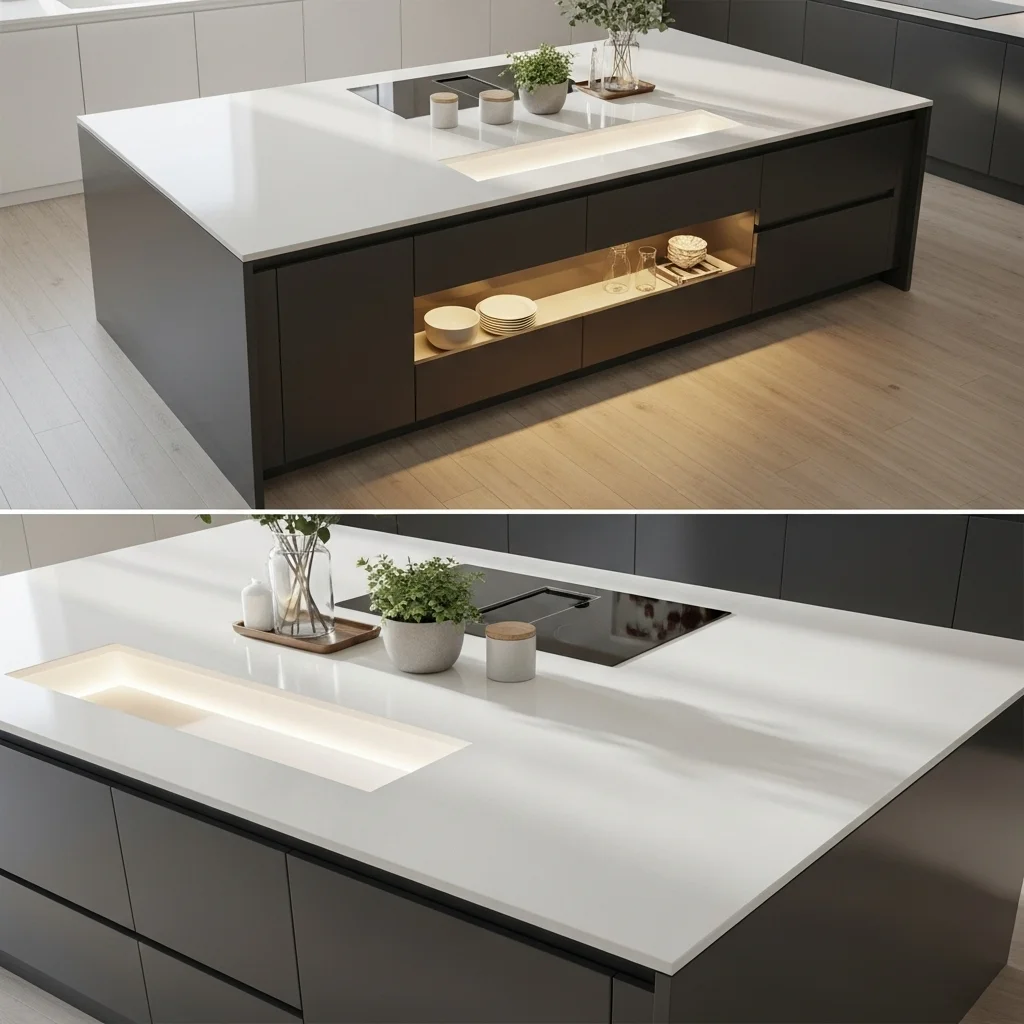
Recessed toe kicks offer both practicality and sleekness. By setting the base trim slightly inward, you create shadow and give the illusion of floating cabinetry. This subtle detail also improves comfort when cooking, offering better foot space.
Toe kicks demonstrate refined custom kitchen craftsmanship, balancing utility with design. It’s a small adjustment with a big impact — adding depth, elegance, and modern appeal to the overall structure.
15. Install Raised Panel Details
Raised panels lend a sense of old-world craftsmanship to kitchen islands. The slightly protruding sections add shadow and depth, making each side of your island visually dynamic and substantial.
Incorporating raised panel trims aligns with woodwork and molding styles that evoke classic architecture. When painted in neutral or earthy tones, these details bring warmth and sophistication to your culinary space.
16. Add Decorative Corbels or Brackets
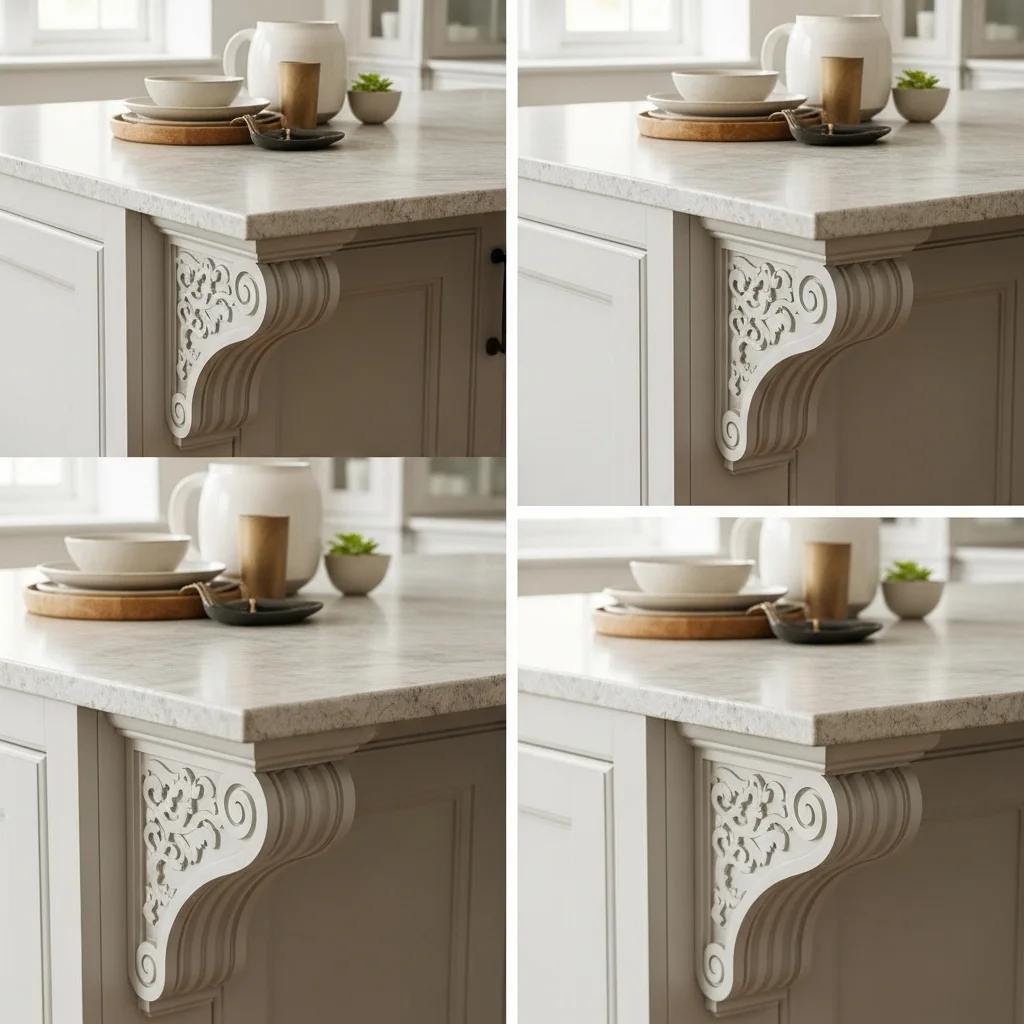
Corbels, whether wooden or metal, provide both visual interest and functional support under overhanging countertops. Their sculptural forms add an artisanal touch that draws the eye and enhances the island’s silhouette.
These features embody decorative island accents, giving personality and presence to traditional or farmhouse kitchens. Even modern spaces benefit from simplified corbels, which bridge form and function effortlessly.
17. Incorporate Vertical Slat Paneling
Vertical slats introduce rhythm and height to your island design. Whether you choose slim wood battens or broader panels, the vertical emphasis adds structure and contemporary appeal.
This detailing celebrates modern kitchen design by balancing precision and warmth. Vertical paneling looks particularly beautiful in natural oak or painted matte finishes, lending a calm, architectural flow to the space.
18. Highlight with LED Trim Lighting

Lighting integrated into the trim or under the countertop base creates a soft, ambient glow. It outlines the island and adds functionality for evening tasks or entertaining.
LED accent lighting exemplifies stylish kitchen detailing, blending aesthetics with practicality. The gentle illumination enhances textures and creates a high-end look that feels luxurious yet minimalist.
19. Add Geometric Inlay Trims
Geometric inlays — diamond, herringbone, or chevron trims — introduce subtle artistry to your island’s surface. These patterns can be carved into wood panels or created using contrasting materials for a custom finish.
This design belongs to custom kitchen craftsmanship, celebrating pattern and precision. Geometric trims infuse creativity into neutral kitchens, turning the island into a centerpiece of texture and craftsmanship.
20. Include Stone or Tile Skirting
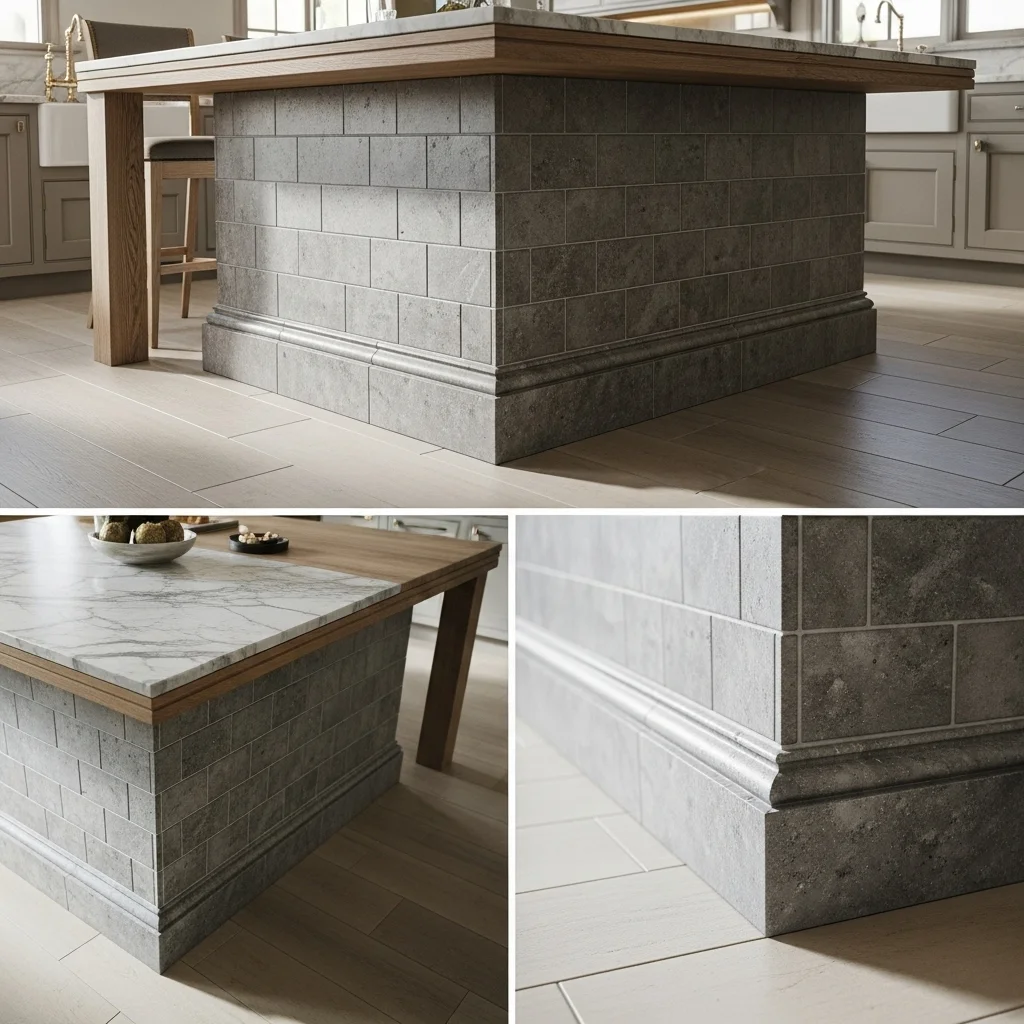
For a truly bespoke appearance, line the base of your island with stone, tile, or marble skirting. This durable addition protects the lower panels while tying your island to the flooring or backsplash materials.
Stone skirting enhances decorative island accents, giving your space cohesion and a luxury aesthetic. It also bridges natural materials throughout your kitchen, creating harmony and continuity between surfaces.
21. Incorporate Minimalist Edge Trims
Minimalist edge trims define sleek modern kitchens beautifully. Choose thin metal or wood strips to outline the perimeter, emphasizing clean geometry without visual clutter.
This refined detail captures modern kitchen design principles — subtle yet impactful. Minimalist trims elevate contemporary spaces by adding tailored precision that feels elegant, sharp, and enduring.
22. Add Furniture-Style Feet or Legs
For a handcrafted finish, replace a solid island base with visible legs or carved feet. This furniture-inspired detail lightens the island’s visual weight and gives it a tailored, homey feel.
Furniture-style bases highlight woodwork and molding styles, turning your island into a centerpiece of character. Whether turned legs or straight minimalist supports, they create a custom, artisan-inspired finish that blends refinement and practicality.
Final Thoughts
Kitchen island trims are where craftsmanship meets creativity. Each of these kitchen island trim ideas demonstrates that even the smallest architectural detail can transform the entire atmosphere of a kitchen. Trims define structure, express style, and create cohesion — turning a utilitarian element into a signature design statement.
Whether your style leans toward sleek modern minimalism or classic sophistication, trims provide endless opportunities for personalization. They merge modern kitchen design with custom kitchen craftsmanship, resulting in kitchens that feel balanced, beautiful, and built to last.
FAQs About Kitchen Island Trim
Q1: What’s the best trim style for a modern kitchen island?
Minimalist trims with clean lines and matte finishes align perfectly with modern kitchen design principles.
Q2: Can trim add durability to my island?
Yes, trims like base molding and corner details protect edges and corners, showcasing smart woodwork and molding styles.
Q3: How do I choose the right trim color?
Match the trim to your cabinetry for subtlety or contrast it for definition — both suit decorative island accents beautifully.
Q4: Is trim installation expensive?
Not necessarily. Many stylish kitchen detailing options can be done affordably with MDF or reclaimed wood for a high-end look.
Q5: Can lighting be integrated with island trims?
Absolutely! Hidden LEDs or under-counter strips add depth and modern flair to your custom kitchen craftsmanship design.