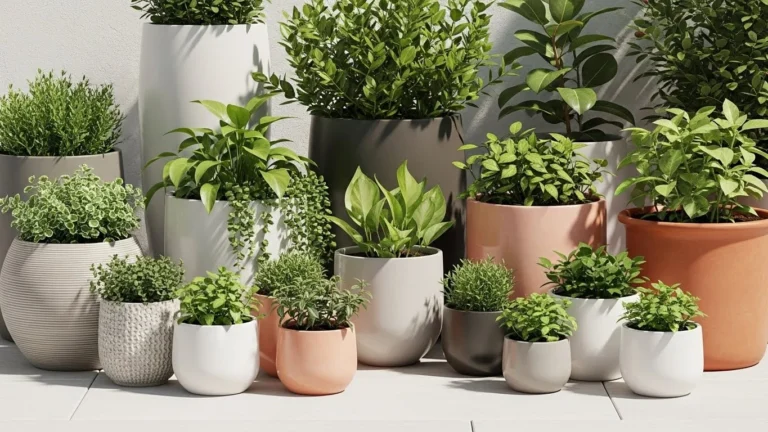
20 Creative Narrow Garden Ideas to Make the Most of Small Spaces

Designing a narrow garden can be a challenge, but it’s also an opportunity to create a visually stunning, functional outdoor space. With thoughtful planning, even the slimmest garden can feel spacious, cozy, and inviting. Clever layouts, vertical features, and strategic planting help maximize every inch of space.
Narrow gardens benefit from layers of textures, lighting, and focal points that guide the eye along the length of the garden. Combining hardscaping, greenery, and decorative accents creates interest without overcrowding the space. This approach makes small gardens feel intentional and harmonious.
In this article, we explore 20 narrow garden ideas that balance style and practicality. From vertical gardens to cozy seating areas, these tips help you transform tight spaces into lush, inviting retreats that look bigger than they are.
1. Vertical Plant Walls

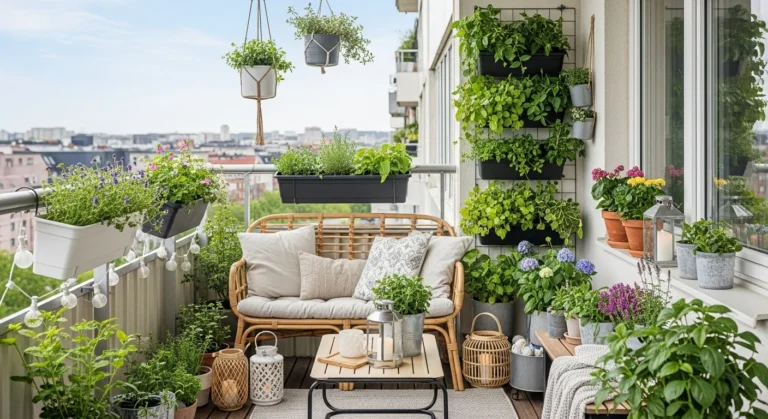
Vertical walls with climbing plants, trellises, or wall-mounted planters make narrow gardens feel taller and fuller. Use flowering vines or greenery for texture and color.
This method saves floor space and creates a lush backdrop. Vertical plant walls are perfect for small patios or side gardens, adding a dramatic visual impact without taking up room.
2. Narrow Raised Beds

Use long, narrow raised beds along garden edges to define planting zones and pathways. Choose uniform materials like wood or stone for cohesion.
Raised beds improve soil drainage and accessibility while keeping plants organized. They create structure, guiding the eye along the garden’s length for a polished look.
3. Meandering Pathways

Curved or zigzag pathways make narrow gardens feel longer and more interesting. Use gravel, stepping stones, or brick pavers to create contrast.
Pathways provide direction and encourage exploration. Plant low borders or edging plants along the path to soften edges and enhance depth.
4. Tall, Slim Trees
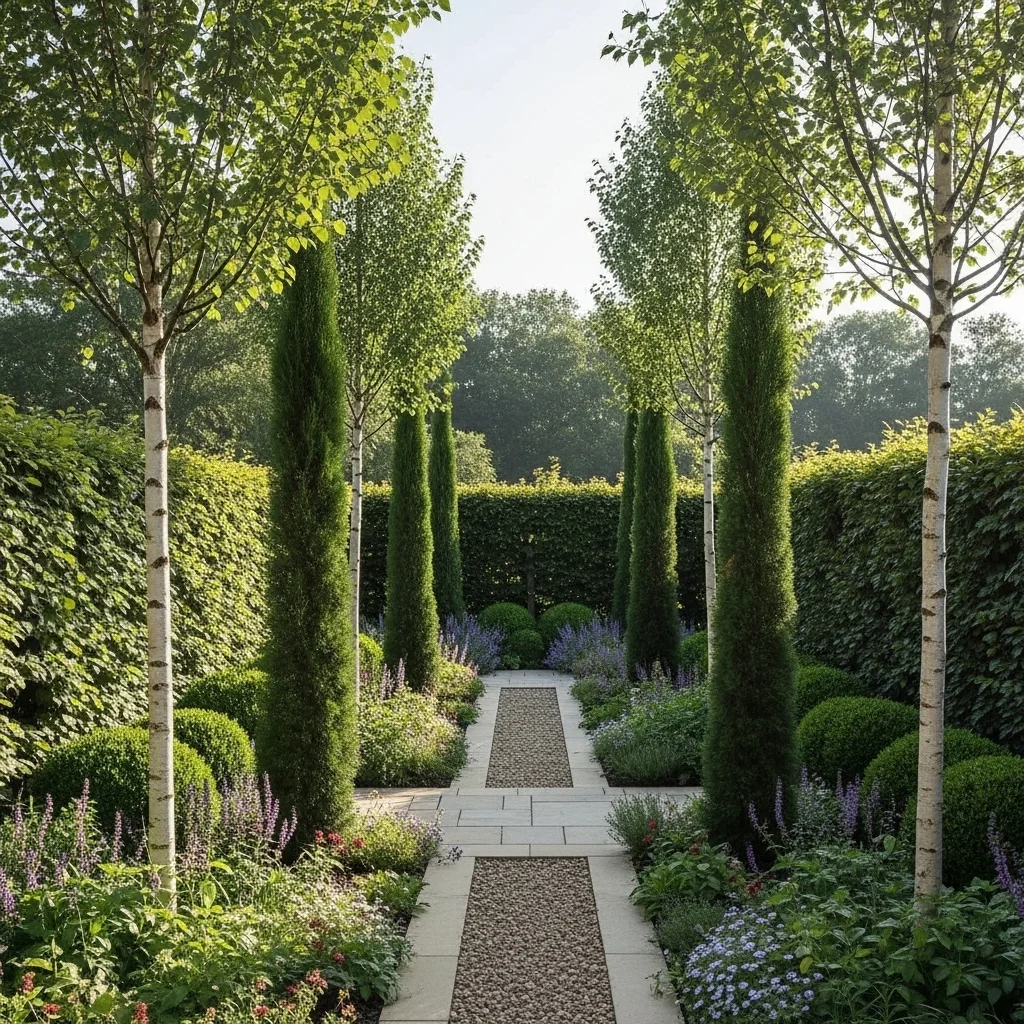
Planting columnar or fastigiate trees, like Italian cypress or narrow maples, adds height without consuming much width.
These trees act as vertical accents, framing garden ends or lining paths. Their slim profile maintains openness while adding structure and elegance.
5. Mirror Accents

Adding mirrors on fences or walls creates the illusion of depth. Large reflective surfaces make narrow spaces feel wider and brighter.
Position mirrors near seating areas or along planting beds for visual interest. Combine with lighting and greenery to enhance the illusion naturally.
6. Layered Planting

Layer low, medium, and tall plants along the narrow garden length to create depth and visual interest. Use colors and textures to guide the eye naturally.
This technique maximizes space and makes the garden feel lush without overcrowding. Layered planting works well with perennials, ornamental grasses, and seasonal flowers.
Read also. 22 Stunning Front Garden Fence Ideas
7. Vertical Herb Gardens
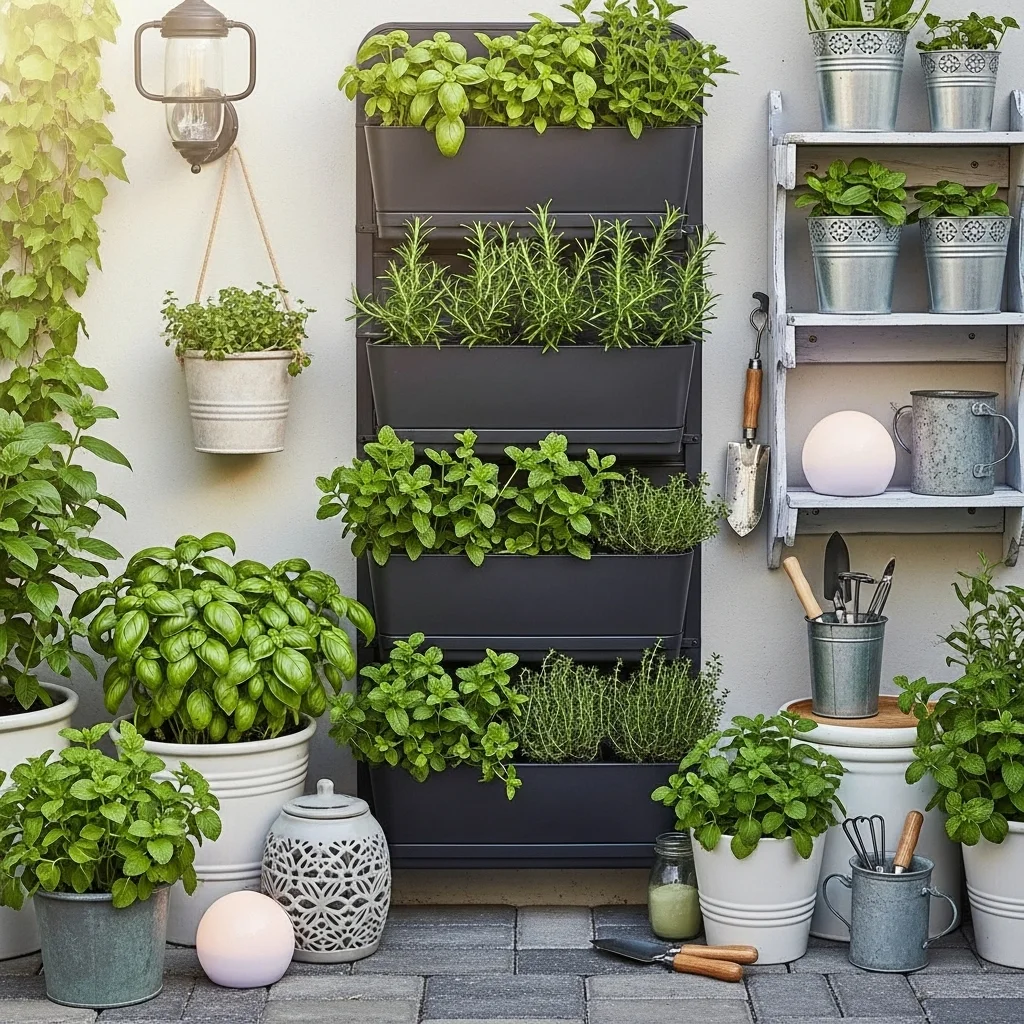
Install wall-mounted planters or tiered shelves to grow herbs vertically. This saves ground space while adding greenery and fragrance.
Herb gardens are practical and decorative, perfect for narrow backyard paths or kitchen-adjacent gardens. Mix textures and plant types for a dynamic effect.
8. Slim Water Features

A narrow fountain, water wall, or small pond adds movement and serenity without taking much width. Reflective surfaces and gentle sounds enhance the garden ambiance.
Place features at the focal end of the garden or along pathways. Even a small water element can make a slim space feel tranquil and spacious.
9. Compact Seating Areas

Add small benches, foldable chairs, or bistro sets in corners or along pathways. Use minimalistic designs to avoid crowding.
Compact seating allows relaxation and enjoyment of the garden, creating cozy nooks in narrow spaces while maintaining flow and accessibility.
10. Hanging Planters

Utilize fences, pergolas, or overhead structures for hanging baskets. Flowers, trailing plants, or even vegetables can thrive in suspended containers.
Hanging planters free up ground space while adding color, texture, and vertical interest. They also draw attention upward, enhancing the sense of height in narrow gardens.
11. Raised Planter Boxes
Use narrow raised planter boxes along fences or walls to add greenery without taking up central space. Materials like wood, stone, or metal create visual interest.
Raised boxes make planting more accessible and organized while keeping the garden tidy. They also help define pathways and seating areas in slim spaces.
12. Stepped Planters
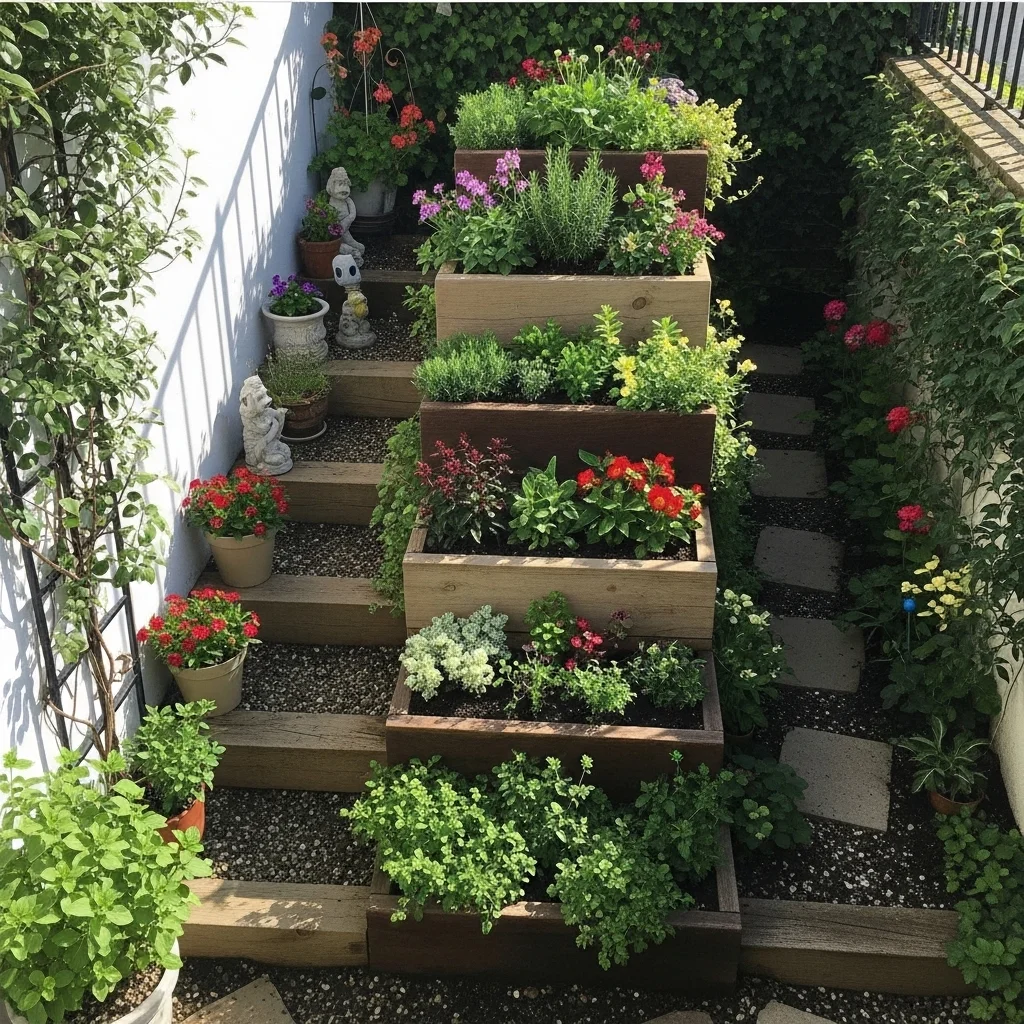
Stepped or tiered planters create a vertical focal point and allow multiple plant layers in a compact footprint. Use different heights to display flowers, succulents, or herbs.
This design enhances depth perception and maximizes planting space. It works beautifully against a fence or along a wall to draw the eye upward.
13. Narrow Pergolas or Arbors
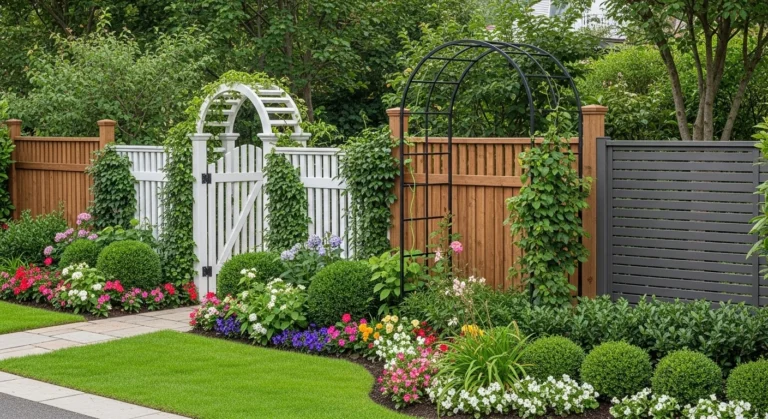
Install a slim pergola or arbor along the garden’s length to add vertical interest and structure. Train climbing plants like roses or clematis over it for lush coverage.
Arbors guide the eye along the garden while providing a shaded walkway or cozy nook. They make narrow gardens feel more intimate and elegant.
14. Decorative Fencing

Use tall, patterned, or lattice fencing to visually expand the space. Light-colored or reflective materials make the garden appear wider and brighter.
Decorative fences double as support for climbing plants, enhancing greenery while adding aesthetic appeal. They frame the garden effectively without consuming floor space.
15. Integrated Lighting
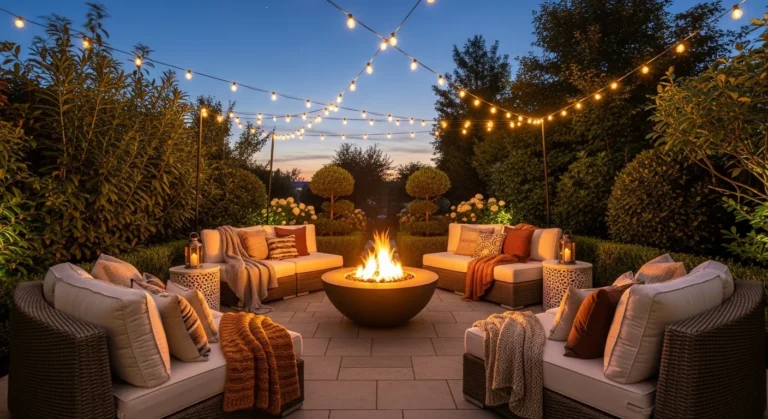
Install solar lights, LED strips, or small lanterns along paths, planters, or walls to create ambiance. Soft lighting highlights features and guides movement.
Lighting enhances the sense of depth and makes narrow gardens usable during evenings. It also emphasizes textures, colors, and vertical elements beautifully.
16. Vertical Trellis Gardens

Add trellises along fences or walls to grow climbing plants vertically. This saves space while adding lush greenery and flowers at eye level.
Vertical trellis gardens create natural walls and focal points, enhancing privacy and depth. They’re perfect for narrow gardens needing height and visual interest.
17. Pathway Flower Borders
Plant low-growing flowers or ornamental grasses along pathways to guide the eye and soften edges. Use colors that complement surrounding plants.
Borders create structure and make the garden feel fuller without reducing usable space. Seasonal blooms add color and freshness to narrow layouts.
18. Narrow Water Channels

Incorporate slim water channels or linear ponds to add movement and tranquility. Even small water features enhance ambiance without crowding.
Water channels reflect light and visually elongate the garden, creating a serene focal point while complementing other design elements.
19. Compact Vegetable Rows
Grow vegetables in slim, organized rows or vertical towers. Use raised beds or stacked planters for maximum yield in minimal space.
Compact vegetable gardens add functionality and sustainability. They allow for fresh produce while maintaining open pathways and aesthetic appeal.
20. Accent Pots and Sculptures
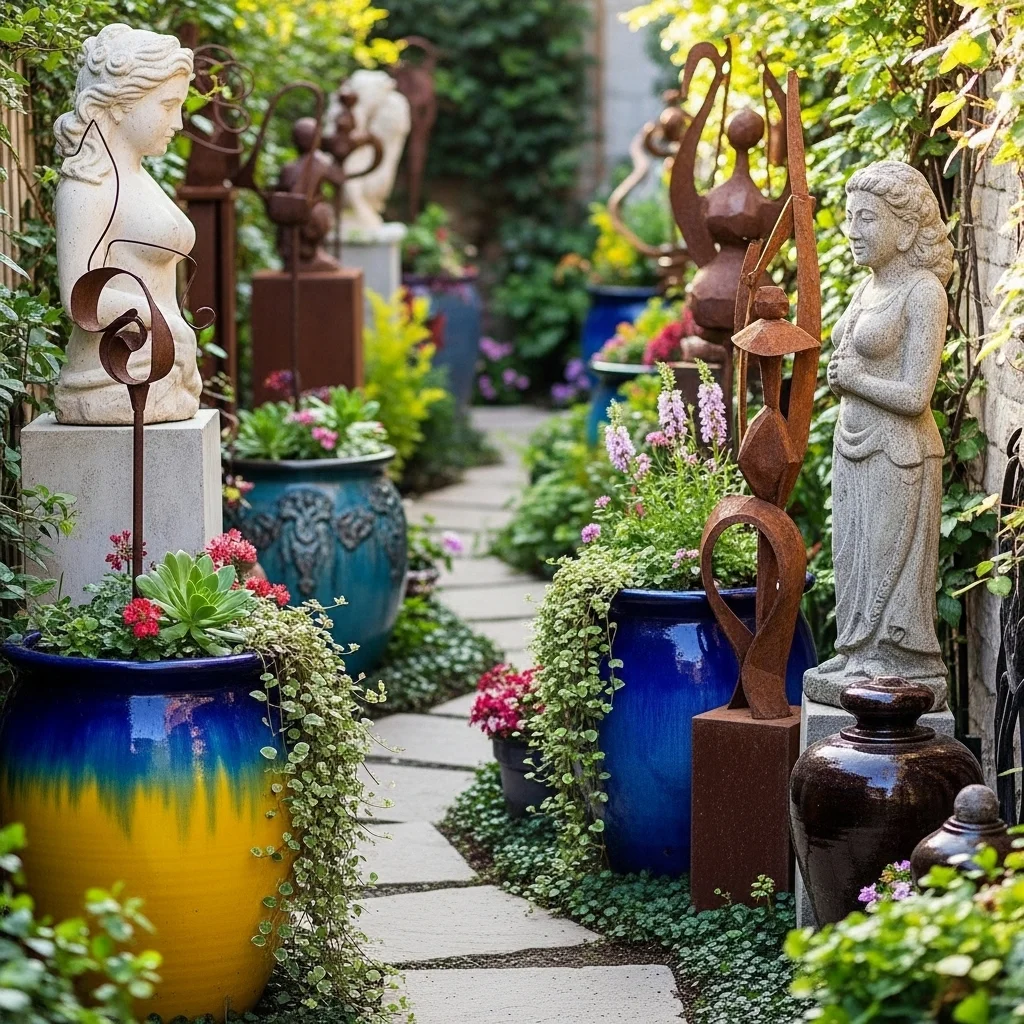
Use tall, slim pots and minimalist sculptures as focal points in tight spaces. Group them strategically along pathways or corners.
Accent elements draw attention, break monotony, and make narrow gardens feel curated and stylish. They enhance vertical interest without overcrowding the floor.
Final Thoughts
Narrow gardens, when designed thoughtfully, can feel spacious, cozy, and visually engaging. Using vertical elements, layered planting, and clever pathways maximizes every inch of space.
Incorporating lighting, focal points, and multi-functional planters creates depth and encourages exploration while keeping the garden organized. Narrow spaces can become lush, serene retreats with careful attention to scale, texture, and color.
With these 20 narrow garden ideas, even the slimmest outdoor area can be transformed into a stunning, functional, and inviting garden that feels larger than its actual size.
FAQs
1. How can I make a narrow garden feel bigger?
Use vertical planting, mirrors, and curved pathways to create depth and height. Secondary keyword: narrow garden ideas.
2. What plants work best in narrow gardens?
Columnar trees, climbing vines, ornamental grasses, and low-growing flowers optimize space and height.
3. Can I add water features in a narrow garden?
Yes, slim fountains, linear ponds, or channels add movement and depth. Tertiary keyword: narrow garden water features.
4. How do I incorporate seating in a small garden?
Use foldable furniture, benches, or compact bistro sets to create cozy zones without blocking pathways.
5. What lighting enhances narrow garden spaces?
Solar path lights, LED strips along walls, and hanging lanterns create ambiance and highlight vertical elements.