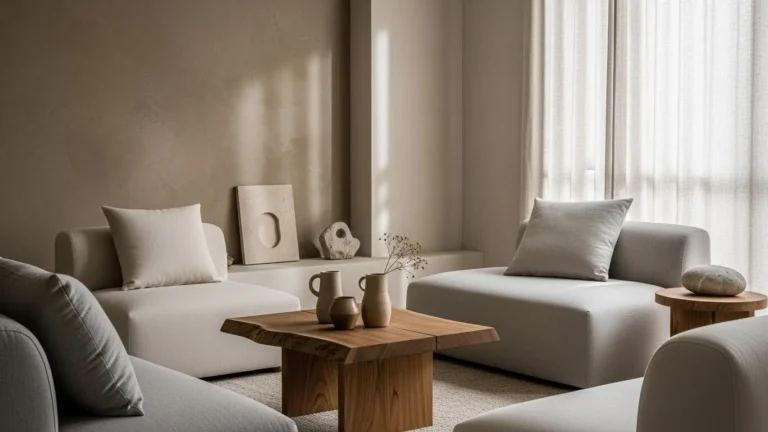
How to Choose Curtains for Your Living Room: Expert Color & Fabric Tips

Curtains do much more than block sunlight — they frame your view, shape the mood of your space, and define your décor style. Whether your living room is cozy and classic or sleek and modern, knowing how to choose curtains for your living room can completely transform its ambiance. From the texture of the fabric to the flow of color, the right curtains can make your room feel taller, brighter, and more inviting.
Choosing curtains isn’t just about picking a pretty pattern — it’s about understanding balance, proportion, and function. The best designs blend style with practicality: filtering light, offering privacy, and complementing your existing furniture and walls. A thoughtful selection can tie the whole room together in a seamless, elegant way.
In this guide, we’ll explore fabric choices, color coordination, length, and hanging styles — all the essential living room curtain ideas that help you achieve a polished and personalized look. Whether you’re decorating from scratch or refreshing your space, here’s how to make the perfect curtain choice for your home.
1. Understand Your Living Room’s Lighting Needs

Before diving into colors or styles, assess how much natural light your room receives. South-facing living rooms often benefit from sheer or lightweight curtains that allow sunlight to filter softly. If your space is darker or faces north, choose lighter colors and thinner fabrics to reflect brightness.
In contrast, sun-drenched rooms might need thicker fabrics or lined curtains to protect furniture from UV damage. Understanding natural light control helps you strike a balance between openness and comfort. The first step in learning how to choose curtains for your living room is knowing what your space needs — light, shade, or both.
2. Choose the Right Fabric for Function and Style

Fabric determines not only how your curtains hang but also how they perform. Heavier materials like velvet or jacquard add warmth and luxury, while linen and cotton offer breezy, casual charm. If you want a sophisticated aesthetic, silk or faux silk adds elegance without feeling heavy.
When considering a curtain color and fabric guide, think of texture as part of your room’s personality — it can either blend in or make a statement. Lighter fabrics bring movement and softness, while heavier ones create structure and coziness.
3. Match Curtains to Your Existing Decor

Curtains should complement your furniture, wall color, and décor style. For minimalist or modern interiors, neutral tones like white, gray, or beige maintain harmony. If your space leans traditional or eclectic, patterned curtains can add visual depth and character.
Look for accent colors already present in your rug, artwork, or cushions. Incorporating these hues into your curtains ties everything together effortlessly. This balance of color and cohesion is key to living room curtain ideas that feel curated rather than chaotic.
4. Pick the Perfect Length and Width

Curtain length dramatically affects a room’s appearance. Floor-length curtains make ceilings appear higher, while pooling styles (that gather slightly on the floor) evoke elegance and luxury. Shorter curtains, on the other hand, create a relaxed, contemporary feel in smaller spaces.
For width, ensure panels are at least twice the window’s width for full coverage and volume. Skim or kiss the floor for a tailored look — a detail that adds subtle sophistication to your home décor aesthetic.
5. Consider the Purpose — Privacy or Ambiance

Think about what you want your curtains to do. If privacy is a priority, especially for street-facing windows, go for blackout or double-lined fabrics. For purely aesthetic purposes, sheer drapes can soften your space without blocking light.
You can also layer — use sheer curtains underneath heavier panels for flexibility. This combination allows you to control both privacy and sunlight, one of the smartest window treatment tips for modern homes.
6. Select Curtain Colors That Complement Your Walls

Color sets the emotional tone of your room. Matching your curtain color to your wall creates a seamless, calming effect. For contrast, choose complementary hues that highlight architectural elements.
Warm shades like terracotta, mustard, or blush create a cozy atmosphere, while cool tones like navy, sage, or gray add calm sophistication. When learning how to choose curtains for your living room, consider how color affects both light reflection and mood.
7. Choose the Right Hardware and Rods
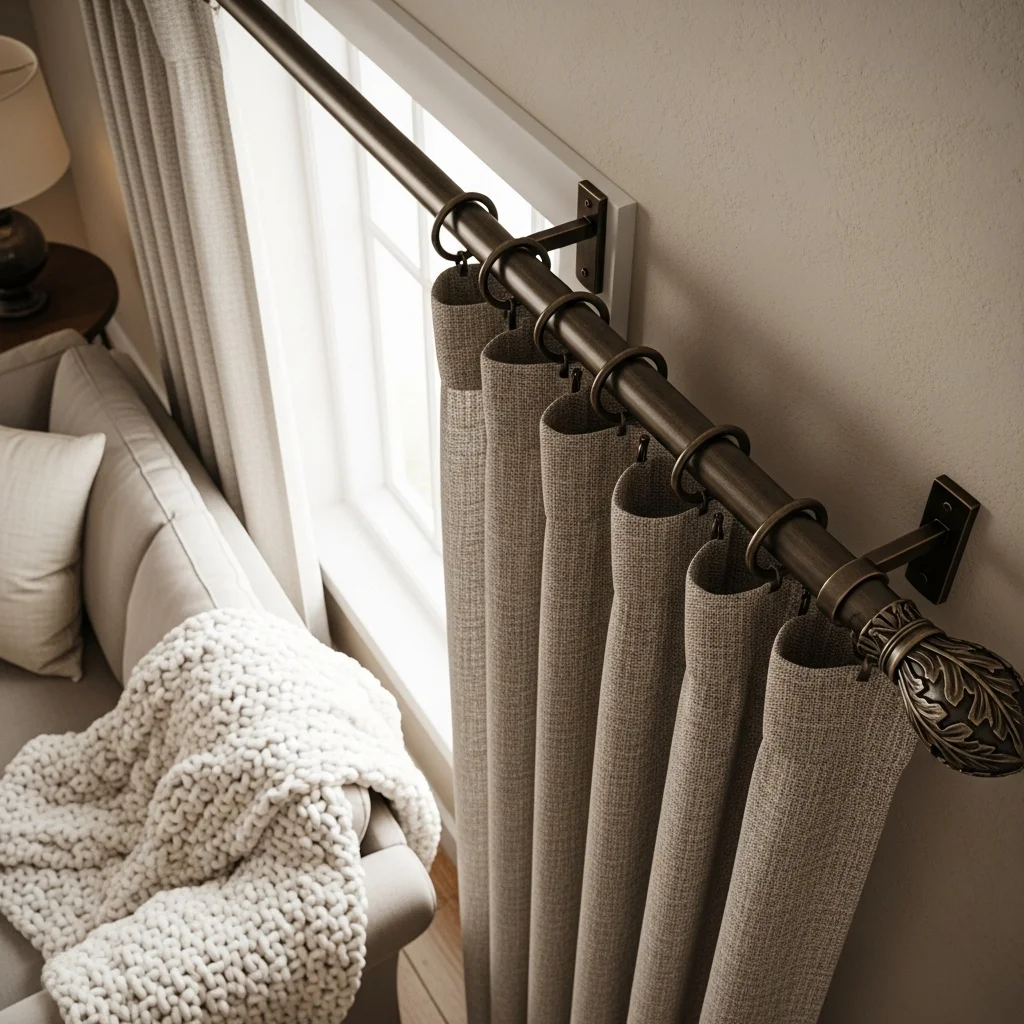
Your curtain rods, rings, and brackets might seem minor, but they’re vital finishing touches. Metallic finishes like brass or black add modern flair, while wooden rods suit rustic or farmhouse interiors.
Install rods 6–12 inches wider than your window frame to make windows appear larger and let more light in. Matching hardware to your existing décor ensures the entire setup feels intentional, reinforcing your home décor aesthetic.
8. Layer for Texture and Versatility

Layering adds both function and depth. Pair sheer curtains with thicker outer drapes for a multi-dimensional look that allows light control throughout the day. This combination creates visual richness and dynamic movement.
Layered curtains are practical too — they insulate better and offer privacy without total blackout. This approach embodies elegant living room curtain ideas for all-season comfort.
9. Choose Patterns Wisely

Patterns can transform a neutral living room into a lively focal point. Stripes make ceilings appear higher, florals bring warmth, and geometric designs add structure. However, balance is key — if your furniture or rug is patterned, choose solid curtains to avoid visual overload.
When working with prints, keep scale in mind. Large patterns make a bold statement, while small ones feel subtle and classic. This visual rhythm supports both cohesion and creativity.
Read also. How Many Lamps in a Living Room?
10. Think Seasonally
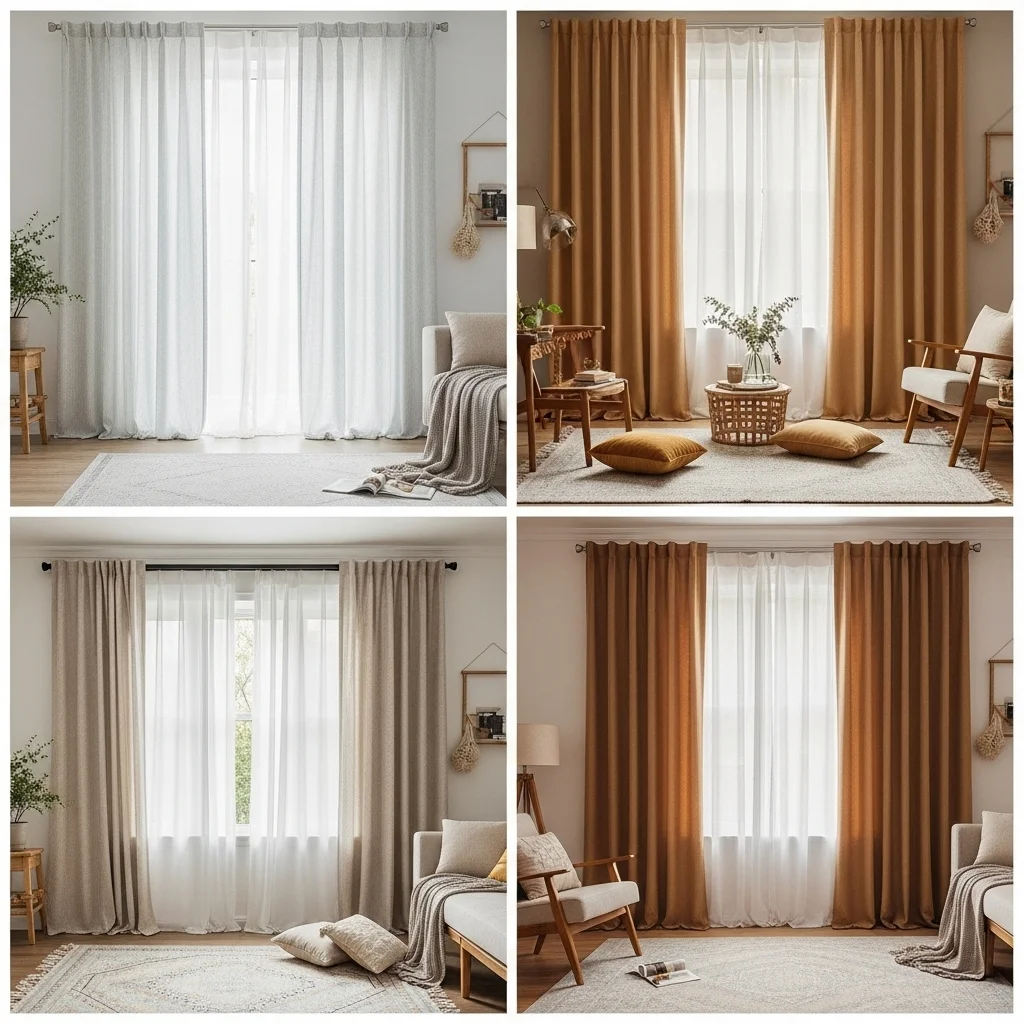
Curtains aren’t permanent — swapping them seasonally refreshes your living room effortlessly. Light linen drapes work well for spring and summer, while velvets or thick cotton blends add warmth for fall and winter.
This adaptable approach keeps your space fresh and inviting all year round. It’s one of those small but effective window treatment tips that keep your décor evolving with the seasons.
11. Don’t Forget Maintenance
Curtains gather dust and absorb odors over time, so easy maintenance is key. Choose machine-washable fabrics for practicality, especially in high-traffic areas. Delicate materials like silk may require dry cleaning but offer unmatched elegance.
Keeping curtains clean ensures they hang beautifully and maintain their true color. Regular care is part of the foundation when mastering how to choose curtains for your living room that stand the test of time.
12. Use Curtains to Frame a View

If your living room overlooks a garden or cityscape, use curtains to frame it elegantly. Mount rods wider than the window and pull drapes aside to expose more of the view. This technique makes the window — and the outside world — part of your décor.
When paired with complementary colors and soft lighting, this design trick enhances openness and serenity in your living room.
13. Create Height with Placement
Mount your curtain rod closer to the ceiling rather than directly above the window. This creates the illusion of taller walls and adds drama to the space. Even in smaller rooms, this technique makes a significant difference.
Vertical emphasis not only enhances proportion but also contributes to a graceful home décor aesthetic. Little adjustments like this elevate your room’s entire look.
14. Coordinate Curtains with Furniture Layout

Lighting, color, and texture should align with your furniture placement. Position curtains near major seating areas to highlight balance. If your sofa sits against a window, choose curtains that don’t overpower the space but frame it softly.
This coordination brings harmony and flow to the room — a subtle art of decorating that ties the whole design story together.
15. Test Before You Commit
Before purchasing, bring fabric samples home and observe them in different lighting conditions. Colors can appear warmer or cooler under natural or artificial light. Testing ensures your final choice complements both daylight and evening tones.
This small step saves time, money, and disappointment — the hallmark of any expert’s guide on how to choose curtains for your living room.
Final Thoughts
Curtains aren’t just accessories — they’re architectural elements that shape how your living room feels and functions. From privacy and light control to texture and elegance, the right choice can redefine your entire space.
Whether you prefer soft sheers or dramatic drapes, following these curtain color and fabric guide principles will help you find the perfect match. Remember, it’s not only about style — it’s about creating balance, comfort, and timeless appeal that complement your home’s soul.