15 Moroccan Living Room Ideas for a Warm, Vibrant, and Culturally Rich Space
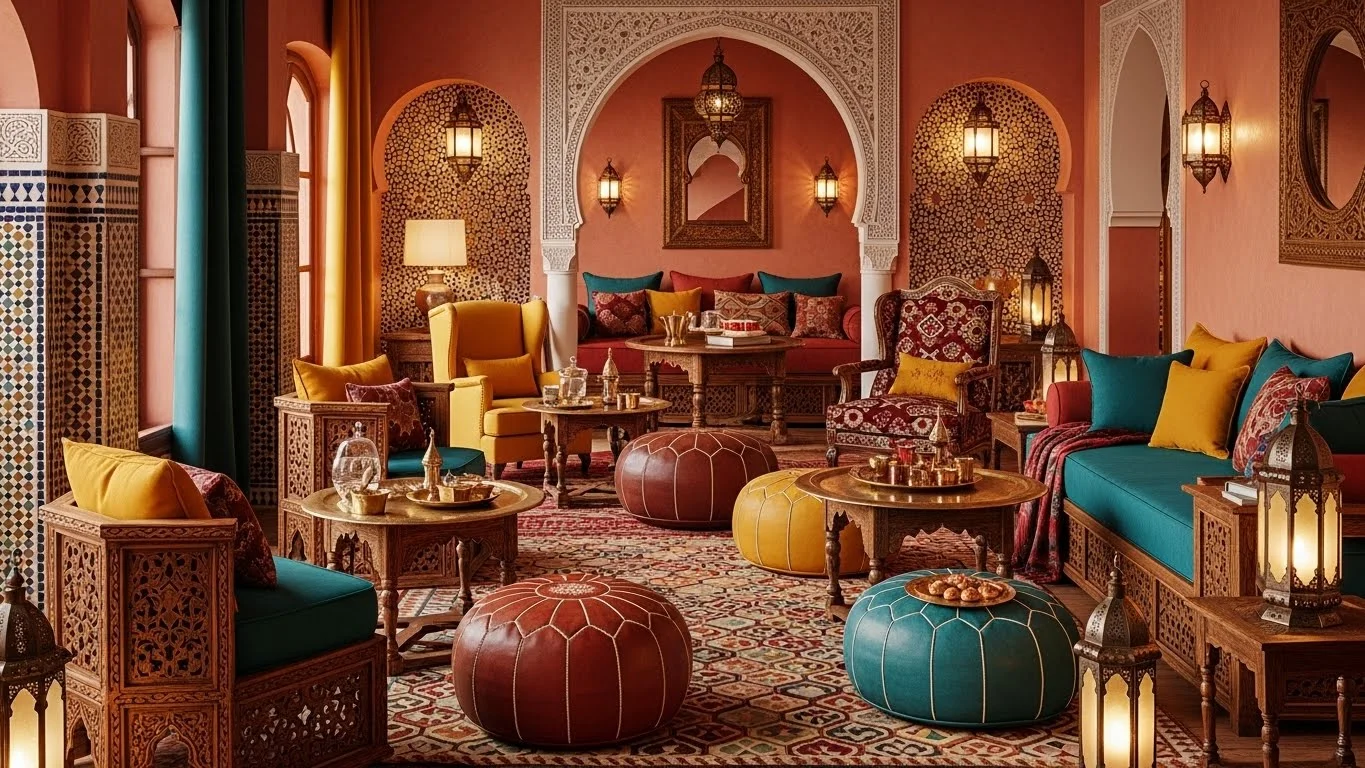
Transforming your home with Moroccan living room ideas brings an atmosphere of warmth, artistry, and cultural richness. Moroccan design is known for its vibrant colors, intricate patterns, soft textures, and the magical balance between earthiness and luxury. The style captures the energy of bustling souks, the warmth of desert tones, and the elegance of Moorish architecture. It’s perfect for anyone who wants a living room that feels expressive, comforting, and emotionally magnetic.
What makes Moroccan décor so special is its layering—patterned cushions, carved wood, glowing lanterns, and rich textiles all blend to create an ambiance that is both cozy and visually captivating. The style encourages comfort and hospitality, inviting you to sit, lounge, and share stories in a space that feels deeply personal and beautifully nostalgic. From colorful rugs to handcrafted pottery, every detail adds a sense of place, tradition, and soulful warmth.
With these modern Moroccan décor inspiration ideas, you’ll explore color, pattern, texture, lighting, and architectural touches that bring this iconic style into your home. Each idea blends traditional design with contemporary elegance, creating a living room that feels vibrant, welcoming, and timeless.
1. Embrace Warm, Earthy Moroccan Colors
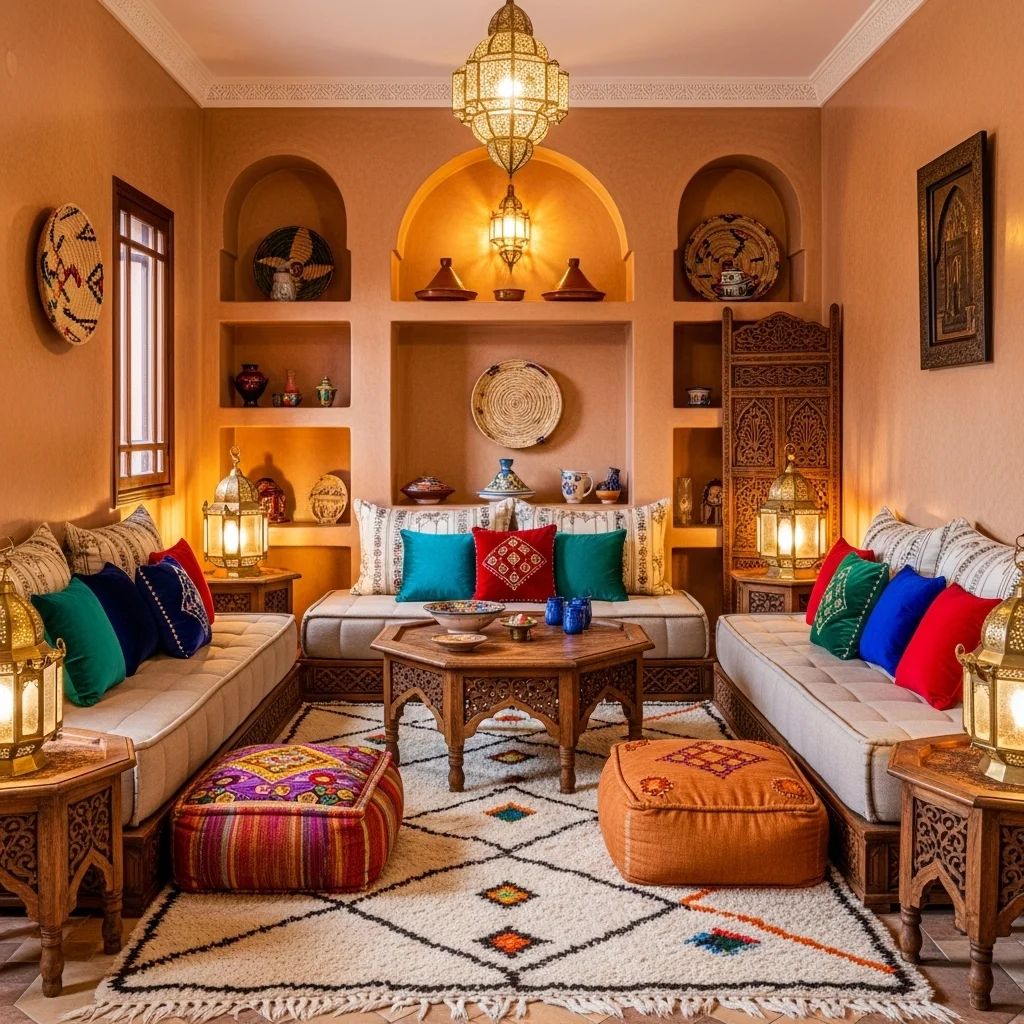
Start with a palette inspired by Morocco’s landscapes—terracotta orange, deep red, sandy beige, midnight blue, desert clay, and warm gold. These colors add richness and warmth, transforming your living room into a space full of depth and personality. Layering these hues brings a sense of movement, sun-soaked warmth, and cultural authenticity.
This idea aligns with the grounding palette inside stylish global interior themes, allowing your living room to feel warm, expressive, and emotionally inviting. Earthy Moroccan colors set the tone for a cozy, culturally rich environment.
2. Add Intricate Moroccan Rugs
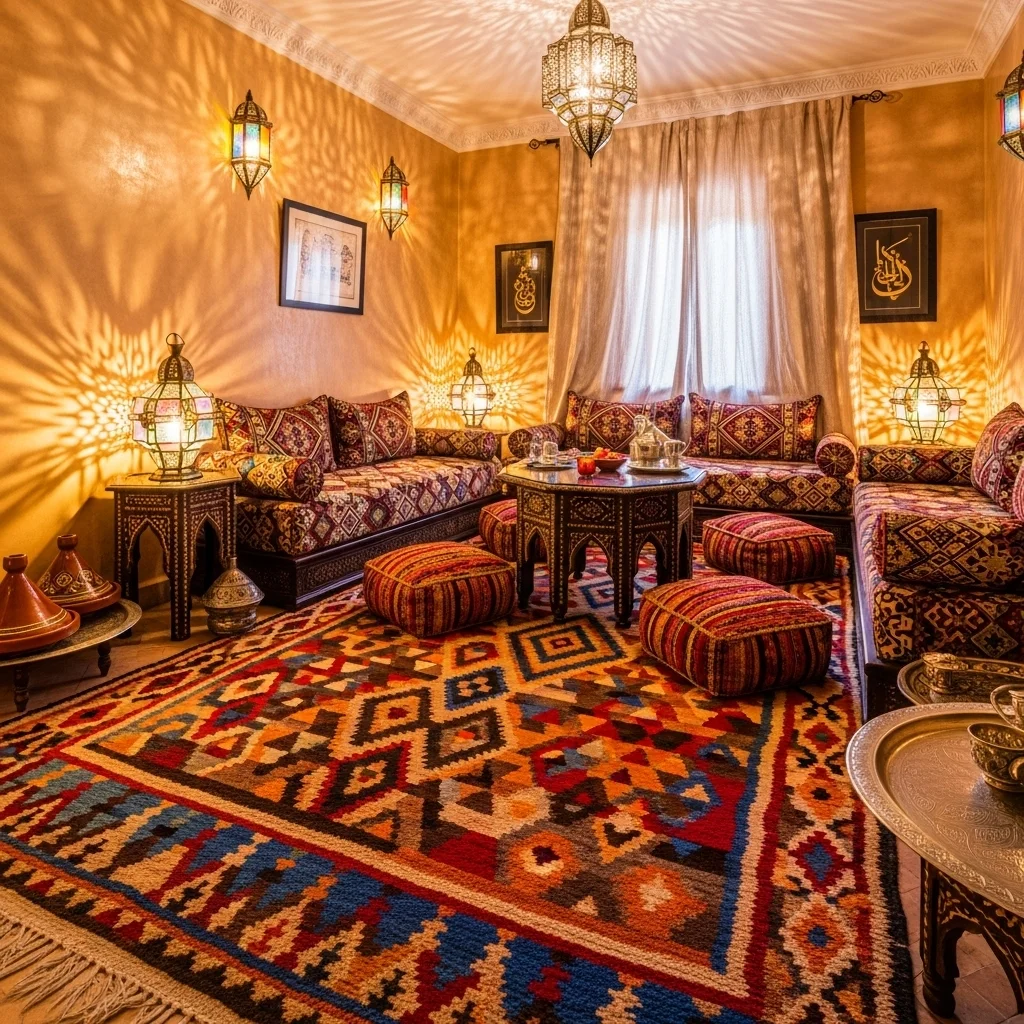
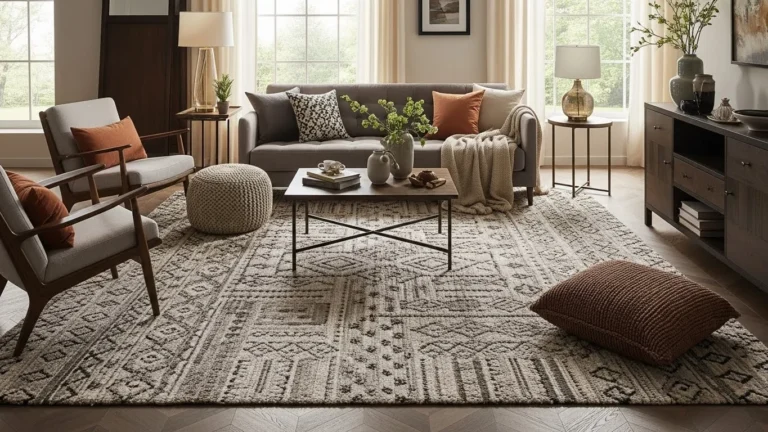
A Moroccan rug—whether Beni Ourain, Boujad, or Azilal—adds texture, pattern, and cultural artistry to the living room. These rugs are known for their softness and detailed designs, ranging from monochrome patterns to vibrant geometric motifs. Their plush fibers make the space feel warm and luxurious.
This idea supports the layered richness within Moorish design accents, anchoring the room with artisanal beauty. A Moroccan rug acts as a grounding centerpiece that adds comfort, heritage, and warmth.
3. Introduce Low Seating or Floor Cushions
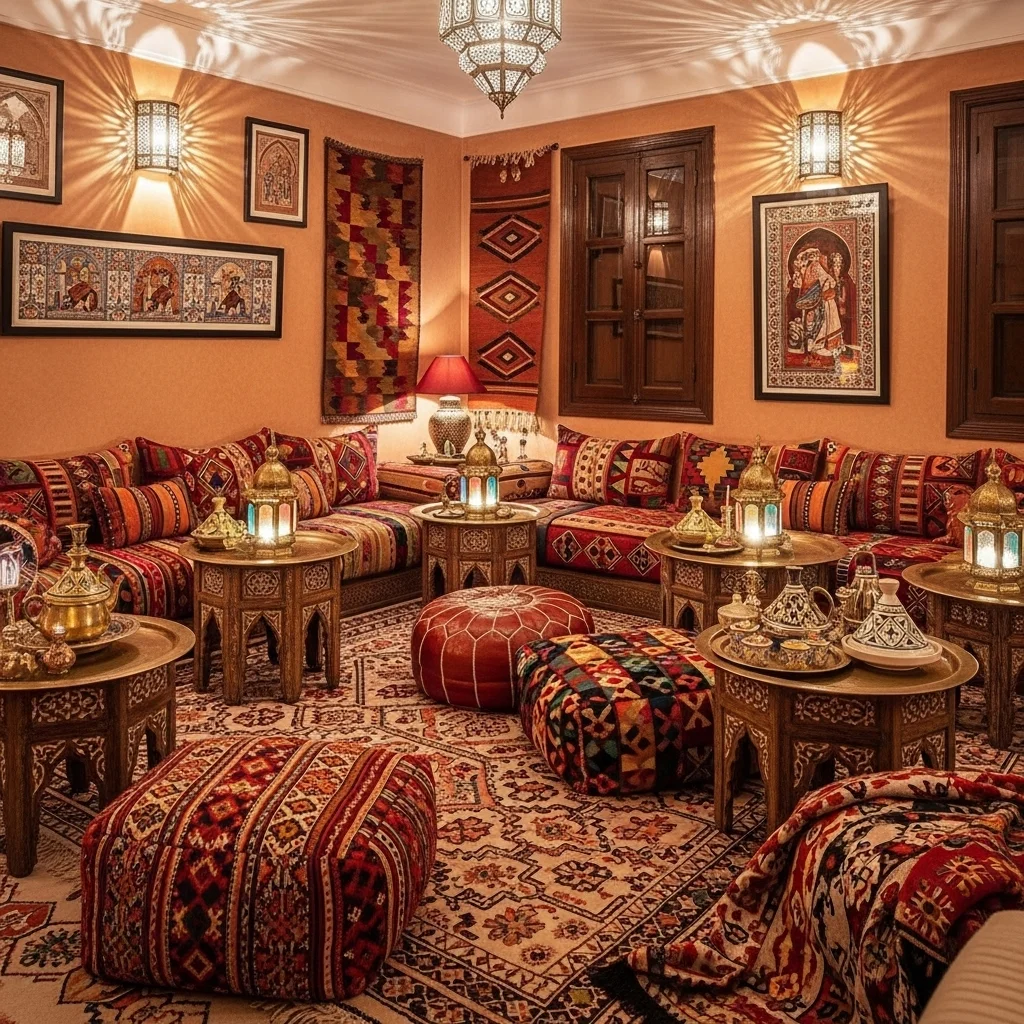
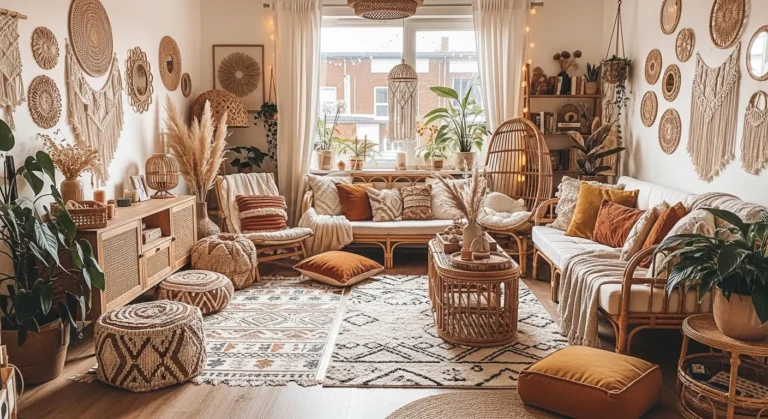
Low seating, poufs, and large floor cushions create a casual, inviting atmosphere reminiscent of Moroccan lounges. This style encourages relaxation and conversation, making the living room feel intimate and culturally rooted. Plush textures and rich colors make the seating both beautiful and comfortable.
This idea blends perfectly with the soft, grounded energy inside earthy exotic textures, helping the room feel welcoming and cozy. Floor seating adds warmth, ease, and the traditional charm of Moroccan interiors.
4. Use Carved Wooden Furniture

Moroccan furniture often features beautifully detailed wood carvings inspired by Moorish architecture. Coffee tables, sideboards, mirrors, and chairs with carved patterns bring an artistic edge to the room, introducing depth and traditional elegance.
This idea enhances the artisanal detail within Moroccan living room ideas, turning furniture into functional art. Carved wood brings timeless craftsmanship and cultural richness to every corner.
5. Add Patterned Throw Pillows
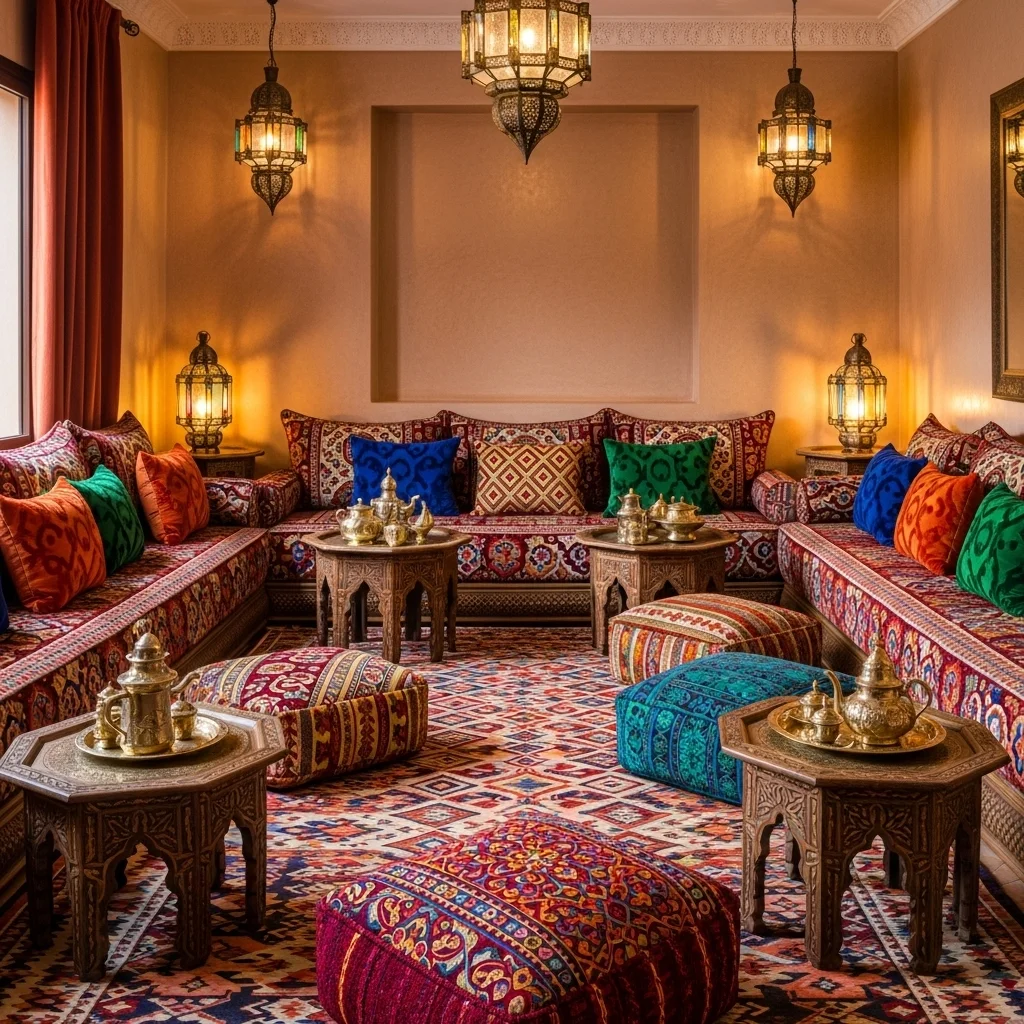
Layered throw pillows with bold patterns, tribal motifs, embroidered details, and rich colors create softness and vibrancy. Mixing shapes and textures adds visual richness, making the living room feel expressive and full of personality.
This idea ties into modern Moroccan décor inspiration, blending tradition with comfort. Pillows help create that relaxed, eclectic Moroccan charm while adding softness and warmth.
6. Use Lantern Lighting for a Magical Glow
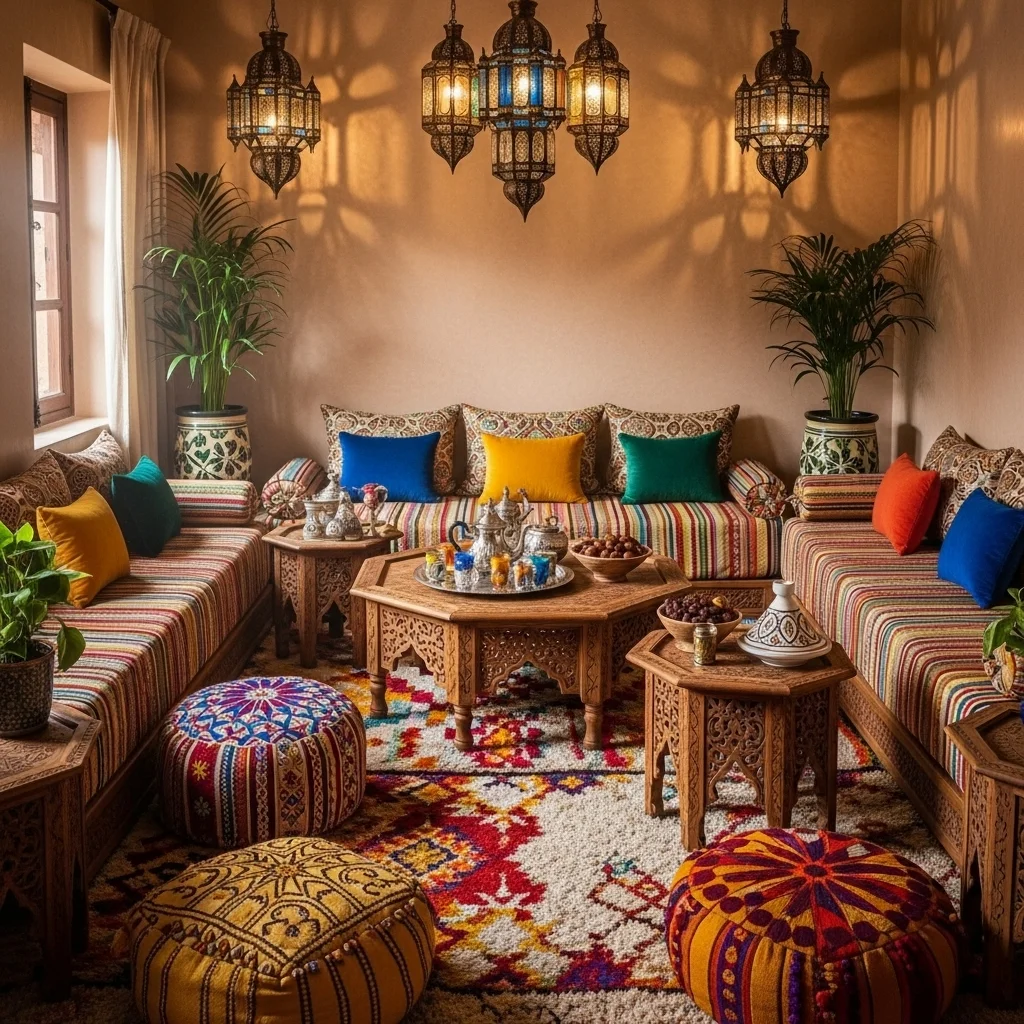
Hanging lanterns, candle lanterns, or pierced metal lamps cast beautiful patterns across the room. The warm golden glow adds a dreamy, mystical atmosphere reminiscent of Moroccan evenings. Lighting becomes a key feature that sets emotional tone and ambiance.
This idea captures the enchanting mood inside stylish global interior themes, illuminating the room with warmth and cultural elegance. Lantern lighting creates a calm, magical environment that feels serene and soulful.
7. Decorate With Mosaic or Zellige Tiles

Mosaic tiles or Zellige accents add brilliant reflections, handcrafted beauty, and intricate detail. You can incorporate them in side tables, wall art, coffee tables, or even framed tile pieces. Their glossy surfaces catch light beautifully and elevate the room aesthetically.
This idea highlights the traditional craftsmanship behind Moorish design accents, bringing color, geometry, and authenticity to the space. Mosaic details add depth and elegance without overwhelming the room.
8. Add Arc-Shaped Mirrors or Niches

Moroccan design loves arches—arched mirrors, doorways, or wall niches introduce softness and iconic architectural beauty. These curves create depth and exotic charm, making the space feel more dynamic and visually engaging.
This idea supports the organic shapes inside earthy exotic textures, giving the room fluidity and cultural presence. Arches soften the lines of the living room and make the design feel elevated and intentional.
9. Use Metallic Gold or Brass Accents
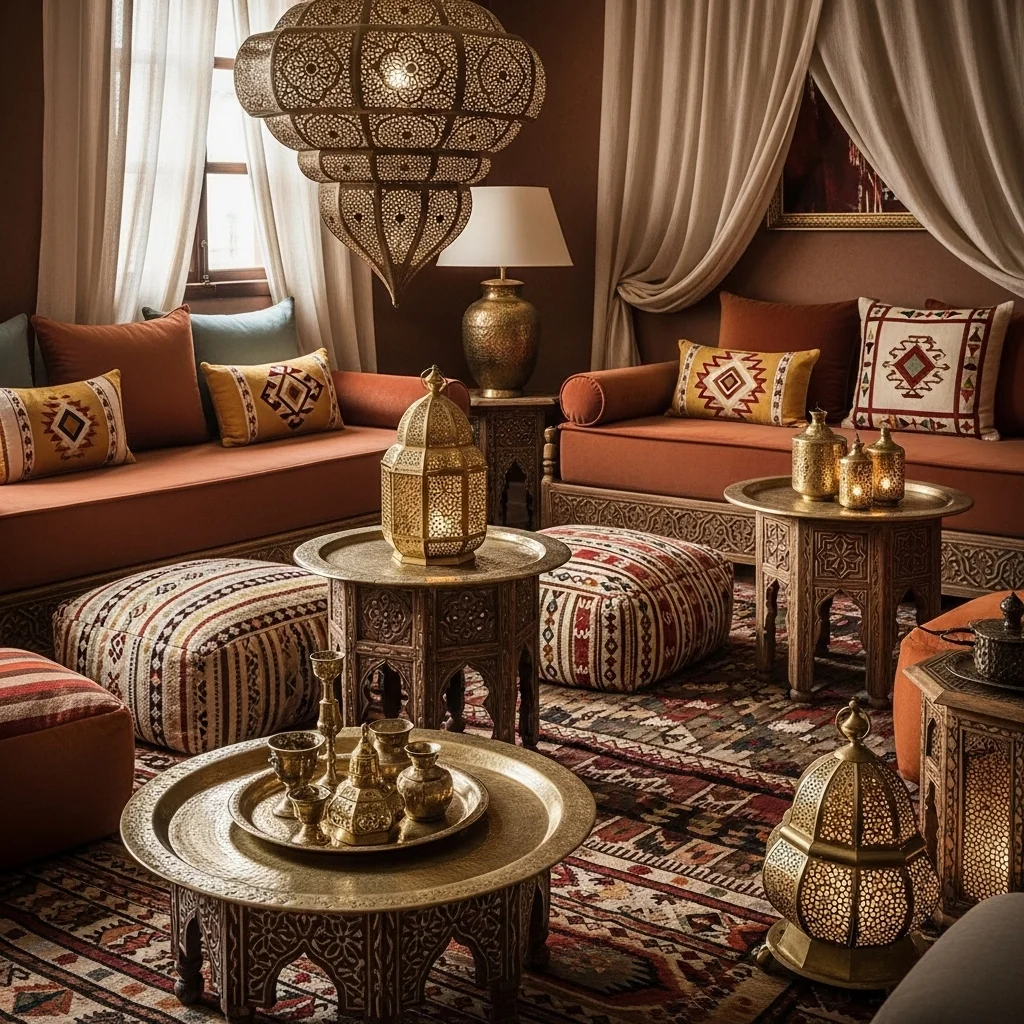
Gold and brass elements—such as trays, lanterns, candle holders, or mirrors—add luxury and warmth. These metals complement the earthy colors and rich fabrics beautifully, creating a balanced contrast of rustic charm and refined elegance.
This idea enriches the warm glow of Moroccan living room ideas, bringing sophistication without overpowering the natural tones. Metallic accents add energy, light, and artistic flair.
10. Add Textured Wall Hangings or Moroccan Tapestries

Woven textiles, embroidered tapestries, or traditional Moroccan wall hangings introduce softness and a sense of story. These pieces bring cultural detail and visual warmth to the walls, making the living room feel layered and comforting.
This idea aligns with the rich cultural textures in modern Moroccan décor inspiration, creating a soulful, expressive backdrop. Tapestries soften the room visually and add emotional depth.
11. Incorporate Moroccan Poufs for Extra Seating
Moroccan poufs add charm, versatility, and comfort to your living room. Whether made of leather, embroidered fabric, or woven fibers, poufs serve as additional seating, leg rests, or decorative accents. Their compact shape and cultural detailing make them perfect for layering alongside sofas or low seating arrangements.
This idea reflects the relaxed hospitality inside Moroccan living room ideas, offering flexible seating that feels warm, stylish, and inviting. Poufs introduce softness, practicality, and that signature Moroccan coziness.
12. Add Decorative Pottery and Handmade Ceramics
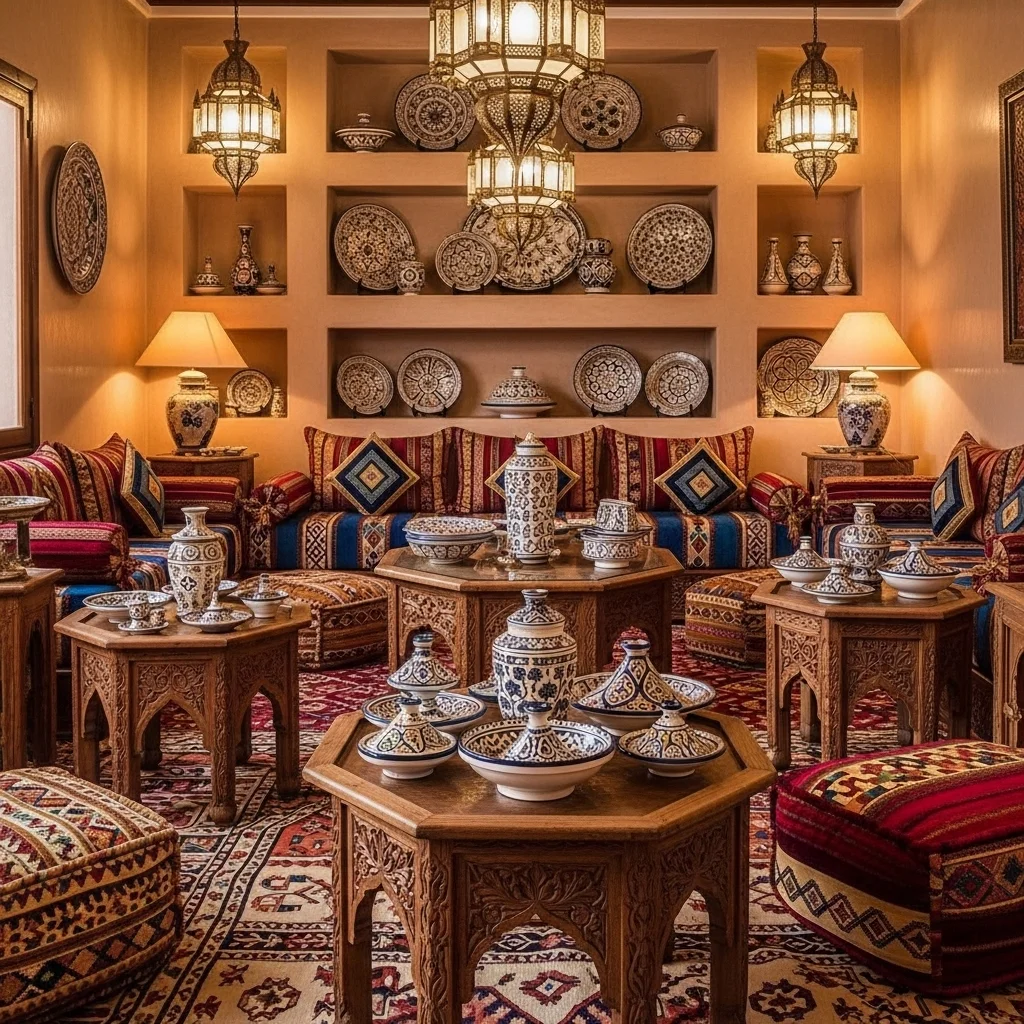
Moroccan pottery—often featuring geometric patterns, bold colors, or hand-painted details—adds an artisanal touch to your living room. Vases, bowls, and ceramic lanterns help bring cultural depth and texture to shelves, coffee tables, and sideboards. Their imperfect, handcrafted beauty enhances the authenticity of the space.
This idea supports the cultural craftsmanship within Moorish design accents, offering objects that feel meaningful and visually rich. Decorative ceramics bring a sense of story while elevating the room with artistic warmth.
13. Introduce Sheer Curtains for Soft, Diffused Light
Light, airy curtains in soft neutrals help create a dreamy Moroccan atmosphere. Sheer fabrics diffuse sunlight beautifully, casting gentle shadows and warm glows throughout the room. These curtains balance the richness of bolder colors and patterns with softness and calm.
This idea enhances the breezy elegance inside earthy exotic textures, making the living room feel lighter and more soothing. Sheer curtains soften the architecture and add graceful movement.
14. Add a Moroccan Divider or Carved Screen
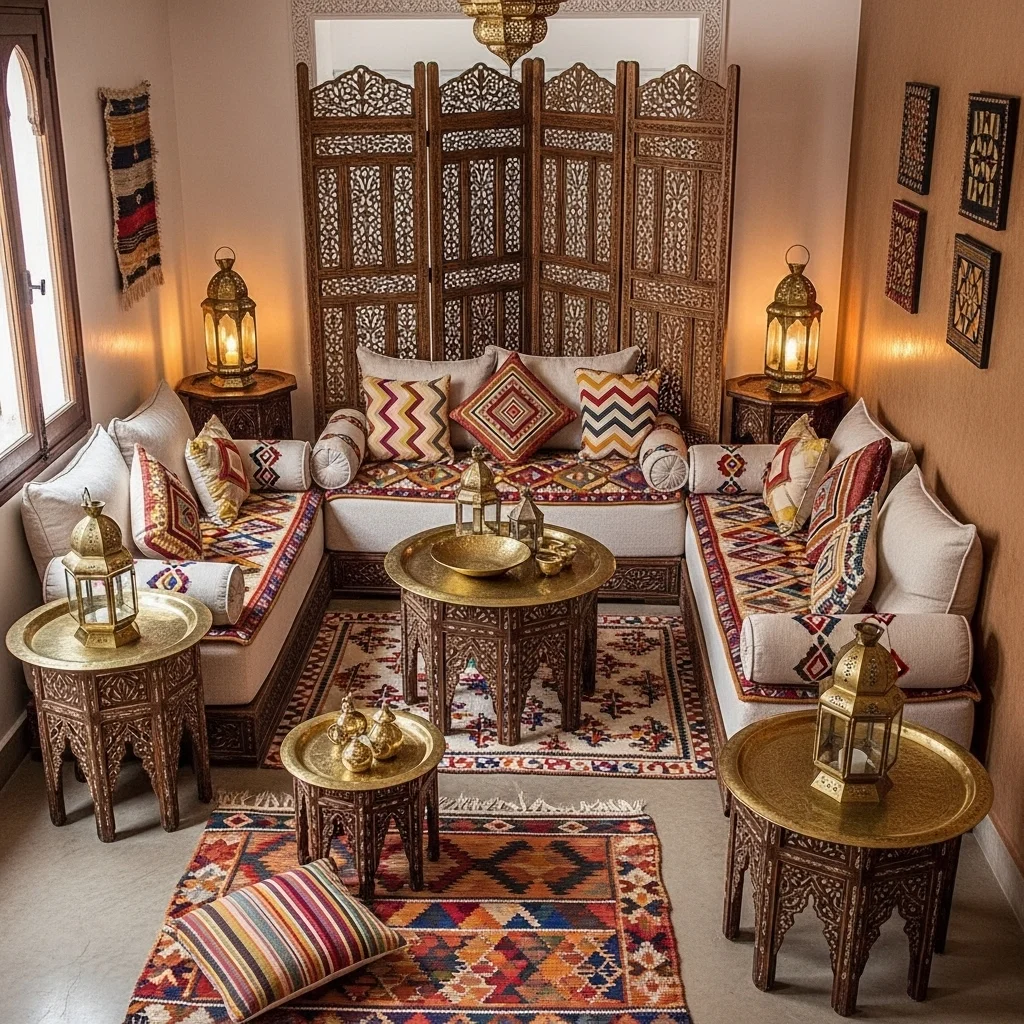
A carved wooden screen or lattice divider brings Moroccan architecture into the living room in a stunning, sculptural way. These screens add privacy, dimension, and a delicate play of shadows thanks to their intricate patterns. They’re perfect for zoning a space or adding depth behind seating areas.
This idea highlights the craftsmanship and detail within stylish global interior themes, offering functional art that elevates the overall design. Screens add a dramatic yet serene focal point that feels culturally grounded.
15. Use Layered Lighting for a Desert Glow
Layering lanterns, sconces, candles, and warm-toned lamps recreates the cozy glow of Moroccan evenings. The combination of soft lighting sources builds atmosphere, making the living room feel warm, magical, and deeply welcoming. Lighting becomes not just functional but emotional.
This idea captures the shimmering warmth behind modern Moroccan décor inspiration, bathing the room in a golden, soulful radiance. Layered lighting ties the entire Moroccan theme together with elegance and serenity.
Final Thoughts
Designing with these Moroccan living room ideas helps you create a space full of warmth, artistry, and rich cultural storytelling. Moroccan style invites you to mix bold patterns with earthy tones, handcrafted materials with luxurious details, and classic design with modern comfort. The result is a living room that feels layered, soulful, and emotionally grounded—perfect for relaxing, hosting, and enjoying the richness of everyday living.
What makes Moroccan décor so inspiring is the balance it strikes between vibrancy and calm. The colorful textiles, lantern lighting, carved wood, and artisanal ceramics all work together to build an atmosphere that feels both expressive and serene. These ideas bring the beauty of Moroccan culture into your home in a way that feels timeless, warm, and meaningful.
FAQs About Moroccan Living Rooms
Q1: What colors define a Moroccan living room?
Warm earth tones, desert neutrals, deep blues, terracotta, gold, clay reds, and rich jewel shades.
Q2: Is Moroccan décor too bold for modern homes?
Not at all—when balanced with neutrals, wood tones, and soft lighting, it blends beautifully with modern interiors.
Q3: What materials are most common in Moroccan design?
Carved wood, metal lanterns, wool rugs, ceramics, leather poufs, mosaics, and woven textiles.
Q4: Can Moroccan décor work in small living rooms?
Yes—use light colors, simple furniture, soft lighting, and one standout accent like a rug or lantern.
Q5: How do I make the room feel authentic?
Incorporate handcrafted items, layered textiles, mosaic details, and warm, magical lighting.