What Size Rug for Every Room: Ultimate Rug Size Guide & Placement Tips
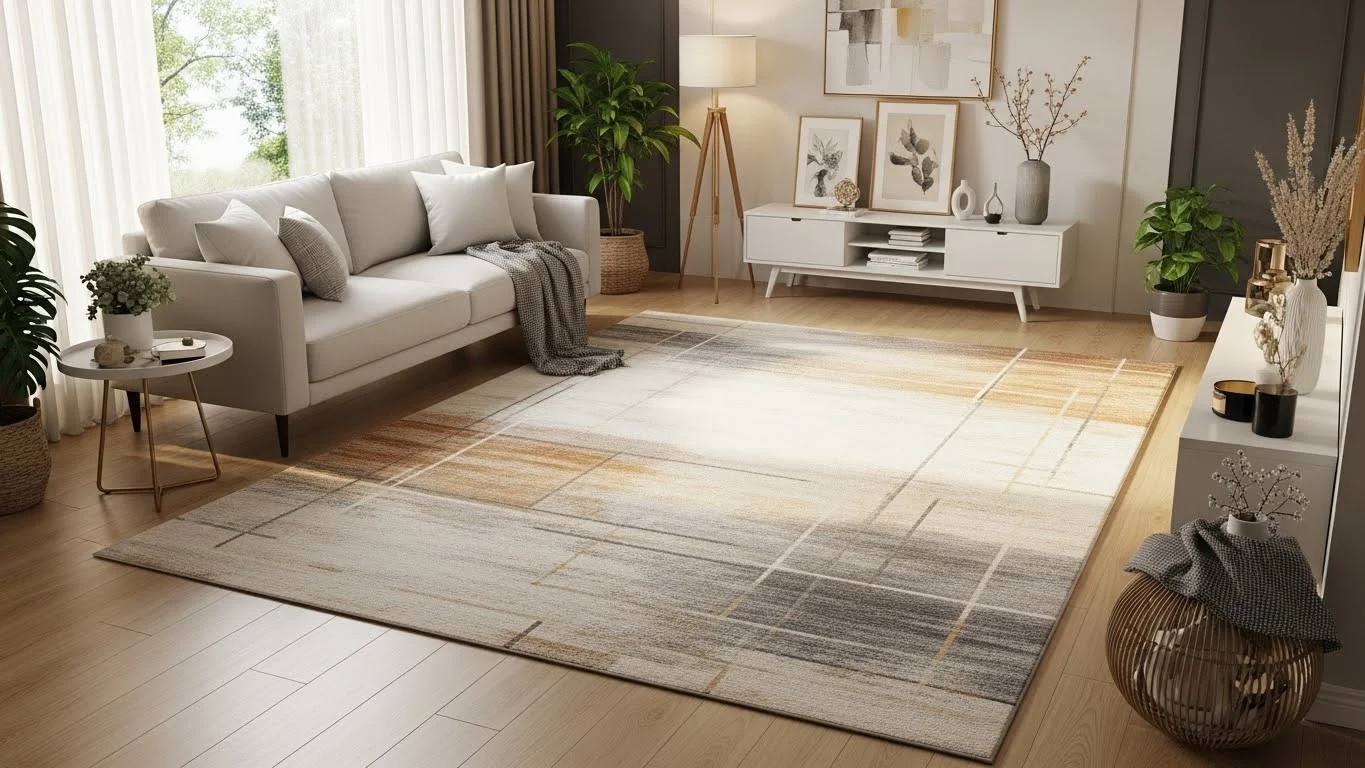
Rugs do more than just warm up a space — they define it. Whether you’re styling a cozy bedroom, a spacious living room, or a functional dining area, choosing the right rug size makes all the difference. Understanding what size rug for every room ensures harmony, proportion, and flow throughout your home.
The wrong rug can make a room feel awkward — too small, and it floats in the middle; too large, and it swallows the furniture. The right one, however, anchors your décor, balances scale, and enhances texture. A rug frames your furniture like art frames a painting — it ties everything together.
This guide breaks down exact measurements, room-by-room layouts, and professional area rug placement tips to help you choose rugs that perfectly fit your home’s personality and proportions.
1. Living Room Rug Size & Placement
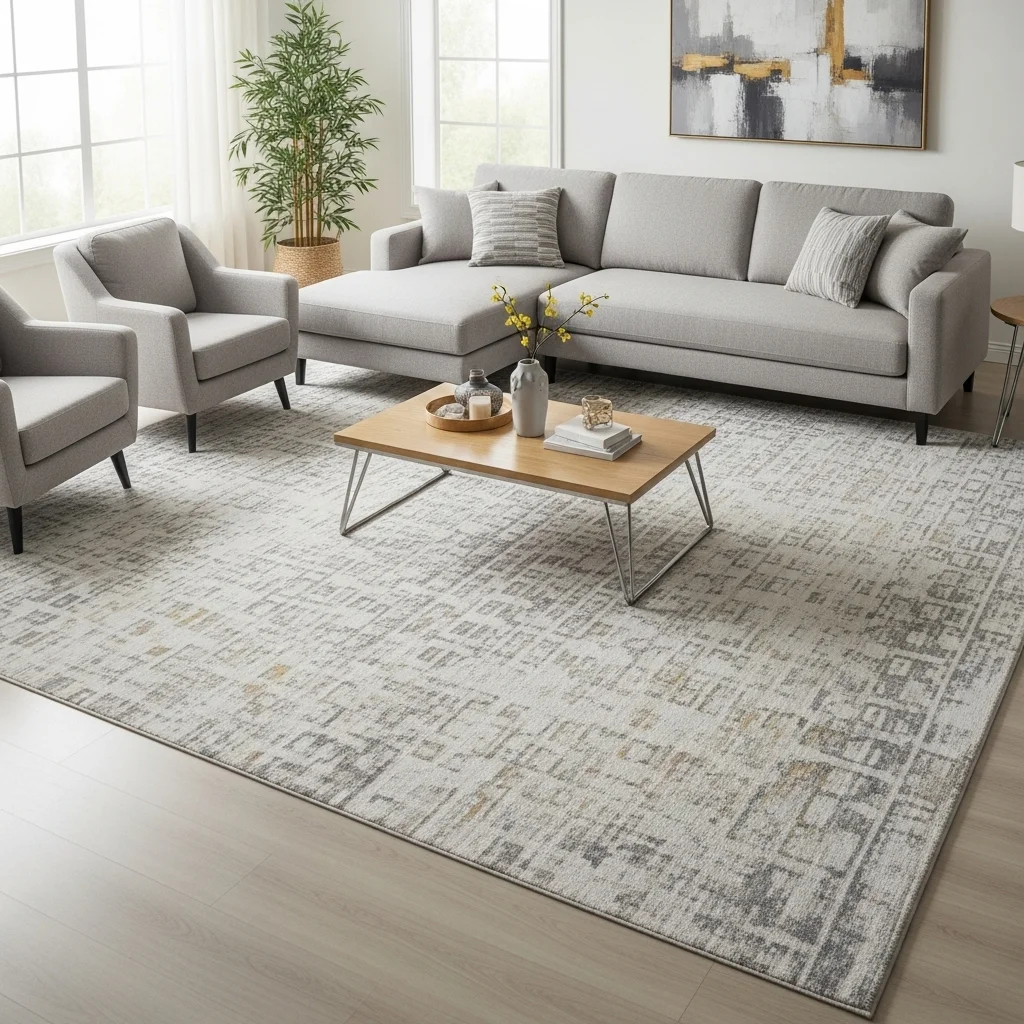
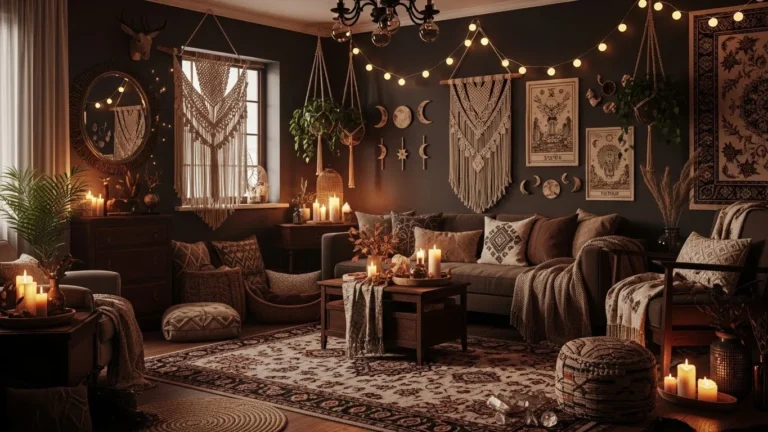
Your living room rug sets the tone for the entire space. The goal is to anchor your seating area — not just fill the floor. For most living rooms, rugs come in 8×10 ft, 9×12 ft, or 10×14 ft sizes, depending on furniture layout.
Ideally, the rug should extend under the front legs of sofas and chairs, creating a unified zone. In larger living rooms, allow all furniture legs on the rug for a luxurious, cohesive look. Smaller spaces look great with just the front legs on — this makes the area feel open and balanced.
The standard rule from professional rug size guides: leave 12–18 inches of bare floor between the rug edge and wall to frame your layout beautifully.
2. Bedroom Rug Size & Placement
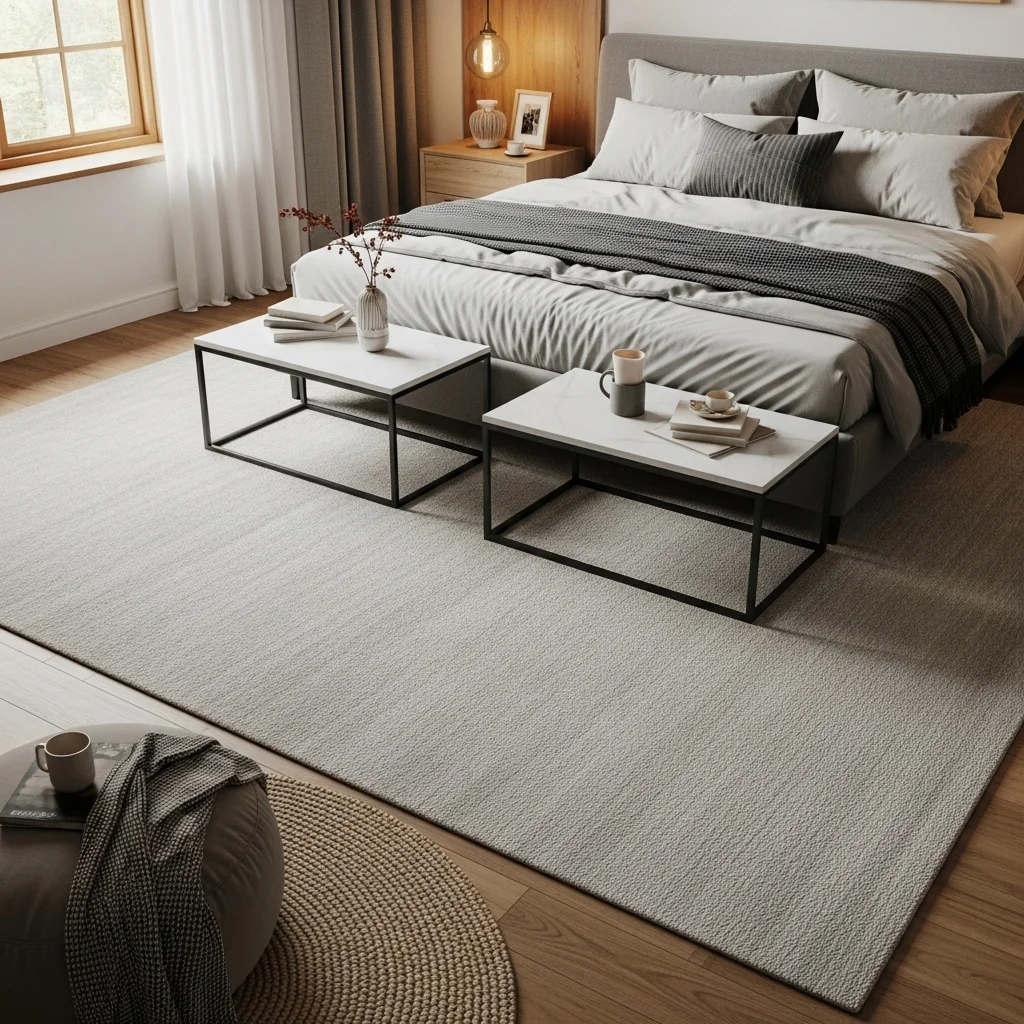
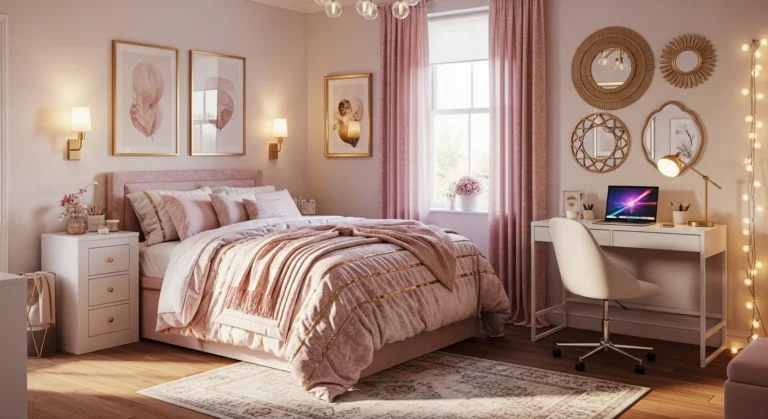
Bedrooms need softness and symmetry. For queen beds, choose a 6×9 ft or 8×10 ft rug that sits under the bed and extends at least 18–24 inches beyond the sides. For king beds, go bigger — 9×12 ft provides generous comfort underfoot.
If you prefer smaller rugs, place two runner rugs on either side of the bed. This works well in compact bedrooms or guest rooms. For statement style, layer rugs — a patterned rug under a neutral one adds dimension.
Getting bedroom rug measurements right makes the room feel balanced, cozy, and well-defined.
3. Dining Room Rug Size & Placement
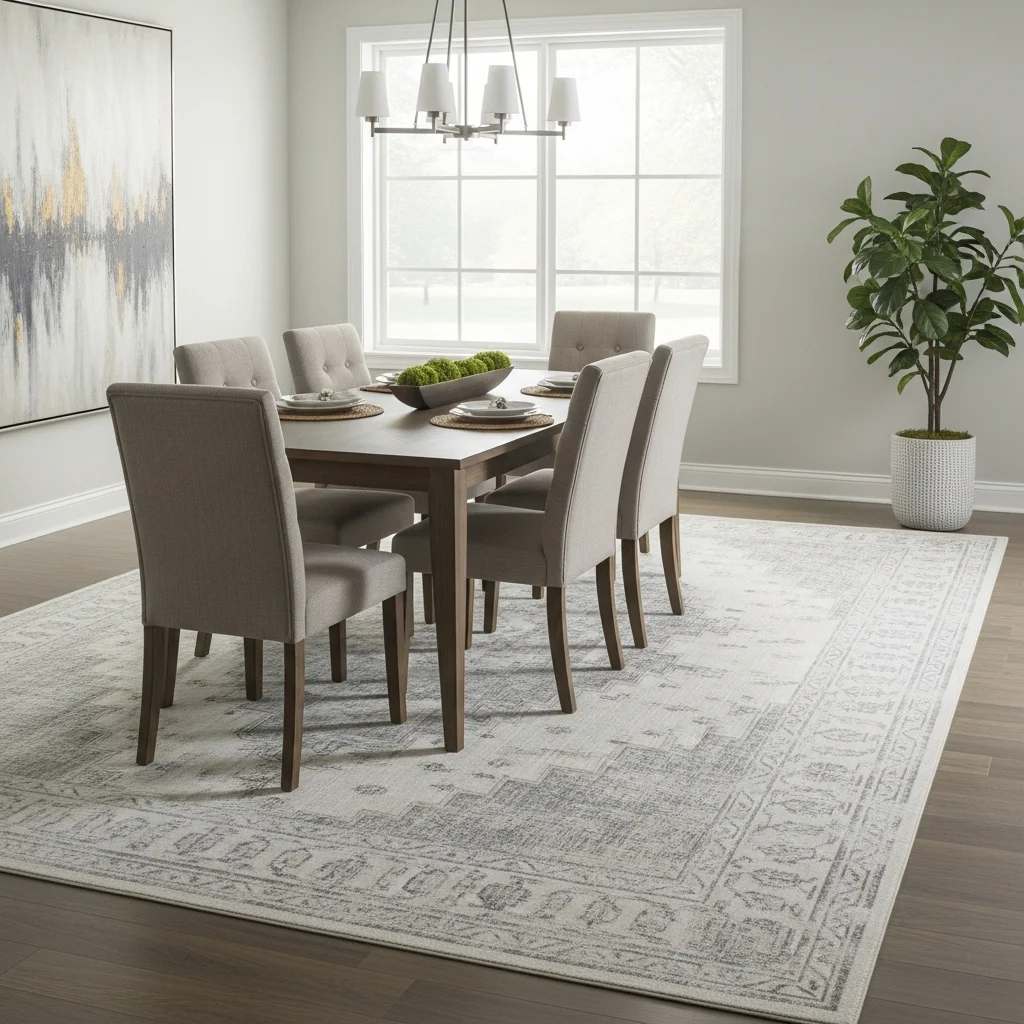
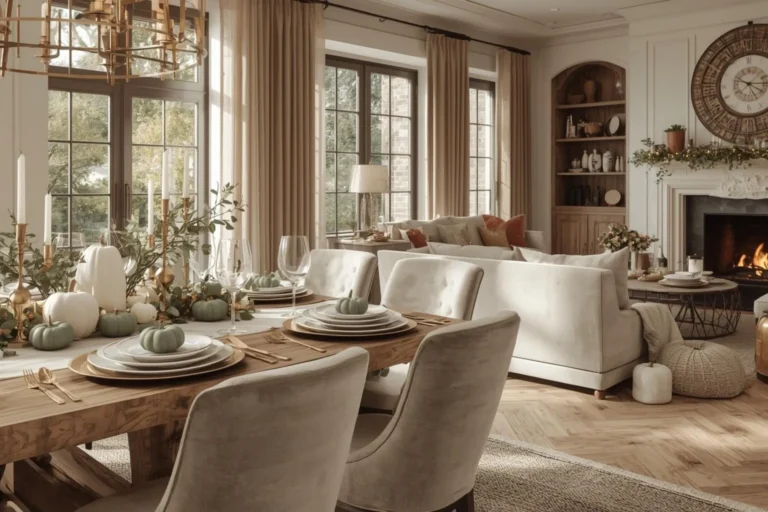
In the dining room, your rug should be large enough to fit both the table and chairs — even when pulled out. Add at least 24 inches on all sides of your dining table for comfortable movement.
For a 6-person table (about 3×5 ft), a 8×10 ft rug fits perfectly. Larger 8-person tables (4×8 ft) work best with a 9×12 ft rug. The key is to keep chair legs on the rug at all times — it prevents tipping and creates a smooth, cohesive appearance.
Round dining tables look great with round rugs, matching the shape and centering the focus — one of the most elegant room layout and rug dimension strategies.
4. Entryway or Hallway Rug Size
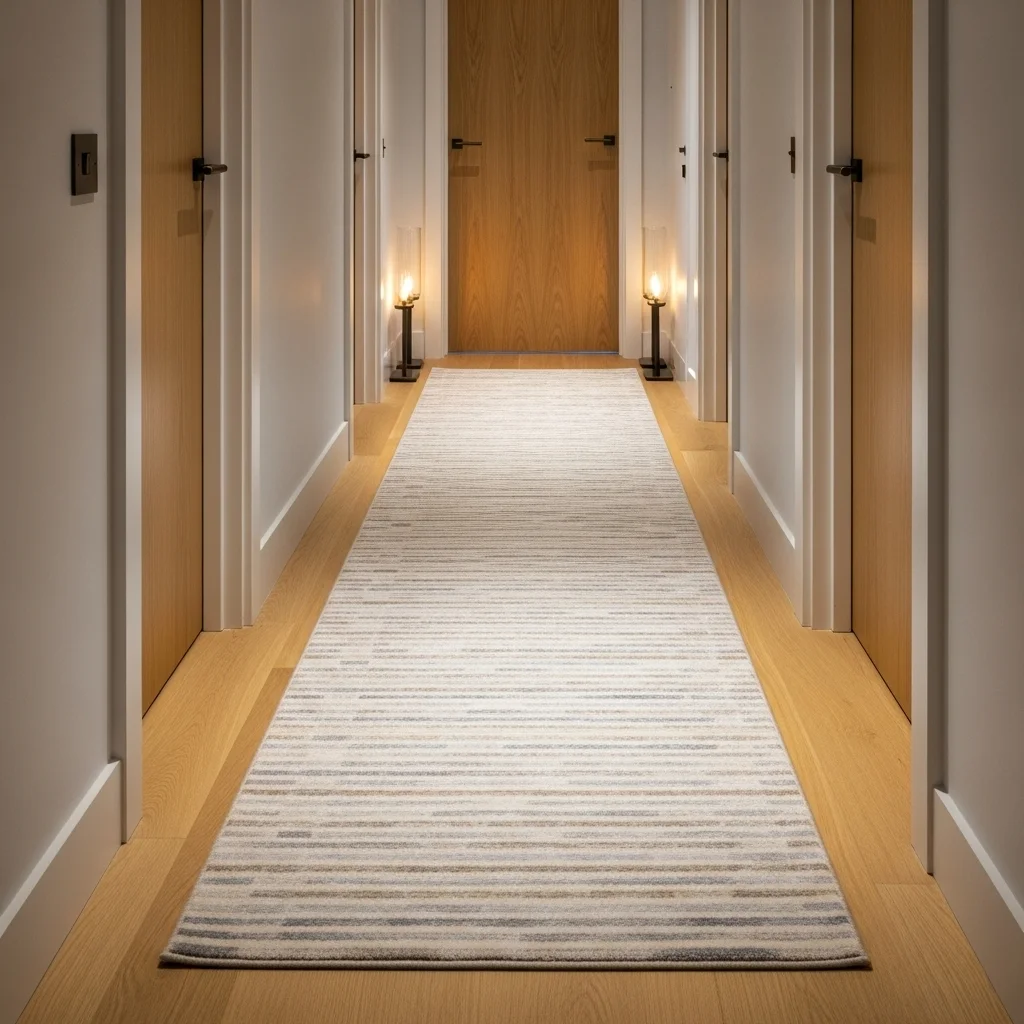
Your entryway rug sets the first impression for guests — it should be both stylish and practical. For narrow entrances, choose runners (2×6 ft or 2.5×8 ft) that lead the eye inward. In larger foyers, use 4×6 ft or 5×8 ft rugs centered under a console table or chandelier.
In long hallways, leave 4–6 inches of space on each side for balance. Entryway rugs should complement the scale of furniture while being durable enough for high traffic — a detail often overlooked in rug size guides but crucial for daily comfort.
5. Kitchen Rug Size & Placement
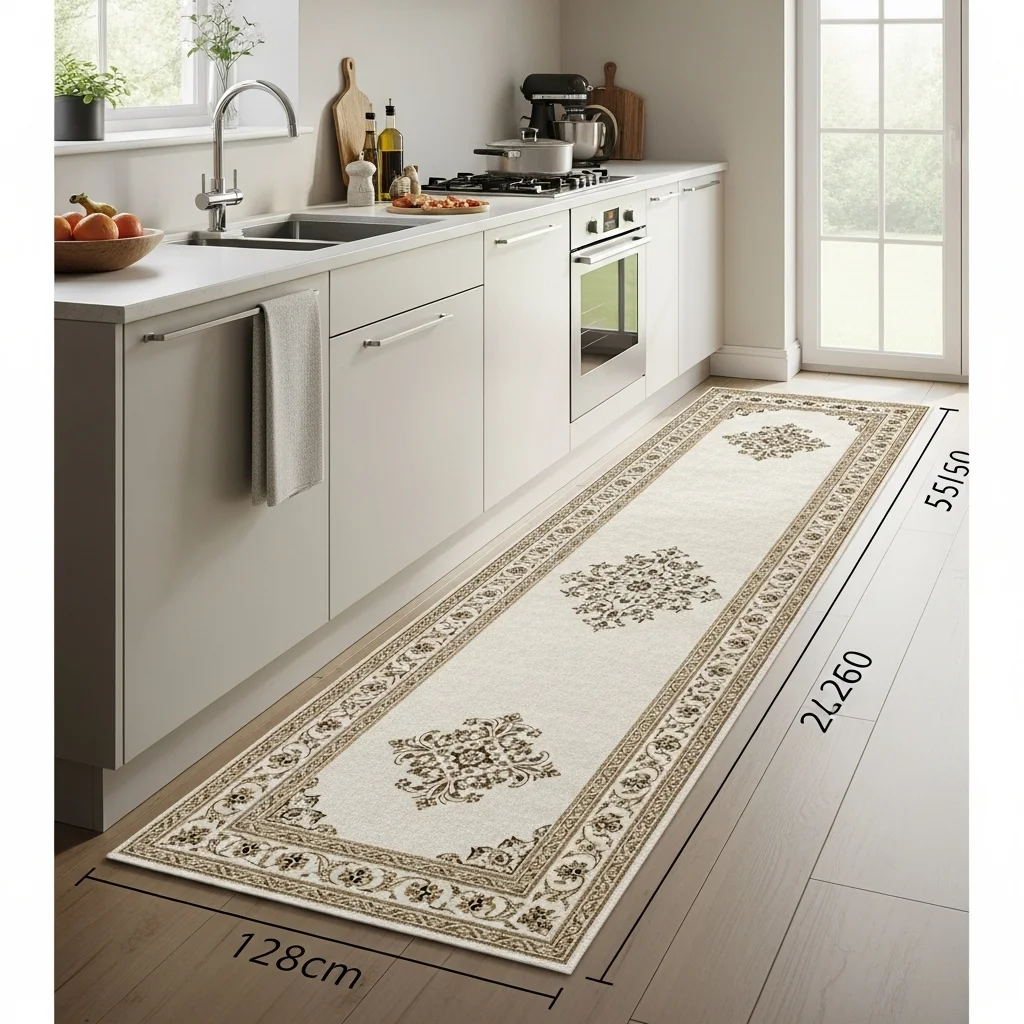
Kitchens benefit from narrow rugs or runners that add warmth and color. For galley kitchens, use 2×6 ft or 2.5×8 ft runners centered between counters. For open layouts, try a 4×6 ft rug near the sink or island for softness underfoot.
If your kitchen opens to a dining area, use coordinating rugs in similar tones to unify both spaces. The right rug enhances comfort without cluttering walkways — a favorite among area rug placement tips for functional homes.
6. Bathroom Rug Size & Placement
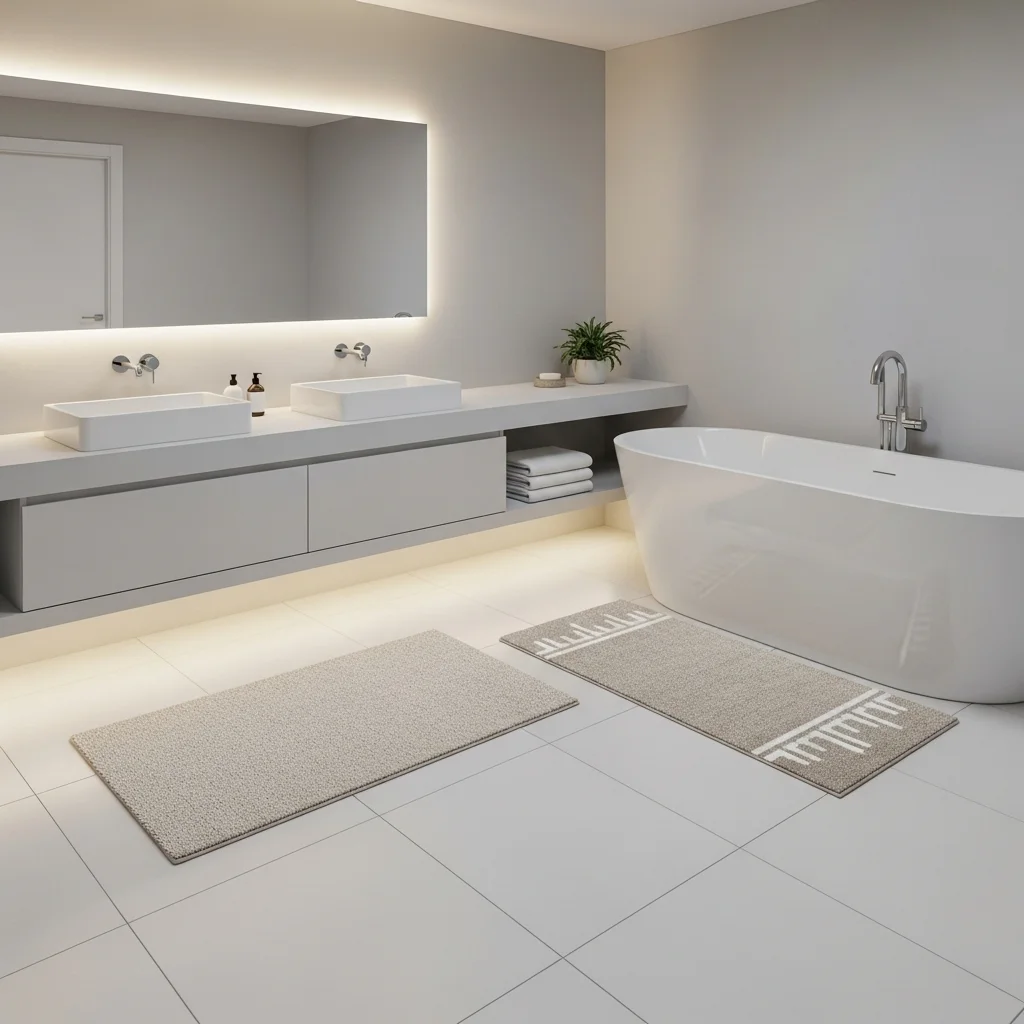
Bathrooms need plush comfort underfoot and practicality against moisture. Use small 2×3 ft or 3×5 ft rugs in front of the sink or shower. For double vanities, opt for a long runner rug to balance symmetry.
Always use non-slip backing for safety. Matching rugs by texture rather than size — for example, a mat near the tub and a runner near the sink — creates layered comfort while maintaining a clean design flow.
Read also. 35 Craft Room Storage Ideas
7. Office or Study Room Rug Size
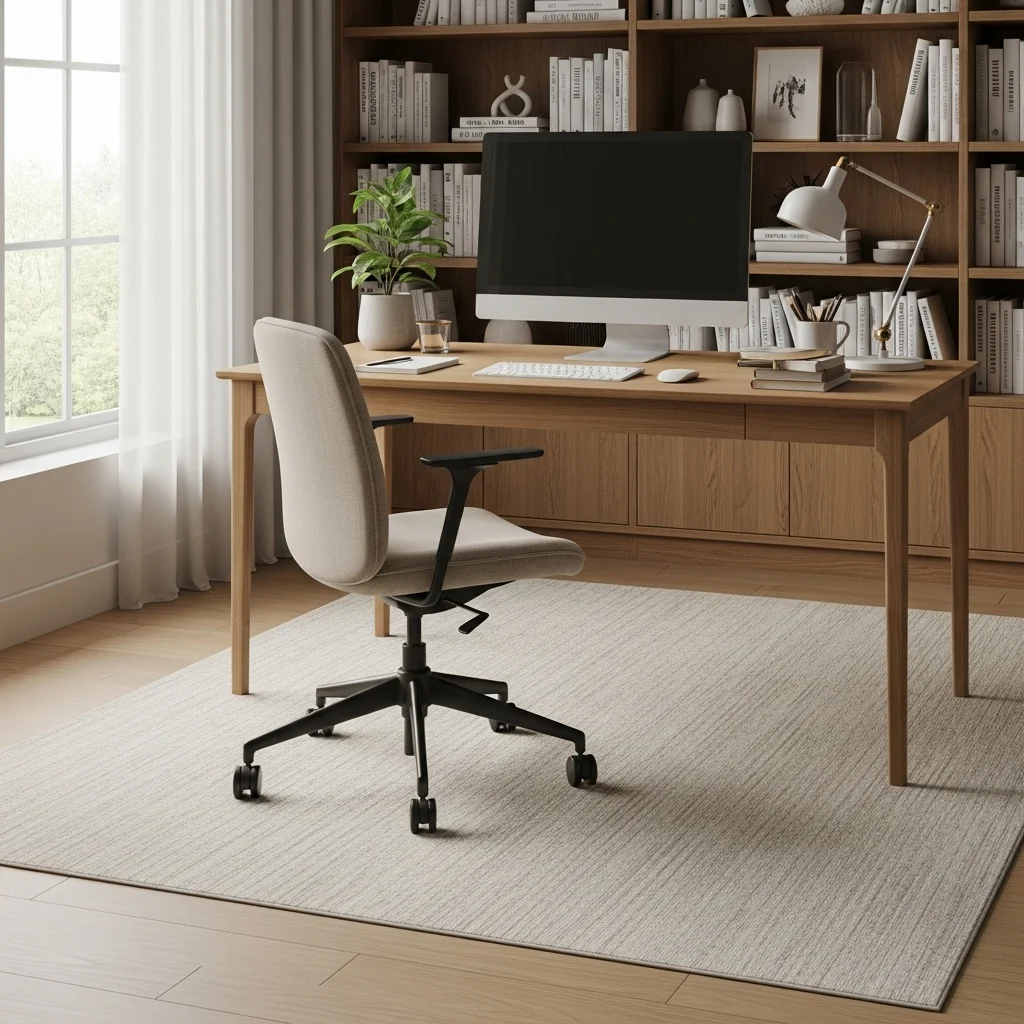
For home offices, choose a rug that sits under both your desk and chair when pulled out — usually 5×7 ft, 6×9 ft, or 8×10 ft, depending on room size.
Avoid smaller rugs that cut off at chair edges; they can cause rolling issues and visual imbalance. Neutral tones or subtle patterns promote focus — one of the smarter room layout and rug dimension hacks for productivity.
8. Kids’ Room Rug Size & Placement
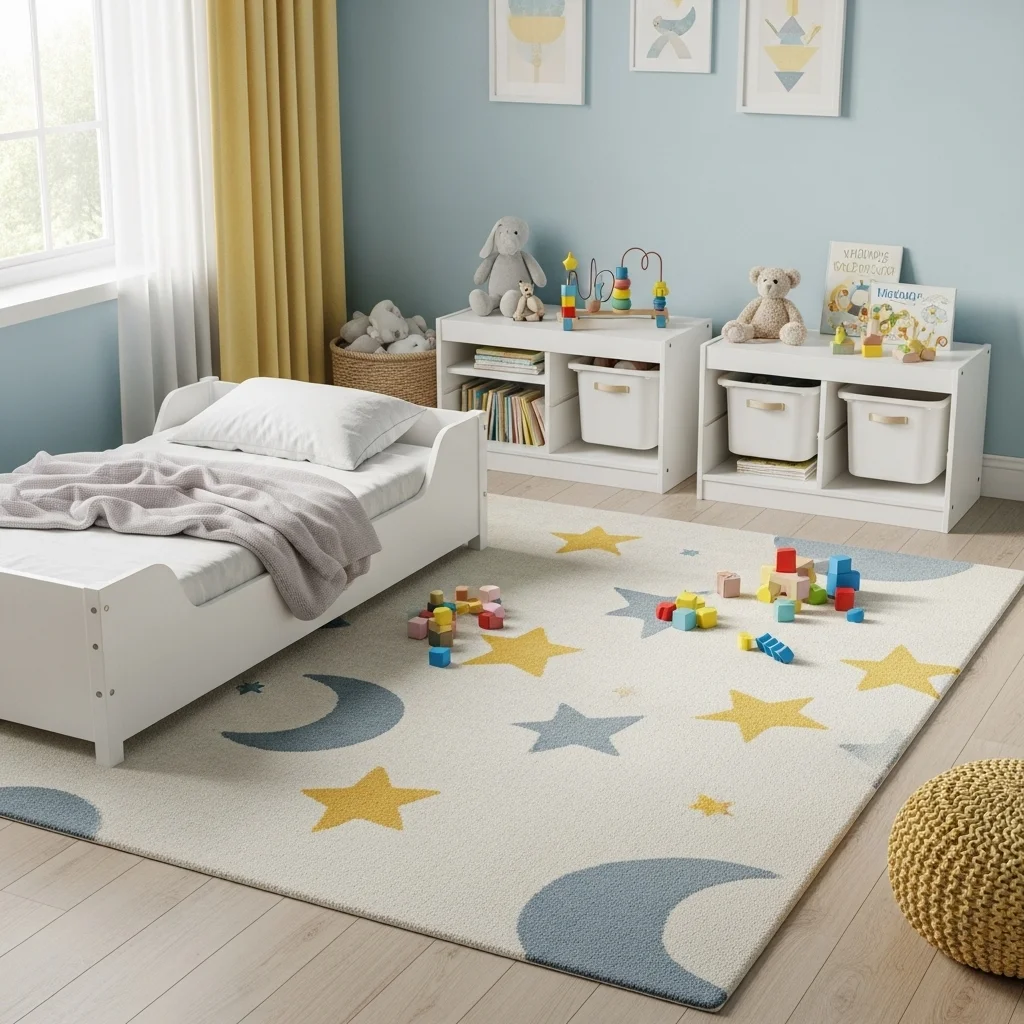
Kids’ rooms are playful, so go for durable, easy-clean rugs. A 5×7 ft or 6×9 ft rug works perfectly for most play areas, offering a soft landing zone while defining the center of the room.
If you have twin beds, position a runner between them or use a large rug under both for balance. Choose fun, bold patterns to make the room cheerful without overwhelming it.
9. Nursery Rug Size
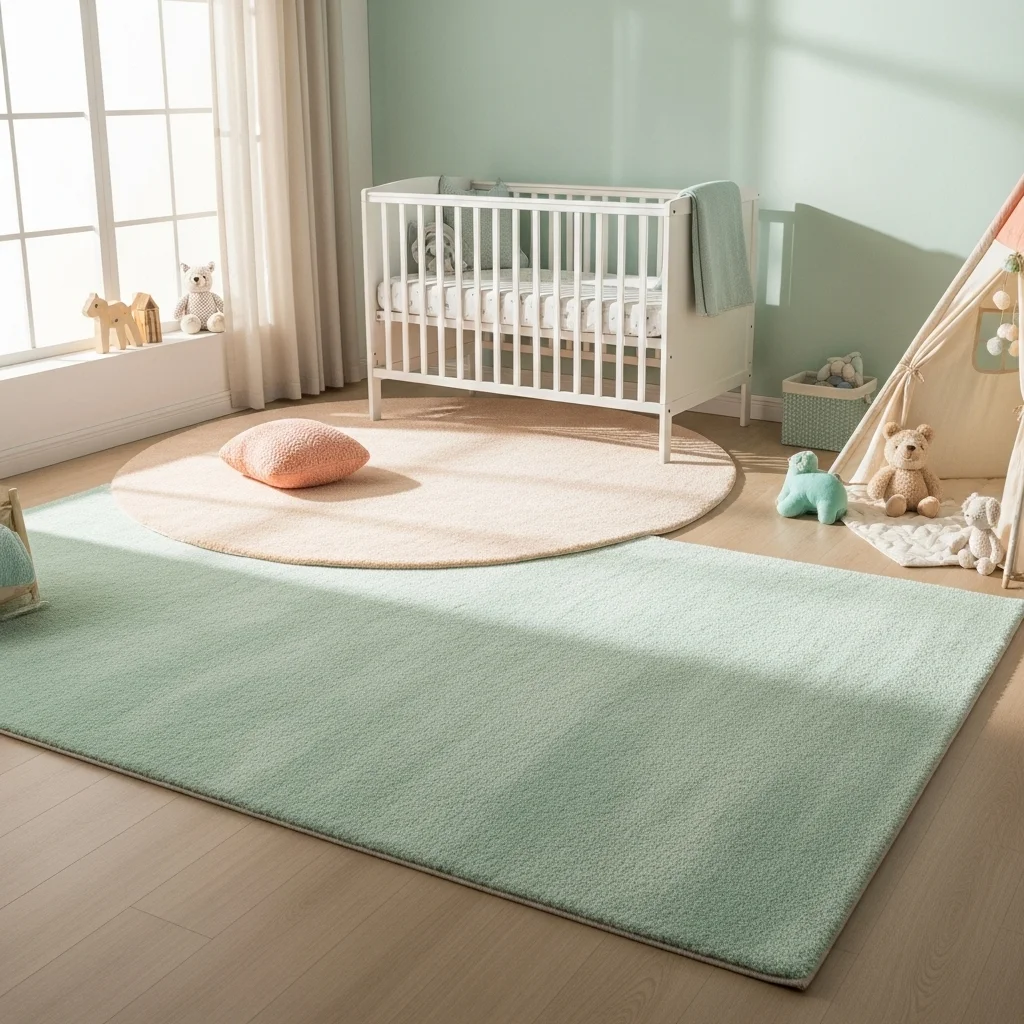
Nurseries benefit from medium rugs that fit under the crib and chair area — usually 6×9 ft. Place the rug partially under furniture to anchor the space while keeping edges visible.
Opt for soft, non-toxic materials like cotton or wool blends. Gentle tones and plush textures complement the calm mood needed for restful sleep and nurturing care — perfect examples of thoughtful bedroom rug measurements.
10. Outdoor Rug Size & Placement
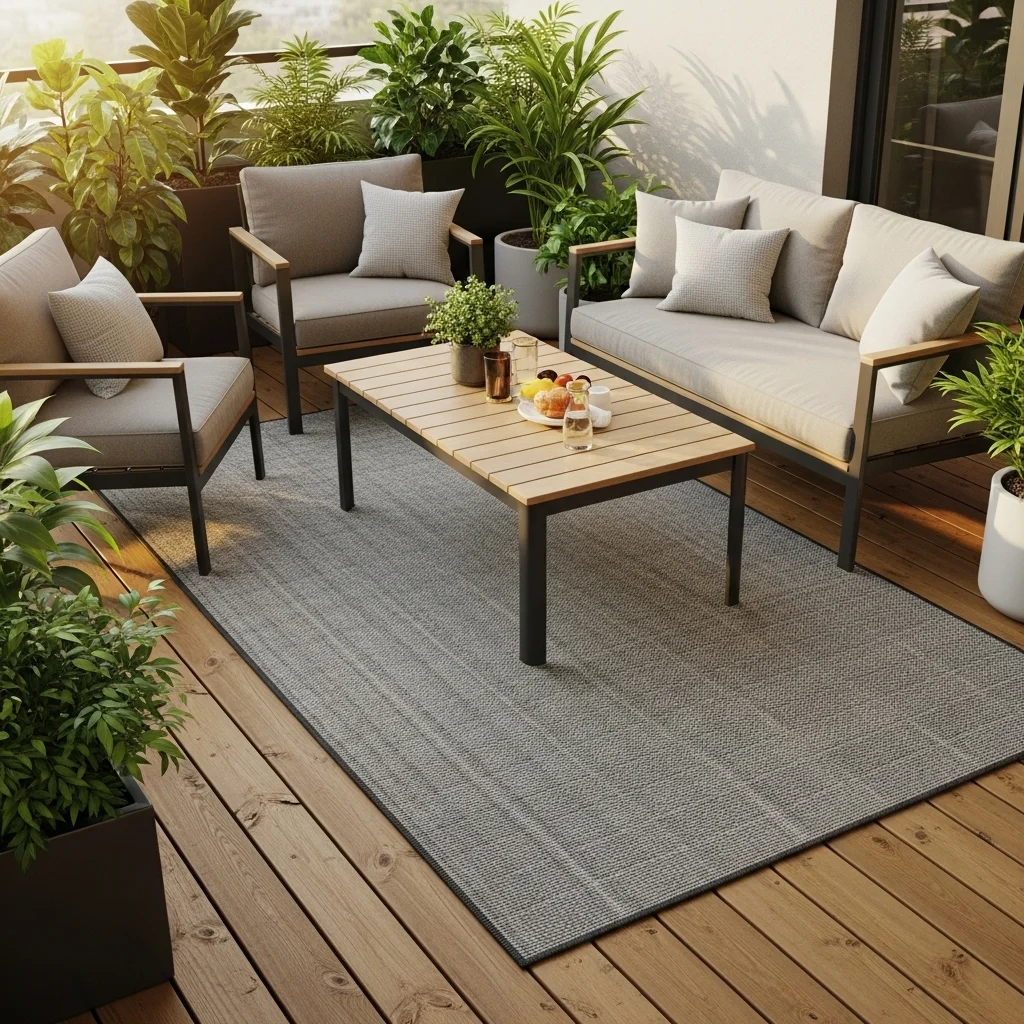
Outdoor rugs should fit your furniture setup the same way as indoor ones. For small patio sets, a 5×7 ft or 6×9 ft rug works well. Larger dining setups look best with 8×10 ft or 9×12 ft rugs.
Keep at least 6–12 inches of floor or deck visible around the rug for a framed, airy effect. Choose weather-resistant, quick-drying materials for longevity and easy maintenance — a modern trend in living room rug ideas extended to outdoor living.
11. Layering Rugs for Texture and Style
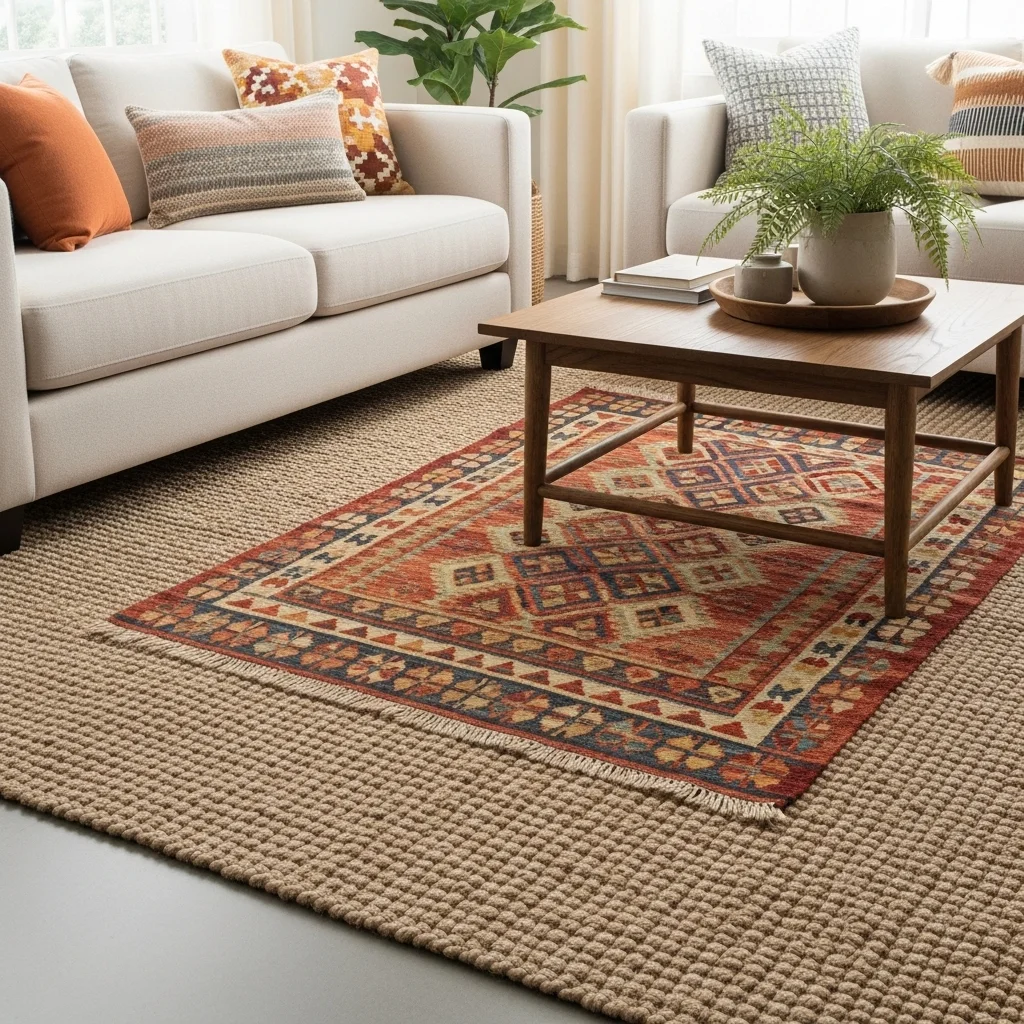
Layering rugs adds texture and dimension, especially in open spaces. Combine a large neutral rug (like jute) with a smaller patterned one on top. This creates a cozy, styled look while defining zones within a single room.
Layering also helps visually connect furniture groupings, enhancing balance — an advanced area rug placement tip that designers swear by.
12. Common Rug Size Mistakes to Avoid
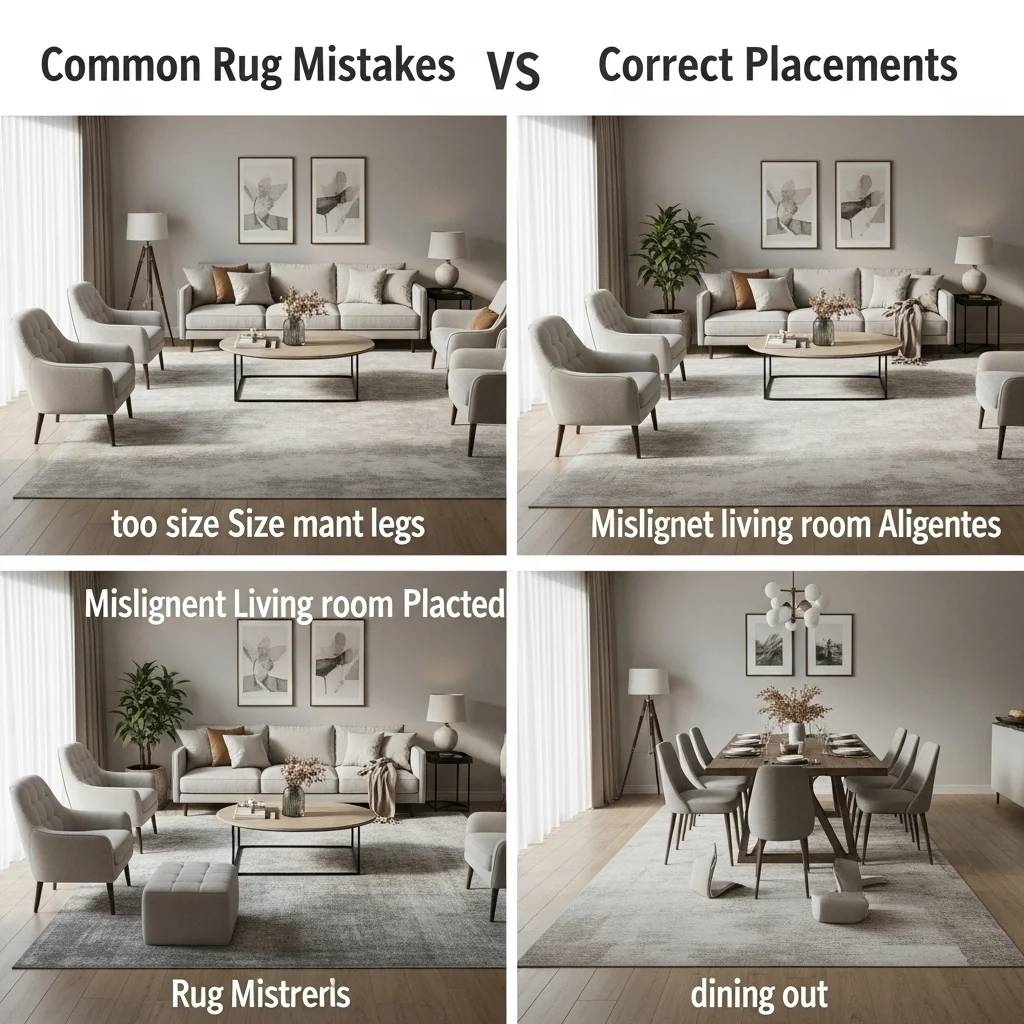
- Too Small: Rugs that float under coffee tables or stop short of furniture edges shrink the visual space.
- Too Big: Rugs that touch walls eliminate framing and look heavy.
- Wrong Shape: A rectangular rug under a round table disrupts flow.
Correcting these common sizing mistakes instantly elevates any room’s aesthetic, proving that precision is power in every rug size guide.
Final Thoughts
Choosing what size rug for every room is all about proportion, placement, and personal style. The perfect rug grounds your furniture, enhances comfort, and ties the entire space together effortlessly.
By following these area rug placement tips, you’ll create rooms that feel balanced, cohesive, and beautifully designed — from cozy bedrooms to lively living rooms. The right rug doesn’t just decorate your floor; it defines your home.