How to Turn Your Living Room Into a Bedroom: Small Space Living Tips That Work

Modern living often calls for creative solutions — especially when space is limited. Whether you live in a studio apartment, a shared home, or simply want an extra sleeping area for guests, learning how to turn your living room into a bedroom can help you make the most of every inch. With thoughtful planning and the right design approach, a single room can serve dual purposes without feeling cramped or cluttered.
Transforming your living room doesn’t mean sacrificing comfort or style. By choosing versatile furniture, creating zones, and optimizing lighting and storage, you can design a space that transitions seamlessly between lounging and sleeping. It’s about blending practicality with coziness — the art of making multifunctionality look intentional.
This guide will walk you through every step: from rearranging furniture and selecting smart storage, to using dividers, textiles, and décor to maintain a peaceful and private sleeping environment. Whether you’re embracing small space living tips or creating a guest-friendly layout, these steps will make your transformation effortless.
1. Start with a Functional Floor Plan
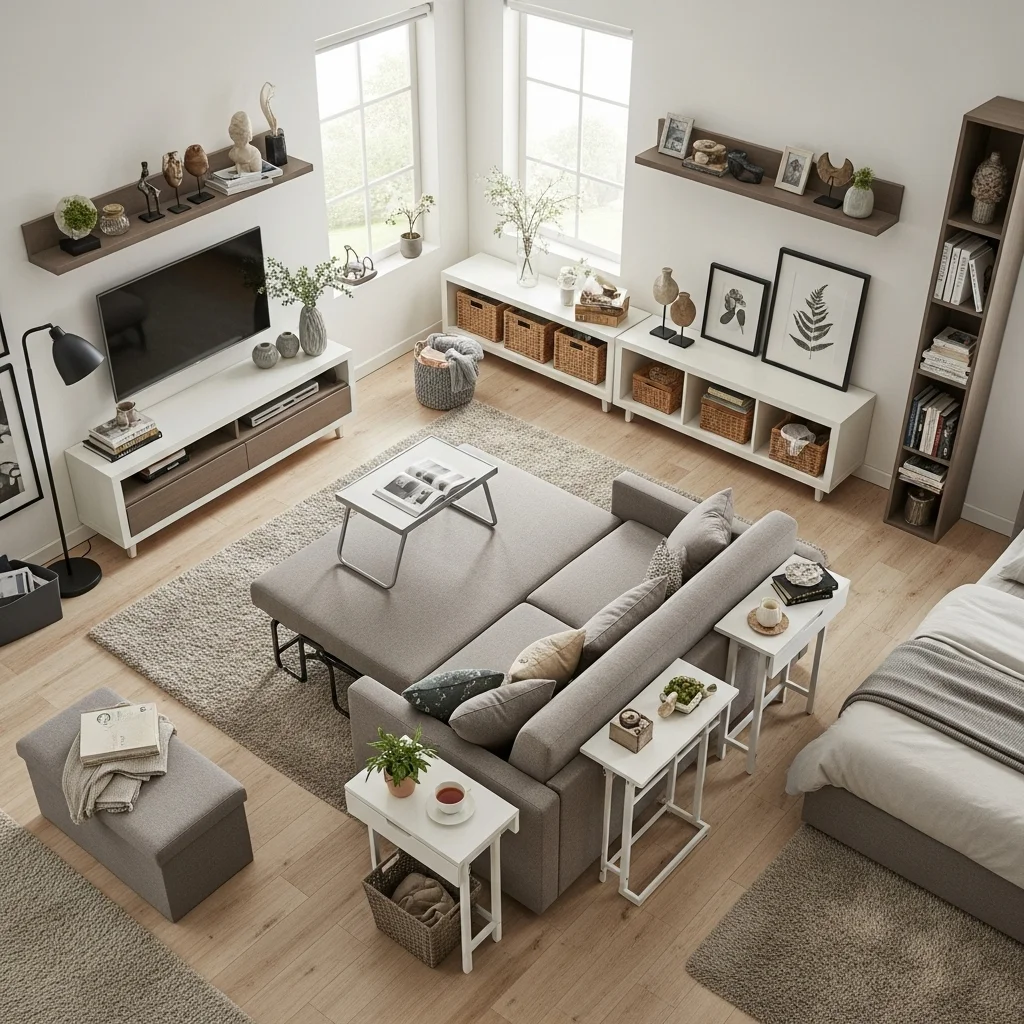
Before moving anything, assess your living room’s layout. Identify where your sofa, windows, outlets, and lighting are positioned. Sketch out possible zones for sleeping and relaxing. Ideally, your bed or sleeper sofa should face away from the entrance to create a sense of privacy and rest.
Make sure to maintain flow and accessibility — avoid blocking windows or pathways. A well-thought-out floor plan is the foundation of living room conversion ideas that feel both stylish and functional.
2. Choose a Sofa Bed or Convertible Furniture
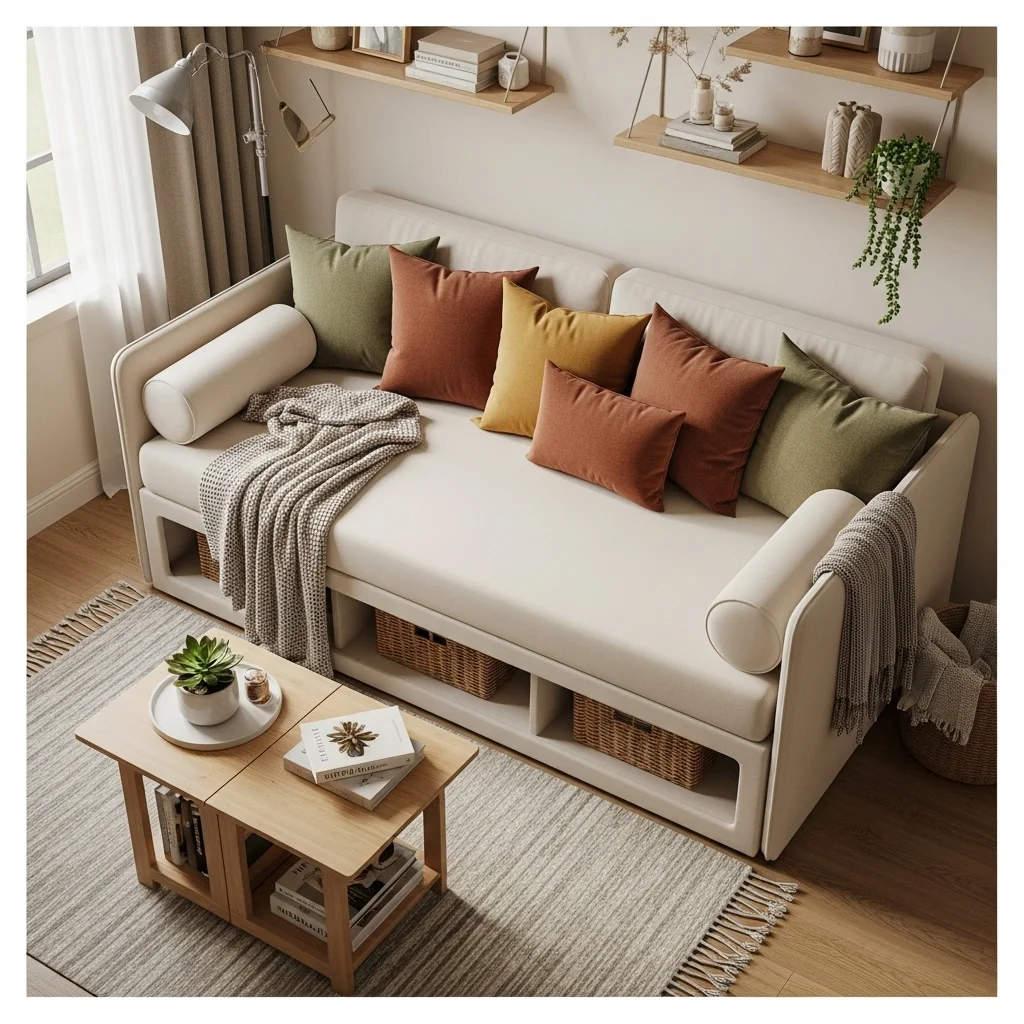
The most practical step when deciding how to turn your living room into a bedroom is investing in a high-quality sofa bed, daybed, or Murphy bed. These pieces provide comfortable sleeping options while maintaining a clean daytime look.
Sofa beds with built-in storage are especially useful in small apartments. You can store bedding, pillows, or seasonal items inside, reducing clutter and maximizing space — a hallmark of smart furniture solutions for modern living.
3. Use Room Dividers for Privacy

To visually separate your sleeping area from the rest of the room, use partitions or dividers. Folding screens, curtains, or open shelving units can section off your bed while still allowing airflow and light.
If you want a softer, homier touch, hang ceiling-mounted drapes that can be drawn at night for privacy. This is a go-to trick in multi-functional room design, offering a quick transformation from living area to peaceful bedroom.
4. Choose a Neutral, Relaxing Color Palette
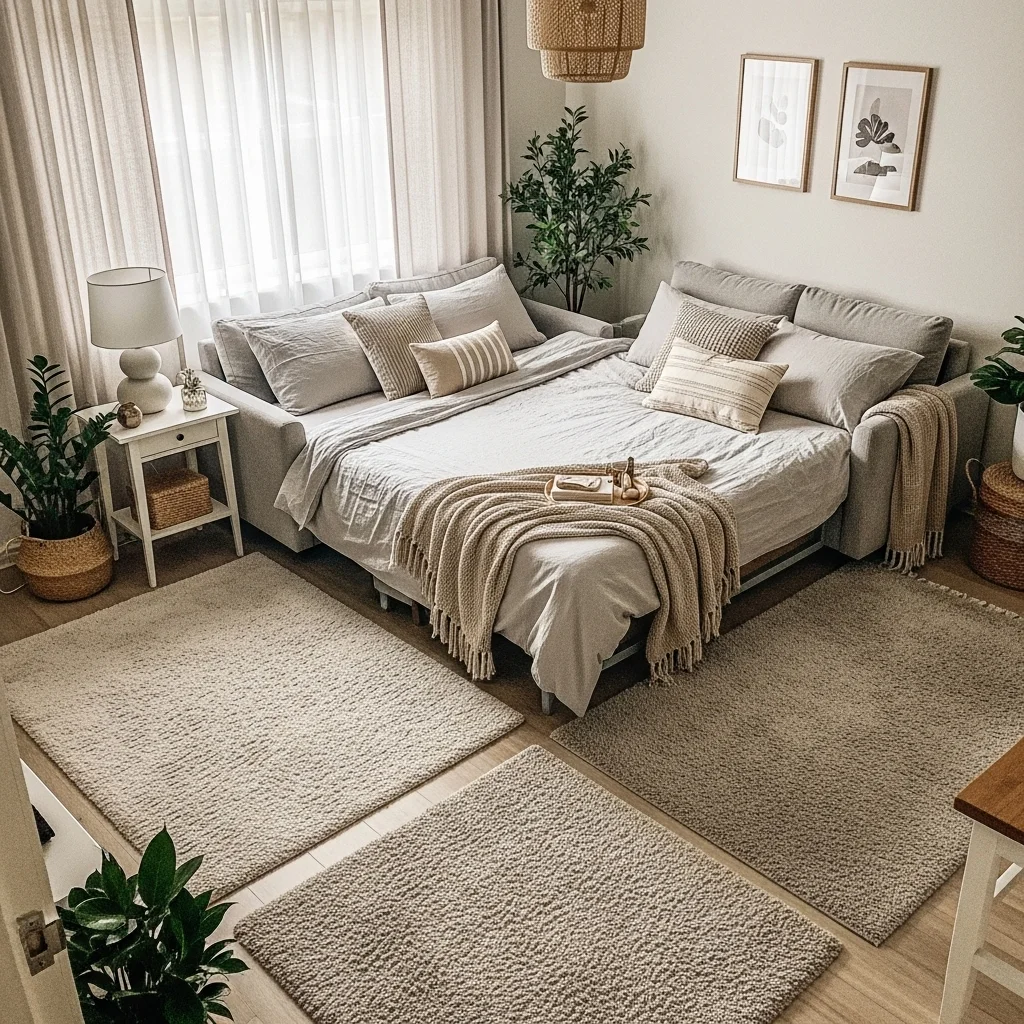
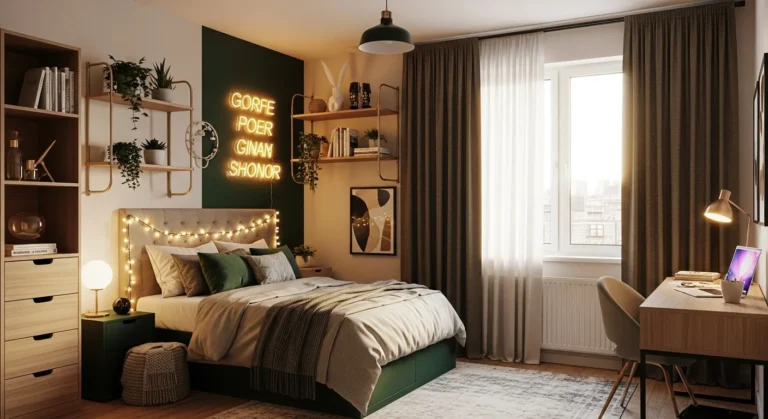
Color plays a huge role in how your space feels. Opt for soothing tones like beige, soft gray, or sage green to promote relaxation. Neutral colors help your room transition smoothly between daytime and nighttime use.
Accent the look with warm lighting, textured throws, and soft area rugs to define the sleeping zone. A calming palette enhances your studio apartment hacks by creating visual serenity, even in limited space.
5. Use Rugs to Define Separate Zones

A well-placed rug helps distinguish between your living and sleeping areas. Place one rug under your sofa and another beneath your bed or convertible furniture to visually separate the two functions.
Choosing different textures or patterns adds dimension while maintaining harmony. Layering rugs is also a cozy way to soften your multifunctional space — a subtle but effective small space living tip.
6. Invest in Dual-Purpose Furniture

Multifunctional furniture is your best friend in small living spaces. Consider ottomans that double as storage, nesting tables, or fold-out desks that disappear when not in use. These designs keep the room flexible and clutter-free.
For instance, a lift-top coffee table can serve as both dining and work space. Each item should earn its place — that’s the golden rule in multi-functional room design.
7. Maximize Vertical Storage
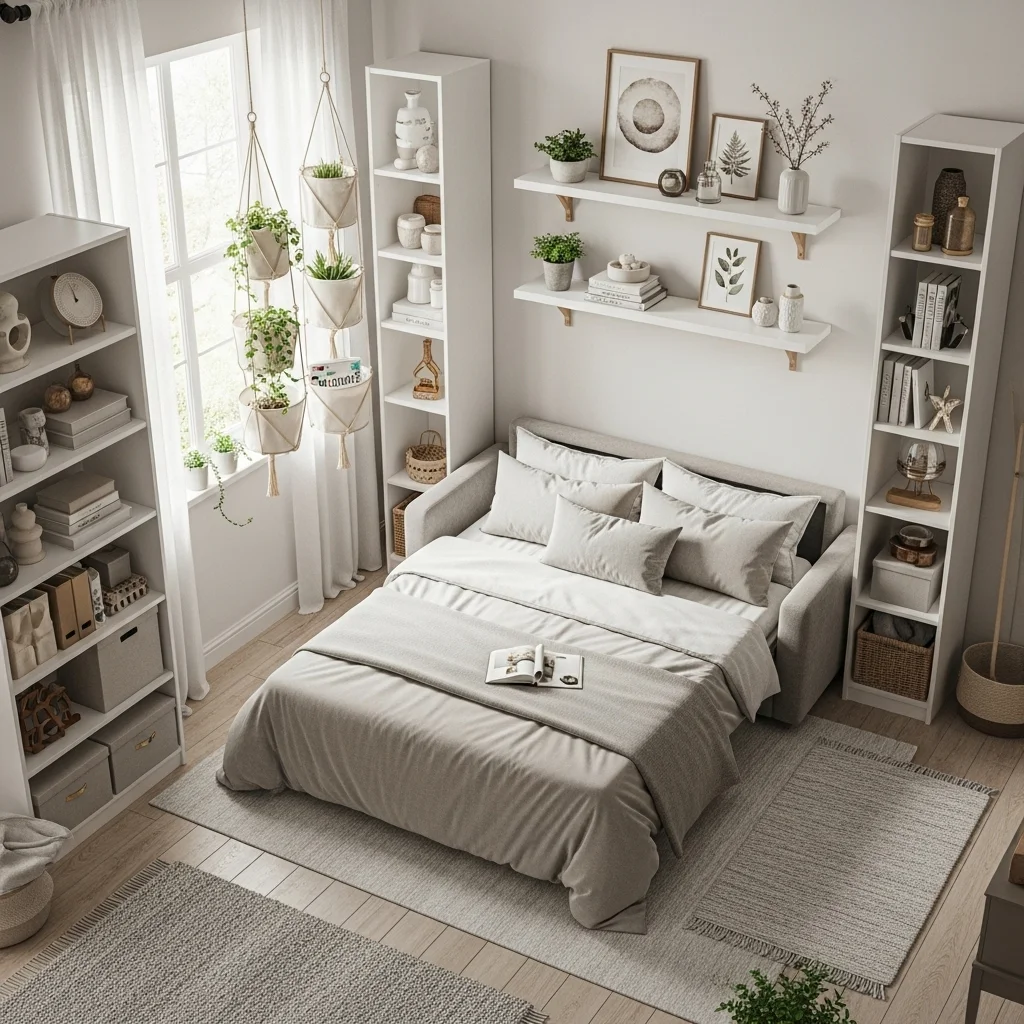
When floor space is scarce, go vertical. Use tall shelving units, hanging storage, or wall-mounted cabinets to keep belongings organized and accessible.
Install floating shelves above your bed or sofa to hold books, plants, or art without crowding the room. This approach is a staple in small space living tips for compact apartments, keeping everything neat yet visually open.
8. Use Lighting to Create Ambiance
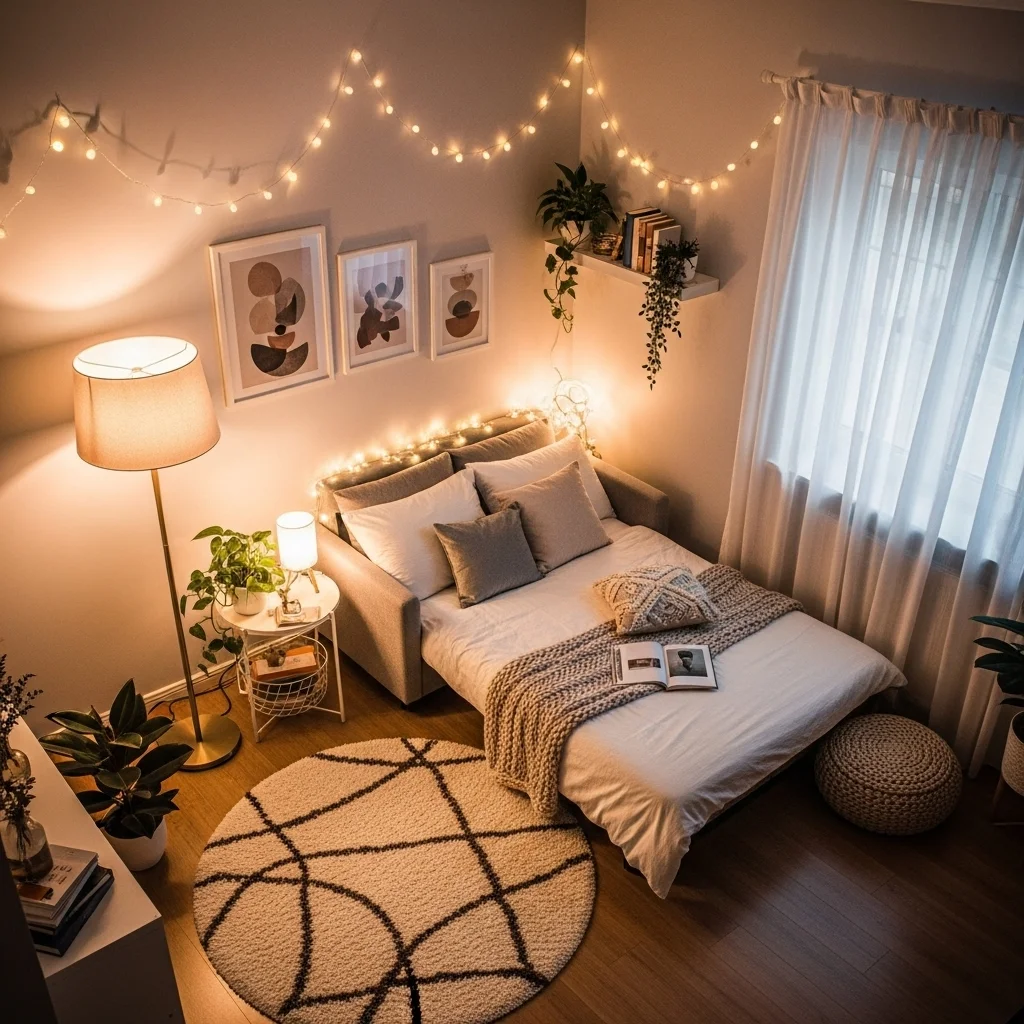
Lighting is key in differentiating zones. Use warm, dimmable lamps near your bed area and brighter, cooler lights near your living area. A mix of floor lamps, wall sconces, and string lights can create layers of illumination.
Soft lighting near your sleeping zone makes nighttime relaxation easy, while directional lamps in your living area keep things functional. Light zoning adds comfort and depth — a central concept in living room conversion ideas.
Read also. 22 Living Room Office Combo Ideas
9. Add Curtains or Sliding Panels for Separation
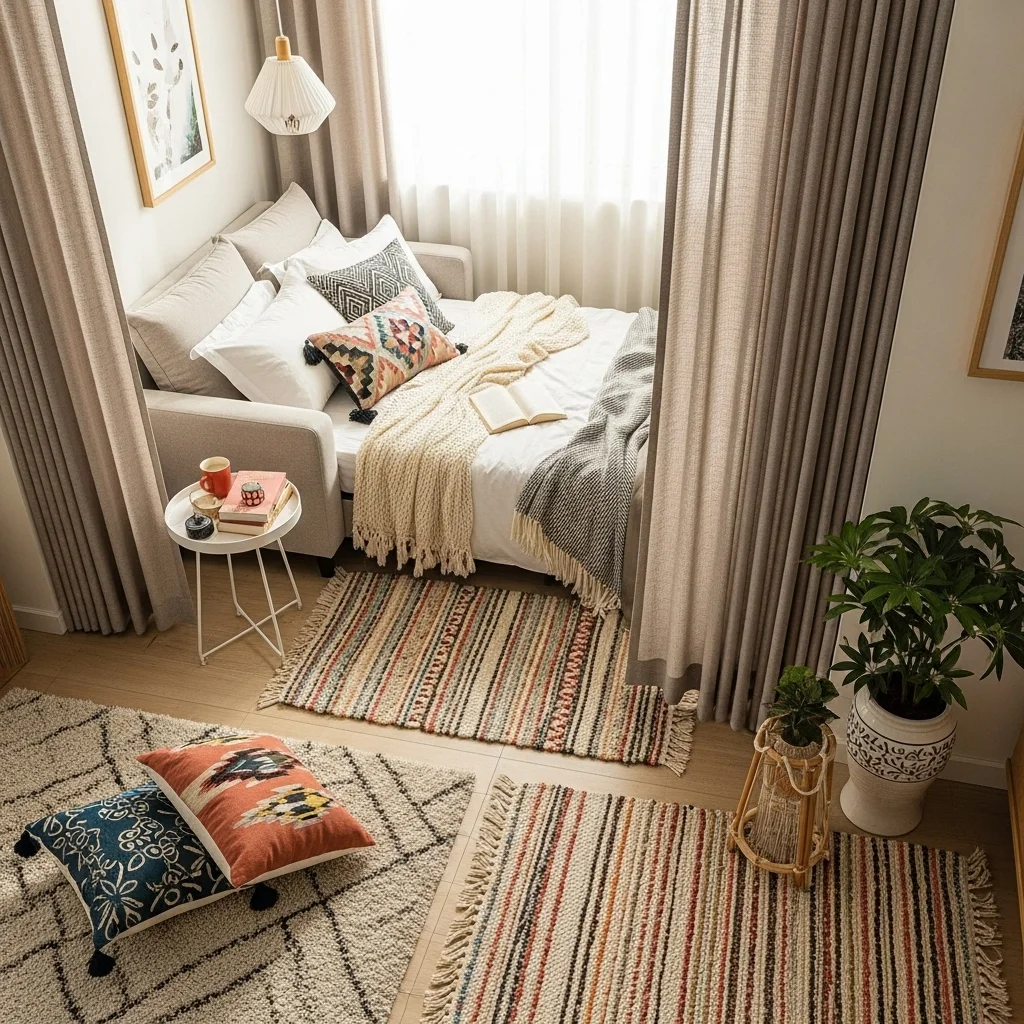
For more permanent solutions, install sliding panels or floor-to-ceiling curtains that divide your space elegantly. These additions are both decorative and functional, offering privacy without needing extra walls.
Choose materials like linen or bamboo for a natural, breathable feel. This technique blends seamlessly with studio apartment hacks, adding sophistication while maintaining flexibility.
10. Keep the Bed Minimal and Comfortable

If your living room doubles as your main bedroom, invest in a high-quality mattress and simple bedding that can be styled easily. Stick to a tidy setup that can be transformed quickly — for instance, fold away blankets and rearrange cushions in the morning.
A neat, minimalist bed setup prevents your room from feeling cluttered and helps maintain the illusion of a living area during the day. Comfort remains the priority in every smart furniture solution setup.
11. Add Storage Under the Bed or Sofa
Utilize under-bed storage boxes or baskets for spare linens, clothes, or accessories. Keeping these hidden ensures your living area remains uncluttered.
Transparent bins or rolling drawers can help organize efficiently while making conversion easier. Maximizing hidden storage is among the most practical small space living tips that keep everything looking seamless.
12. Personalize the Space with Decor
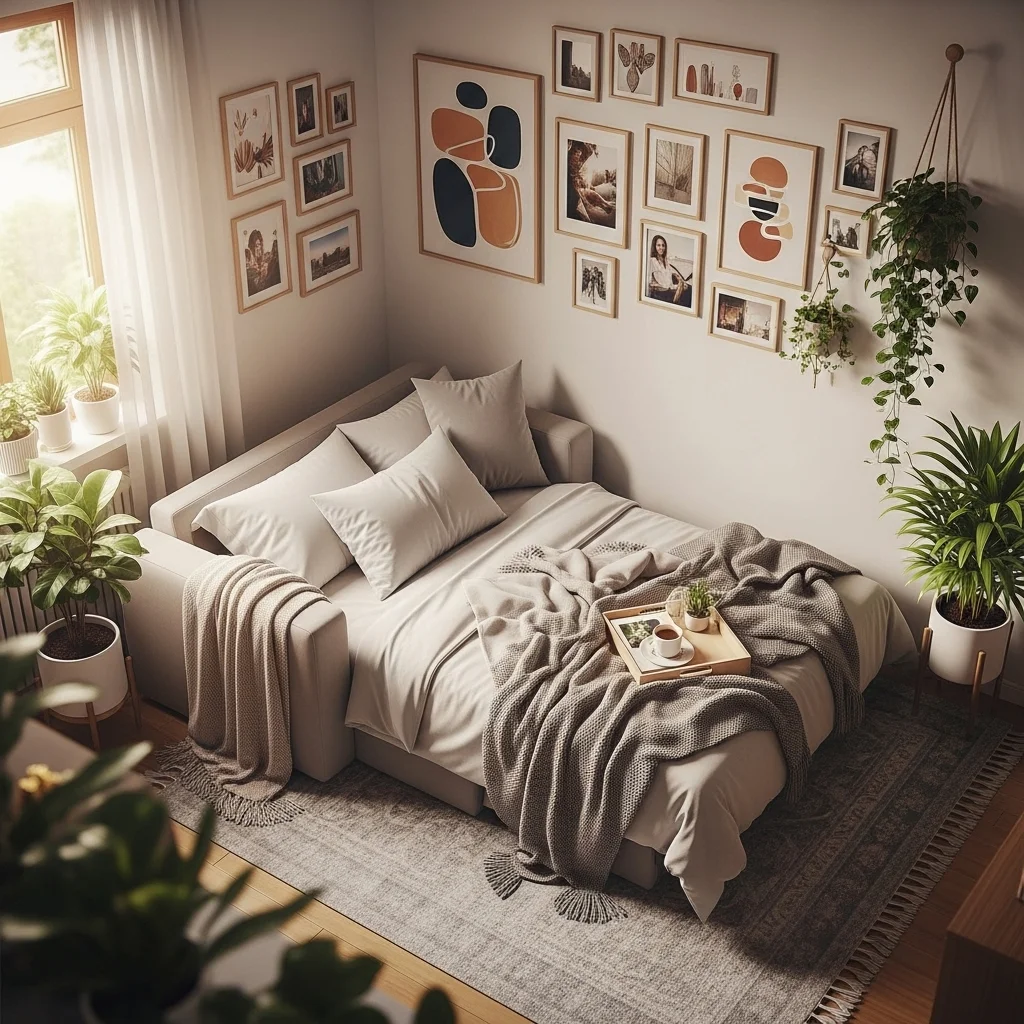
Even a convertible room should reflect your personality. Use removable wall art, cozy textiles, and small plants to make the space feel welcoming. Avoid oversized décor that dominates both functions of the room.
Subtle touches — like neutral cushions or layered throws — can blend both purposes beautifully, giving your space a unified and lived-in feel.
13. Keep It Easy to Transition
Your setup should be effortless to switch between living and sleeping modes. Opt for lightweight furniture that can be moved easily and foldable pieces that disappear when not needed.
Simplifying transitions is key in multi-functional room design, especially when you need to switch quickly from “movie night” to “bedtime.”
14. Use Mirrors to Create Openness
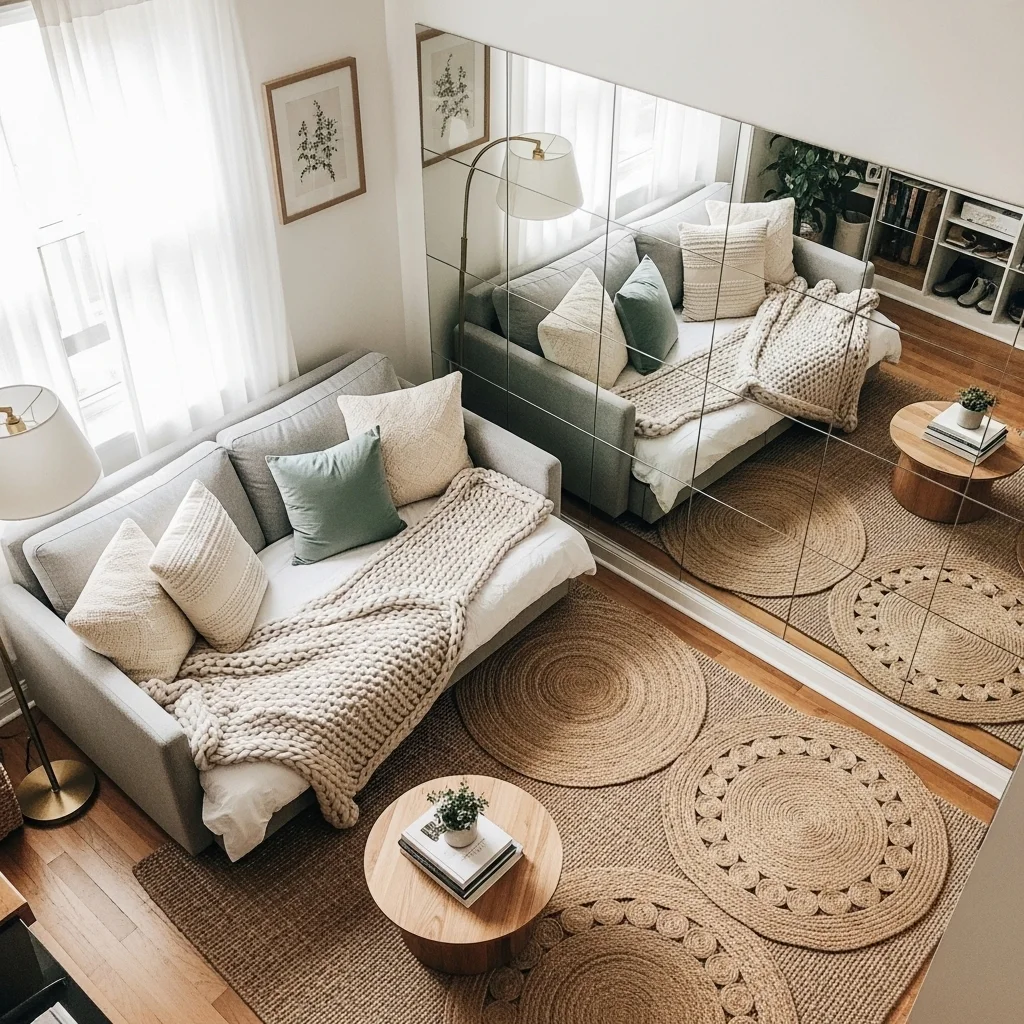
Mirrors reflect light and visually double your space, making small living rooms feel more expansive. Place a large mirror opposite a window or behind your sofa to enhance brightness and depth.
Decorative mirrors also act as design pieces, integrating seamlessly into your décor while improving perceived space — a clever trick used in studio apartment hacks.
15. Keep a Consistent Style Theme
To make your dual-purpose room feel intentional, stick to one consistent aesthetic — minimalist, bohemian, Scandinavian, or modern. Unified tones and textures create flow and prevent visual dissonance.
This harmony ties both “bedroom” and “living room” sides together, resulting in a multifunctional space that feels cohesive and beautifully designed.
Final Thoughts
Mastering how to turn your living room into a bedroom is about blending creativity with function. With smart planning, flexible furniture, and visual zoning, you can craft a space that meets every need without feeling cramped.
From cozy lighting to space-saving storage, every choice should reflect balance and purpose. When designed thoughtfully, your living room can become a serene retreat by night and a lively gathering area by day — proof that comfort and style can truly coexist in any size home.